

Ludwig van Beethoven as a Musical Year-End Reflection
15.01.2026 Arts & Culture, Concerts, Music, Throwback Saanenland, Arts & Culture, Events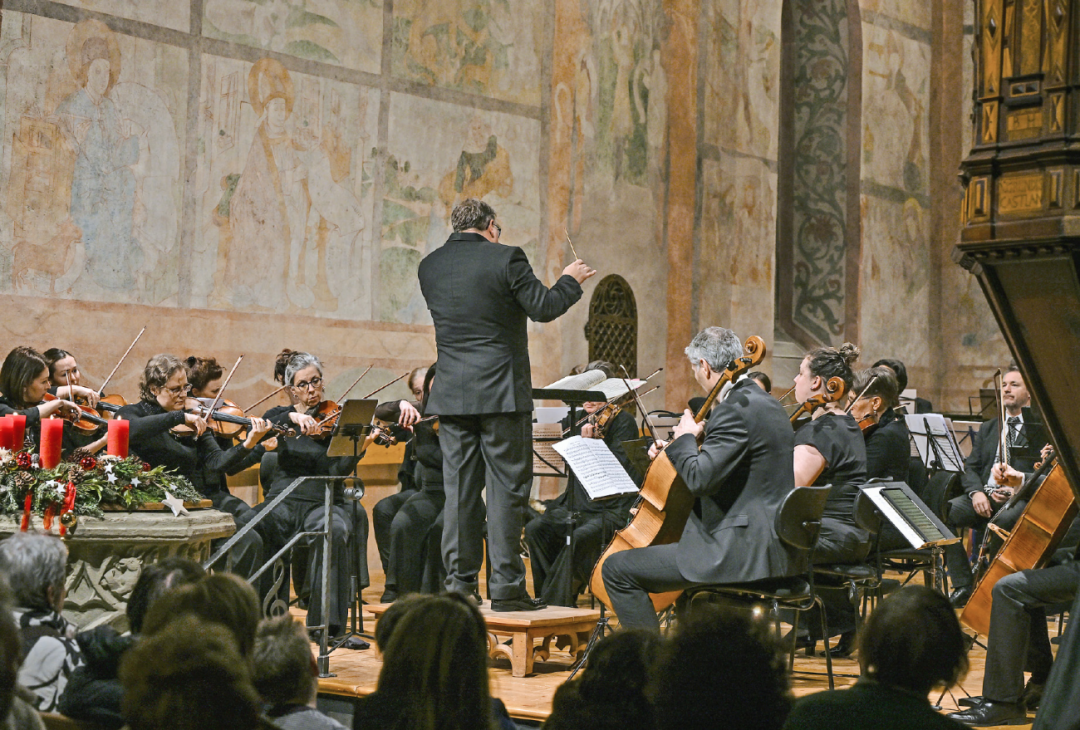
With works by Ludwig van Beethoven, the traditional year-end concerts in the Church of Saanen offered moments of strength and contemplation. Under the direction of Michael S. Bach, the Orchestra degli Amici joined forces with pianist Reto Reichenbach to shape an intense musical conclusion to the year, one that made the timeless relevance of Beethoven’s music powerfully tangible.
Strength and contemplation in challenging times
This year’s Altjahrskonzerte in the Church of Saanen were devoted exclusively to the music of Ludwig van Beethoven. Led by Michael S. Bach, with long-standing concertmaster Simone Roggen and soloist Reto Reichenbach, the Orchestra degli Amici delivered a compelling musical farewell to the year—moments of strength and reflection in a time of global upheaval.
Beethoven’s compositions were shaped early on by political turmoil as well as by his serious illness. As early as 1798, before the age of 30, the first signs of his hearing loss became apparent. The Piano Concerto No. 4 in G major, Op. 58, was the last work Beethoven himself was able to perform as a piano virtuoso—right in the midst of his first, highly productive creative period.
Beethoven’s oeuvre was profoundly influenced by political, economic and cultural change. Symphony No. 7 in A major, Op. 92, was composed in the period following the long wars of liberation and the Congress of Vienna, famously described as having “danced” its way into history. The result is a passionate work, its exuberant final movement full of contrasts and surging energy.
Musical expression
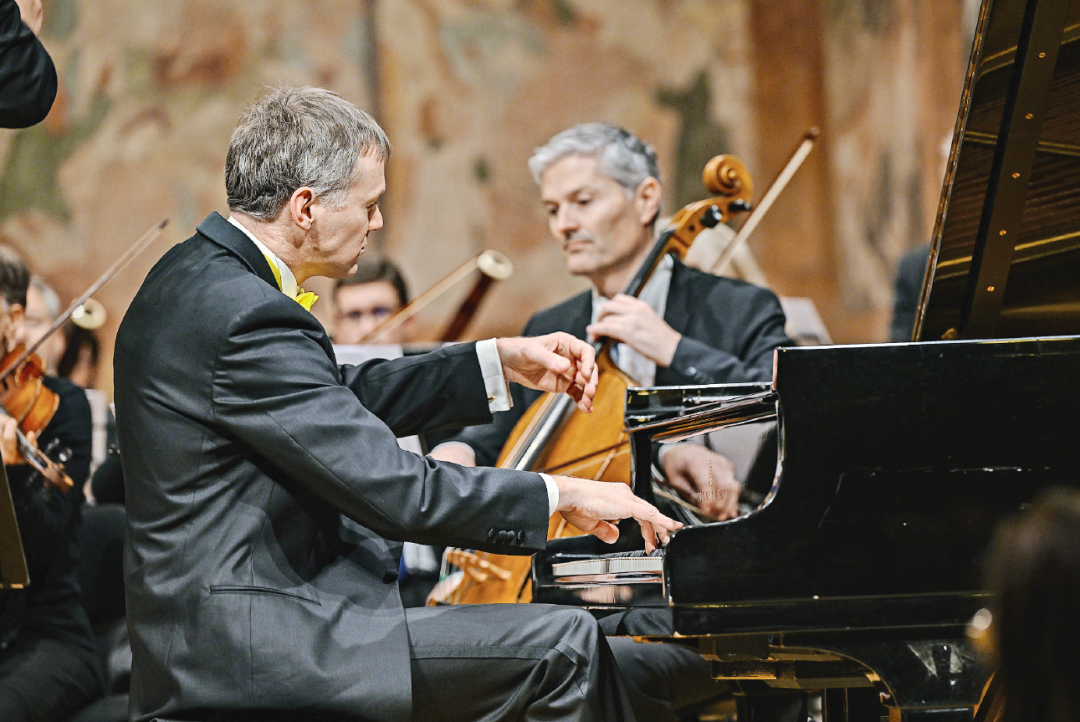
The deep emotional and psychological range of the Fourth Piano Concerto, lyrical and dreamily melancholic, moving through a dramatic, almost painful dialogue between piano and orchestra, and culminating in a cheerful rondo and concluding presto, was rendered with great sensitivity by pianist Reto Reichenbach.
He opened the concerto with the theme, which was then taken up by the orchestra, and after an impressive cadenza achieved a finely wrought fusion between solo instrument and ensemble. In this unique concerto, the orchestra matched the soloist in every respect.
With the graceful Rondo in C major, Op. 51 No. 1 (Moderato e grazioso), Reto Reichenbach thanked the audience. Despite its minor-key middle section, the simple piano piece feels light, modest and delicately serene.
Dynamic contrasts
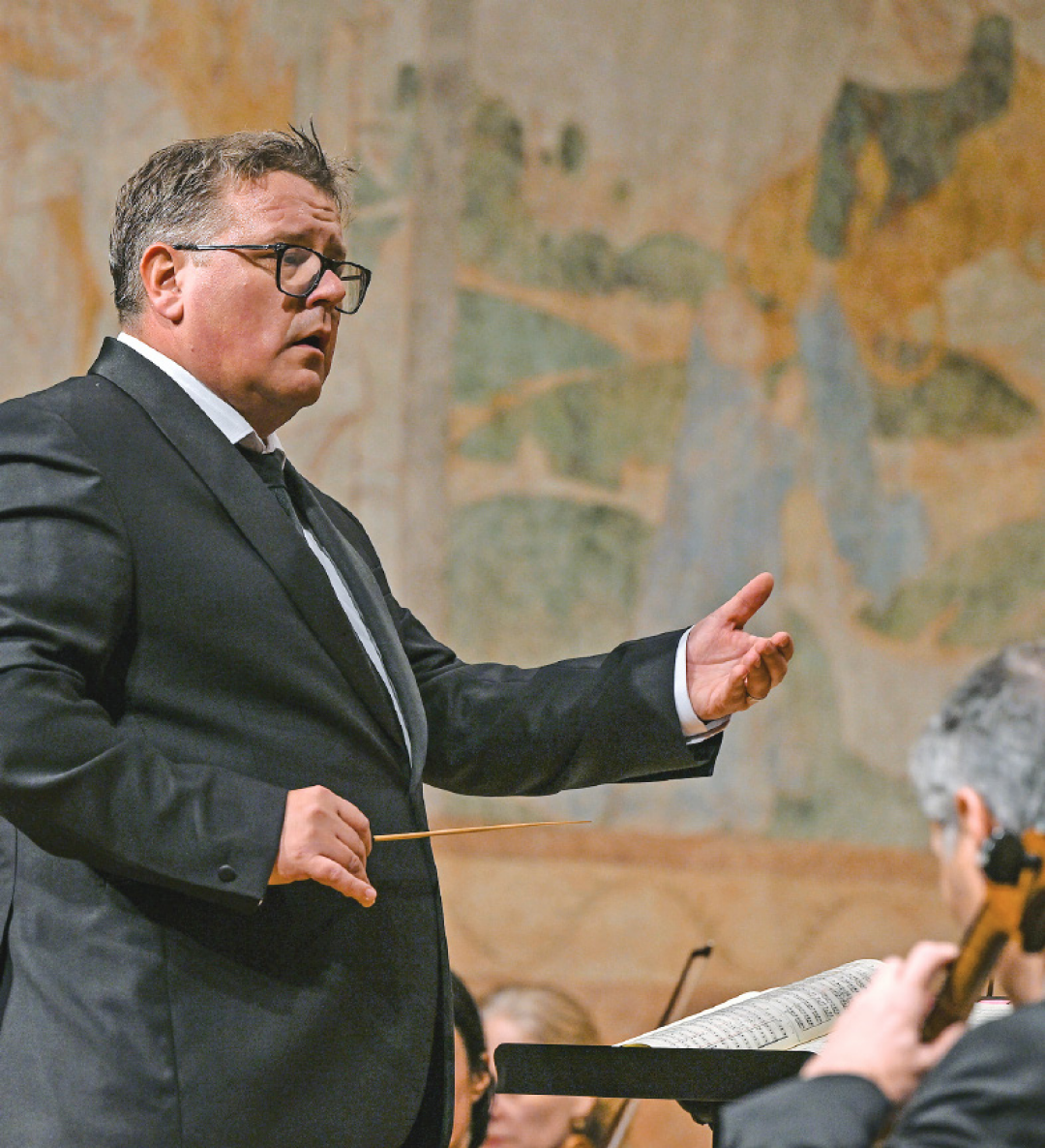
With verve and evident joy, Michael S. Bach conducted the Orchestra degli Amici, a fixture of the year-end and Easter concerts in Saanen for many years. Dramatic tension is in no short supply in Beethoven’s Symphony No. 7. From pianissimo to fortissimo, from rapture to unrestrained joy, but also melancholy and suffering—everything finds expression here. Yet despite all the tragedy and the struggle against dark forces, the joyful ultimately prevails, leaving a mood of hopeful happiness.
The 45th time
For the conductor’s father, Markus S. Bach, this year’s Altjahrskonzert marked the 45th edition under his organisation. What began modestly with organ and trumpet gradually expanded: an orchestra was added, concerts were repeated, and today they take place over two evenings. Both the year-end and Easter concerts testify to the vibrant local music scene and have become an integral part of Saanen’s annual calendar.
Dates for the Easter concerts have already been set; they will take place on Good Friday, 3 April, and Holy Saturday, 4 April, both at 5 pm in the Church of Saanen. Markus S. Bach has already revealed that an ad hoc choir, led by Deborah Walther, will rehearse six times. The programme will include Symphony No. 8 in B minor (“Unfinished”) by Franz Schubert and a suite from Peer Gynt by Edvard Grieg.
Based on AvS | LOTTE BRENNER