

Denmark makes its mark in Gstaad
30.08.2026 Arts & Culture, Editors Picks, Concerts, Events, Menuhin Festival & Academy, Inspiration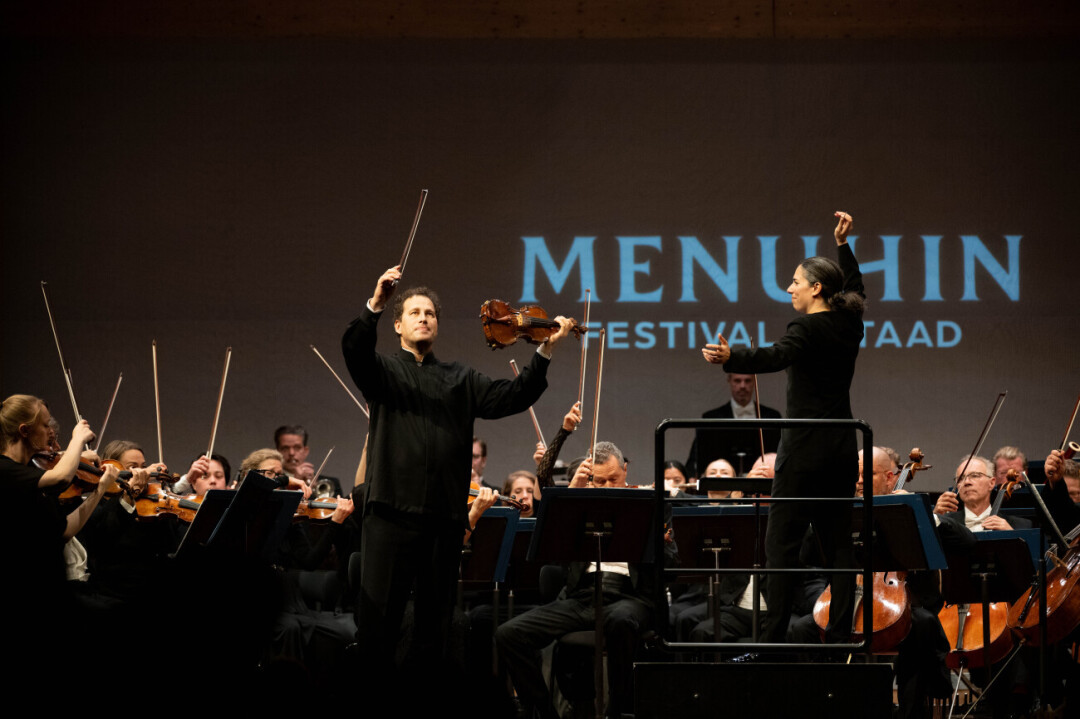
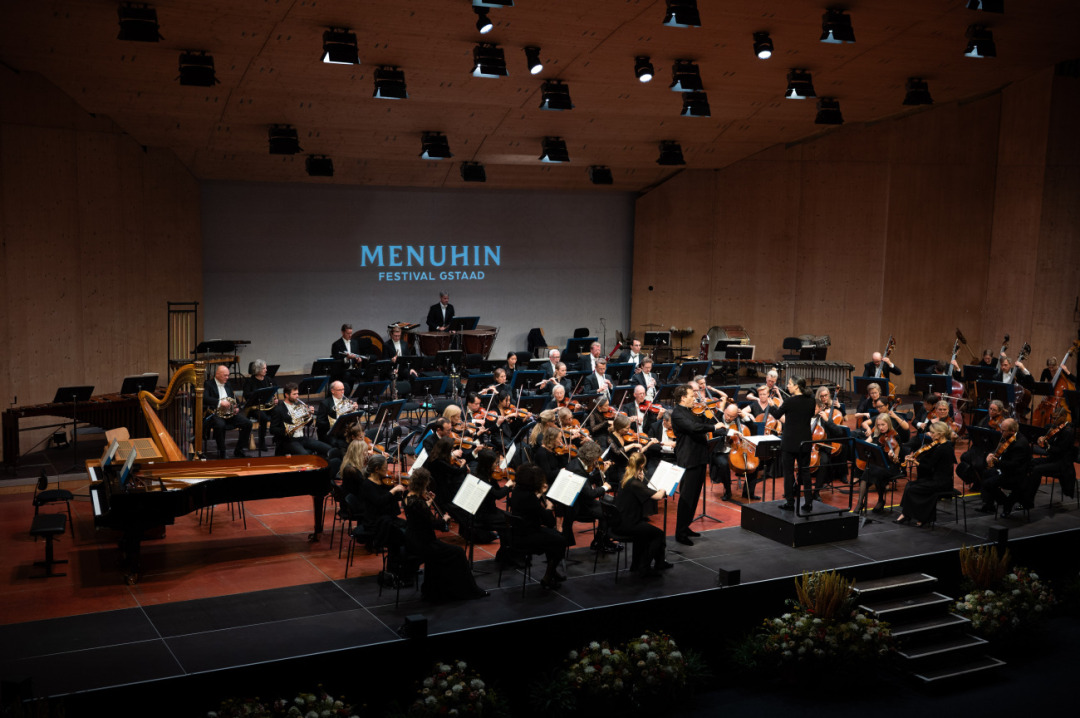
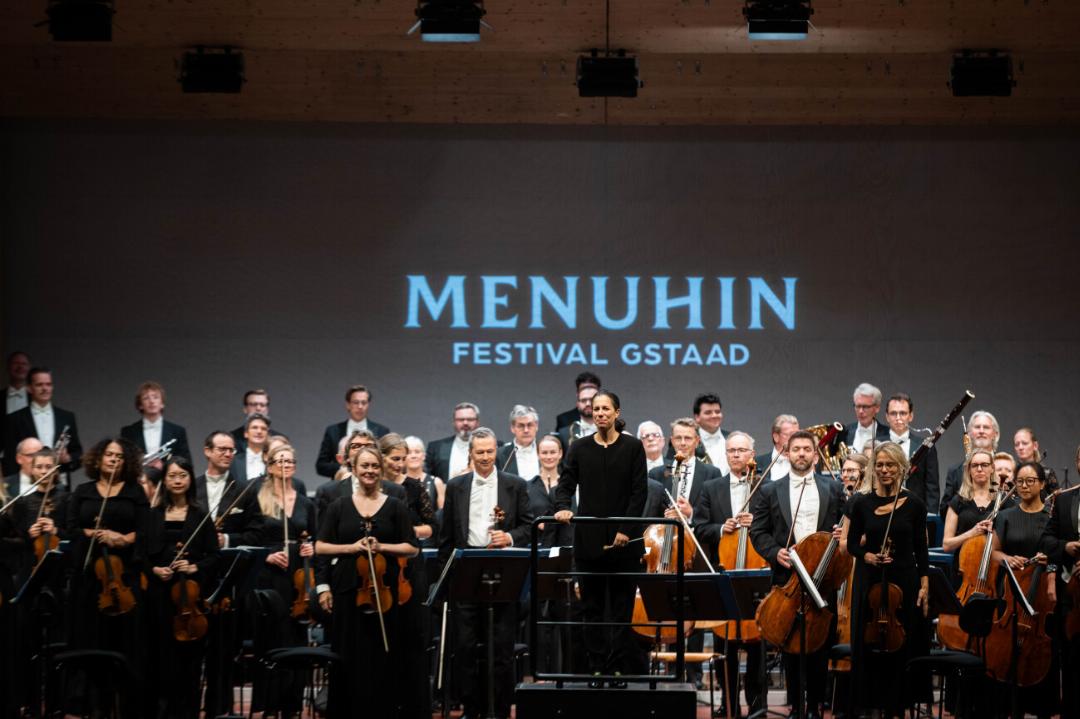
A delayed arrival may have kept the audience waiting, but once the Royal Danish Orchestra took to the stage at the Menuhin Festival Gstaad, there was little doubt that the Danes had arrived. Joined by violinist Nikolaj Szeps-Znaider and conducted by Marie Jacquot, the orchestra made an impressive Gstaad debut with music by Hans Abrahamsen, Brahms and Prokofiev.
There are evenings when national pride can perhaps be forgiven. For the Danish among us, the Royal Danish Orchestra’s first appearance at the Menuhin Festival Gstaad on 22 August was certainly one of them.
It did not begin quite according to plan. The orchestra had performed at Amsterdam’s Concertgebouw the previous evening, and a travel complication meant that not all of its musicians reached the Saanenland on time. The concert in the Festival Tent therefore began half an hour late. Once everyone was assembled, however, there was no sense of rushing to make up lost time.
The programme opened, fittingly, with Danish composer Hans Abrahamsen’s Three Pieces for Orchestra. At just seven minutes, it was the shortest work of the evening, but hardly an insignificant introduction. Minimalist passages, shifting colours and a strong rhythmic pulse gave the audience an immediate taste of an orchestra capable of considerable precision and tonal variety. Then came one of Denmark’s best-known classical musicians.
Szeps-Znaider returns to Gstaad
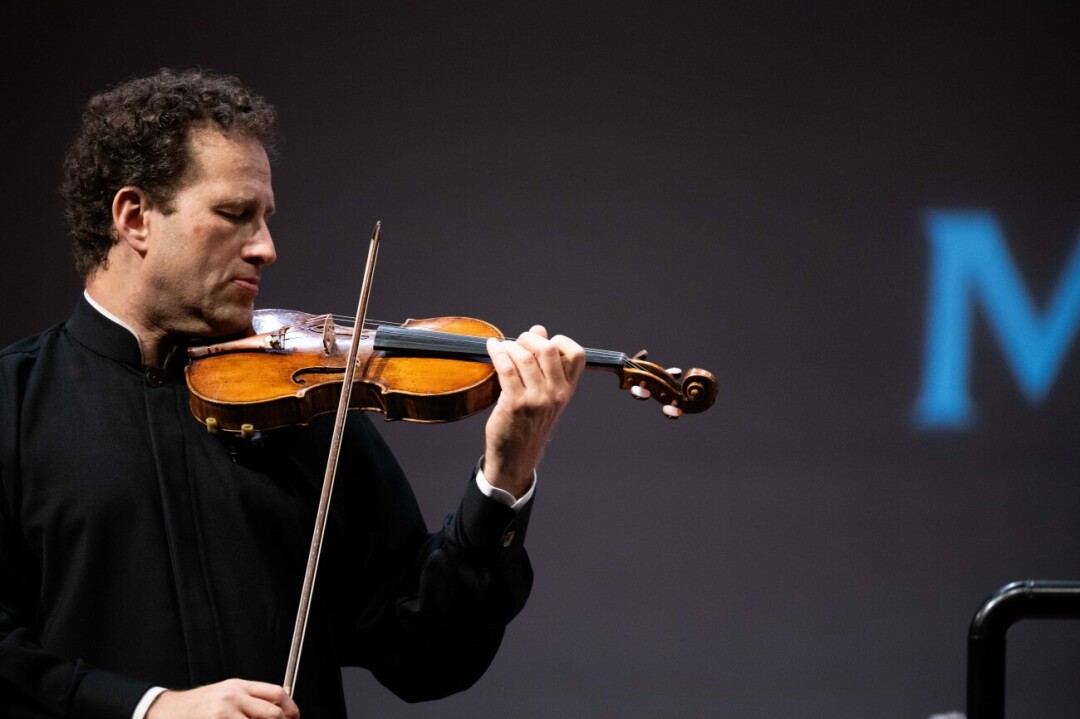
Violinist Nikolaj Szeps-Znaider was making his third appearance at the Menuhin Festival, following performances in 2011 and 2015. This time he took on Brahms’ Violin Concerto in D major, playing the 1741 Guarneri del Gesù violin on which he has built such a distinctive sound.
Szeps-Znaider approached Brahms without unnecessary theatrics. His playing moved easily between the concerto’s vitality and its quieter, more melancholic passages, finding warmth and delicacy even in its technically demanding runs.
There was also a palpable sense of exchange between soloist and orchestra. Szeps-Znaider, himself an experienced conductor, seemed continuously aware of what was happening around him, turning the concerto into a conversation rather than a display.
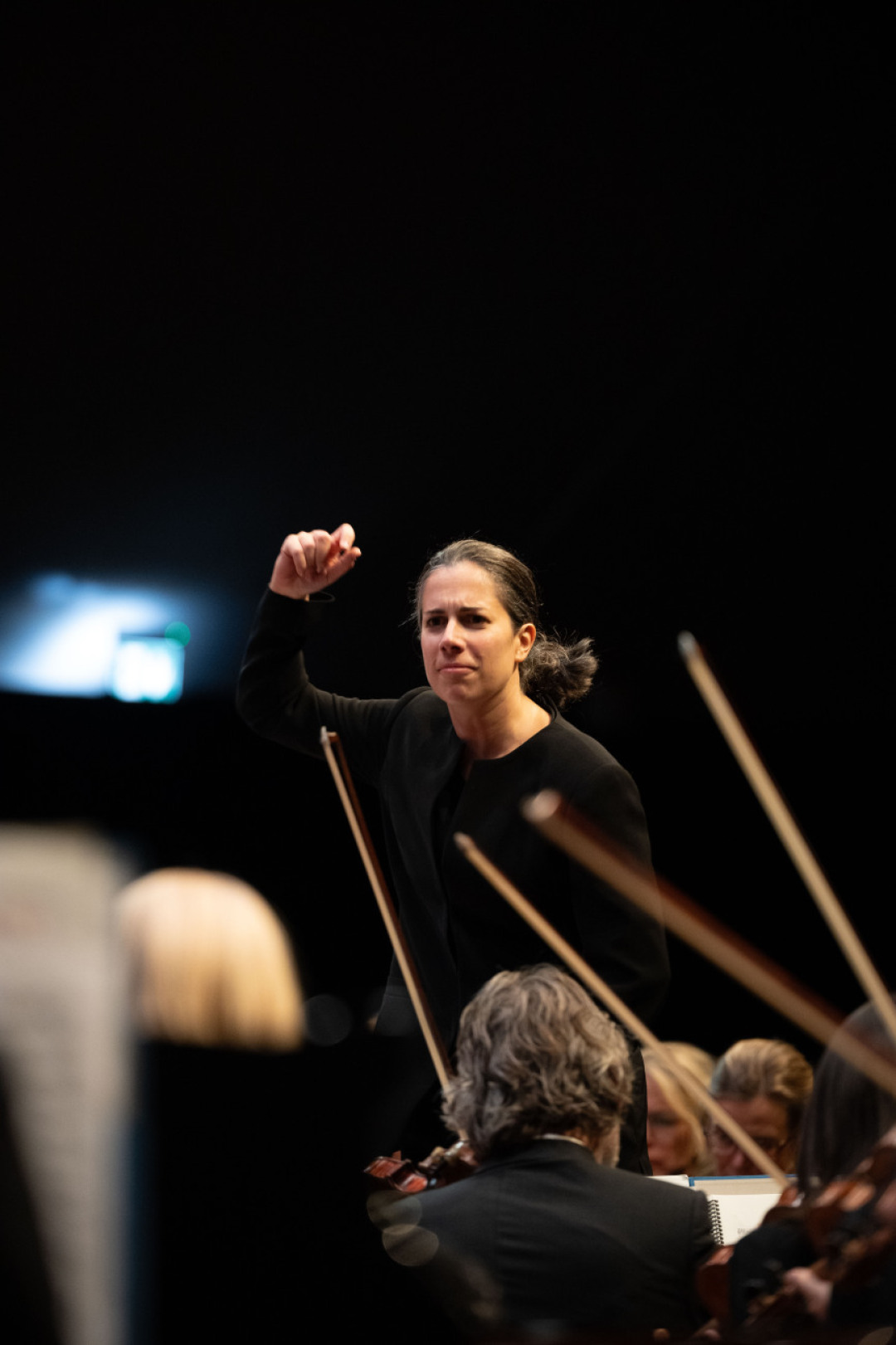
At the podium, the Royal Danish Orchestra’s chief conductor Marie Jacquot kept a close eye on that balance. The French conductor – whose route into music included both competitive tennis and training as a trombonist – allowed the orchestra plenty of strength without overwhelming the violin, drawing particularly fine results from the strings.
From Brahms to battle
After the interval, the orchestra largely abandoned restraint.
Prokofiev’s Romeo and Juliet gave the orchestra an altogether different canvas. Written originally as ballet music in 1935 and later arranged into orchestral suites, it moves between brutality and tenderness: the violence of the Montagues and Capulets set against some of Prokofiev’s most lyrical writing.
For an orchestra, it is music that leaves few places to hide.
Expanded with piano, a large percussion section, tenor saxophone, glockenspiel and mandolin, the Royal Danish Orchestra threw itself into the score. The famous heavy chords had weight without turning muddy, rhythmic changes remained sharp and the quieter passages were given enough space to breathe.
Jacquot conducted with clear, physical gestures, at times holding the forces back precisely so that individual instrumental colours could emerge from the mass of sound.
Across the selected movements, the orchestra moved convincingly from swagger and confrontation to intimacy, foreboding and, finally, tragedy. It was in Prokofiev that the full scale of the ensemble became most apparent: powerful when required, but still transparent enough for the detail underneath to remain audible.
For its first appearance in Gstaad, the Royal Danish Orchestra therefore left quite a calling card.
The only slight disappointment was in front of the stage rather than on it. The Festival Tent was only around half full – rather sparse company for an orchestra, soloist and conductor of this calibre. Those who were there, however, heard a Danish debut worth waiting half an hour for.
Based on AvS by SVEND PETERNELL | Edited for GstaadLife by jwi
PHOTOS: MENUHIN FESTIVAL GSTAAD / RAPHAEL FAUX / GSTAADPHOTOGRAPHY.COM