

Between cowshed and tea room
20.02.2026 Arts & Culture, Gallery & Exhibitions, Editors Picks, Events, Arts & Culture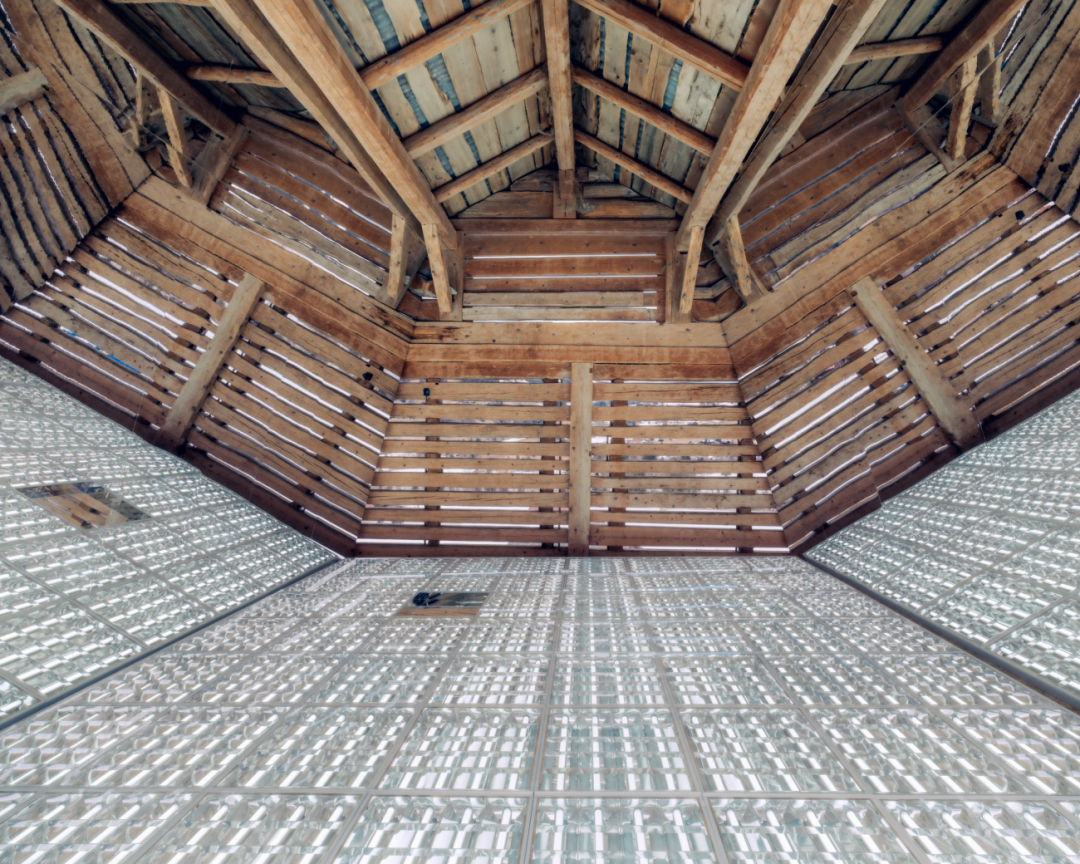
Alexandre de Betak transforms a Saanen barn into a luminous space
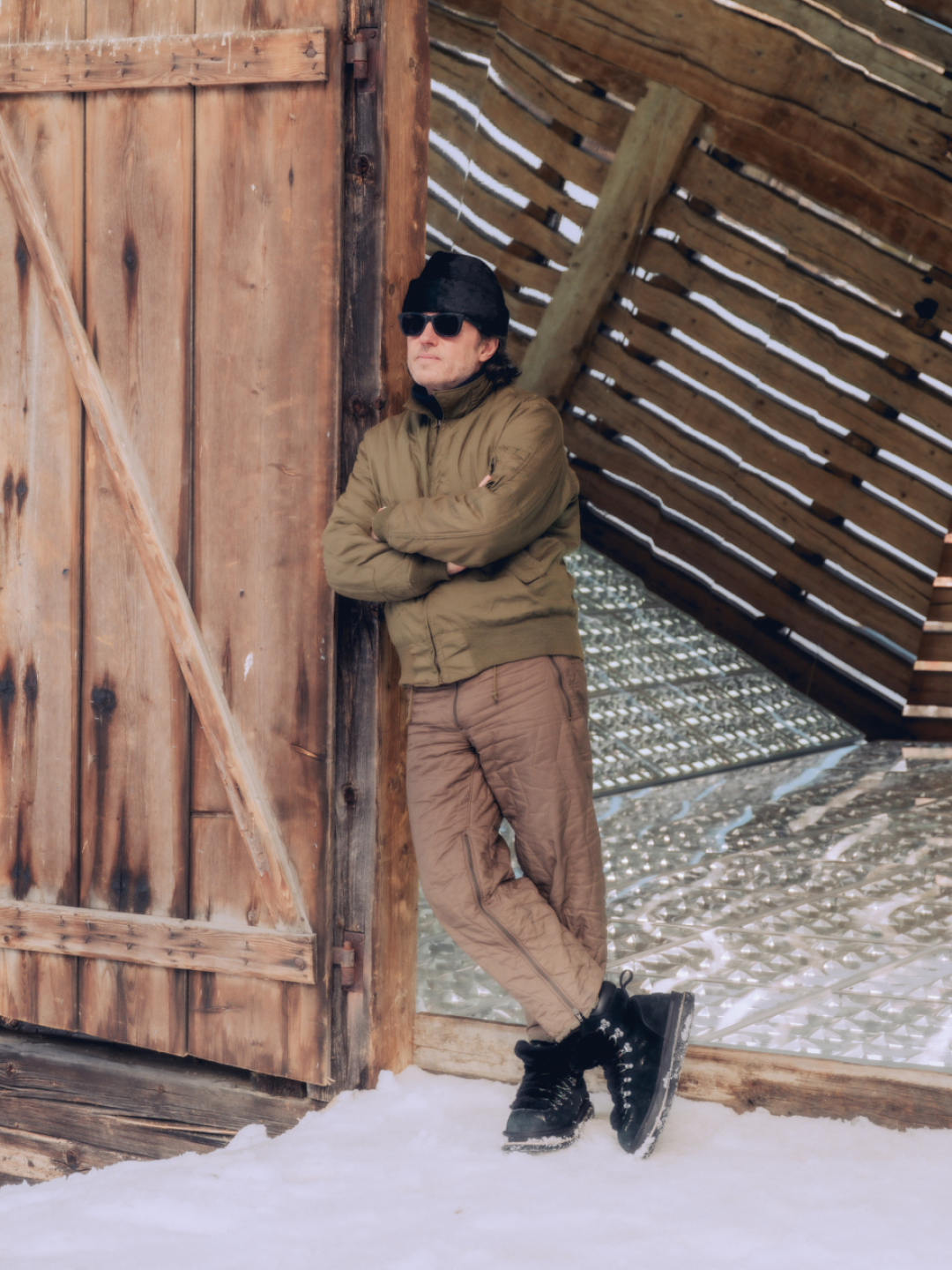
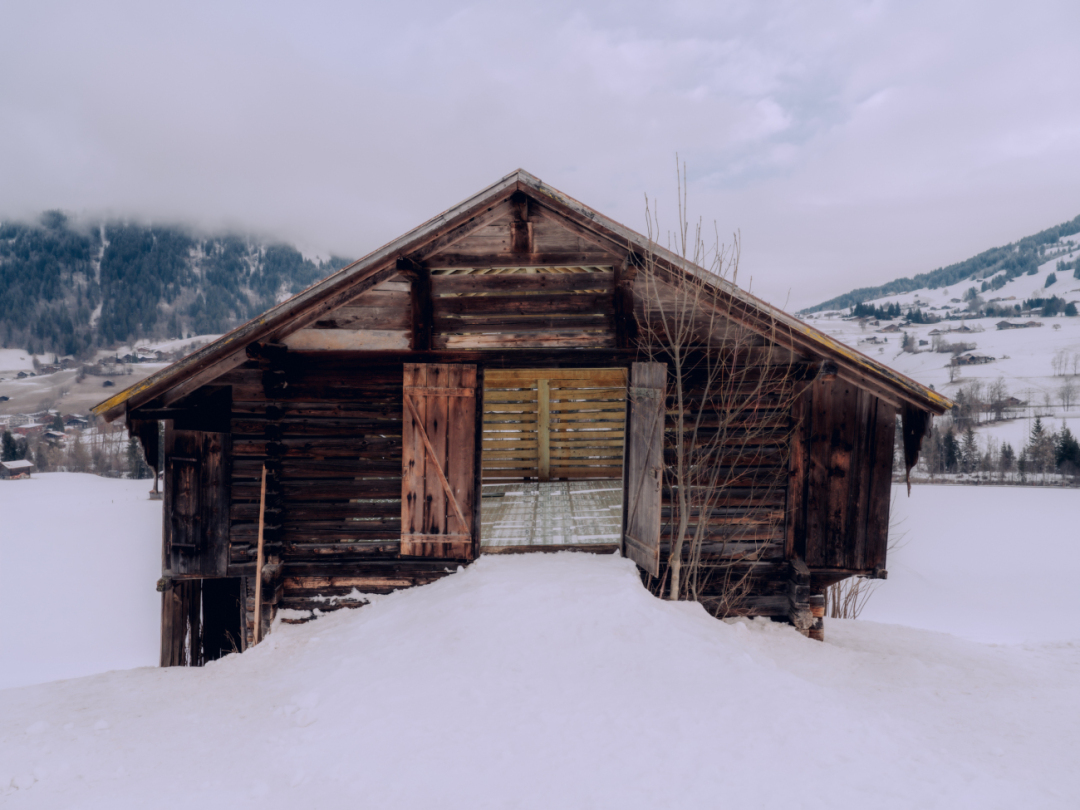
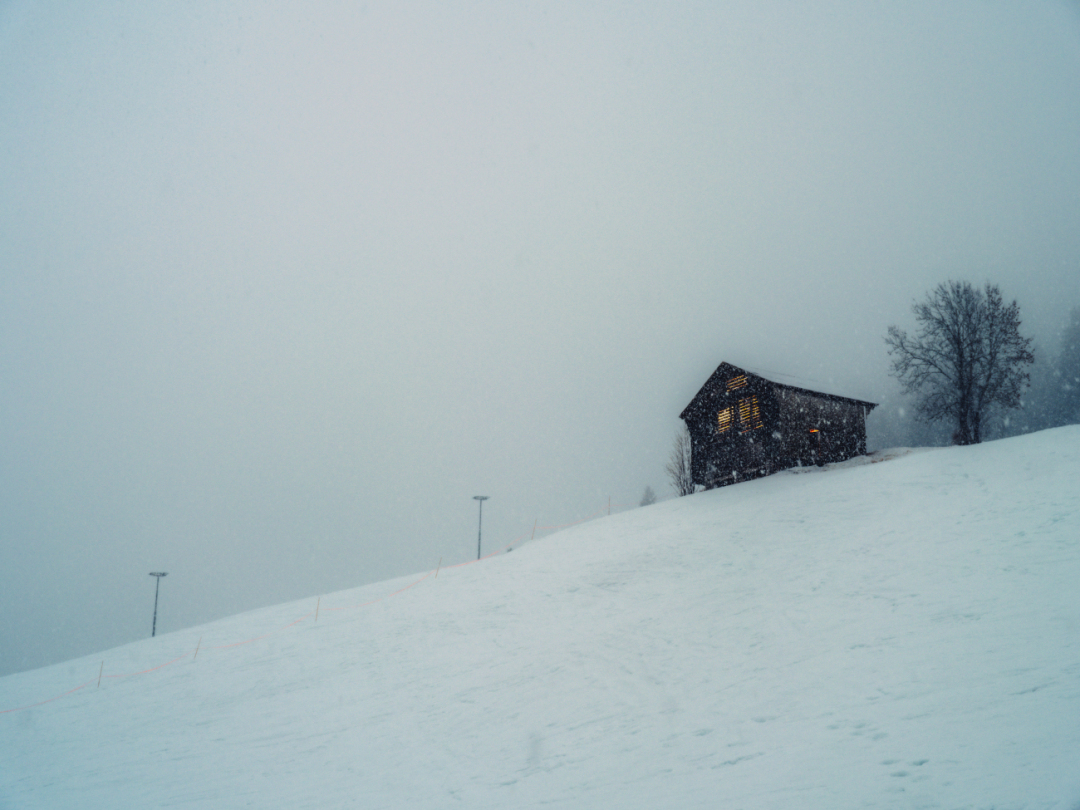
In wintry Saanen, just above the Eggli valley station, a small Schürli has been glowing in an unexpected way this week. Where hay is usually stored, and cows spend the winter months, French designer and scenographer Alexandre de Betak has created a walk-in light installation.
De Betak did not originally come to the Saanenland for an art project, but for his daughter. Eight-year-old Sakura attends the Lovell School during the winter season. Only through these regular stays, he explains, did he begin to understand what makes the region so special, less the secondary residences, more the many small barns and stables that shape the landscape.
He admires the strict protection of local architecture. Here, you cannot simply build whatever you wish, regardless of budget. That attitude, he says, is why he fell in love with the valley “out of respect.”
A Barn becomes a Palazzo
The barn hosting the installation during Gstaad Art Week belongs to the Bach family. De Betak recalls knocking on the doors of many empty stables last winter ,“no one was there, because there were no cows” until he met Willy and Christiane Bach and Timon Zimmermann.
They immediately supported his idea and made the space available. For de Betak, this modest Schürli is a palazzo: as dignified as a Venetian city palace, only built of timber, with hayloft and feeding stalls.
A Japanese tea room above the cowshed
The traditional two-level structure of the barn, hay above and animals below, forms the conceptual starting point of the installation.
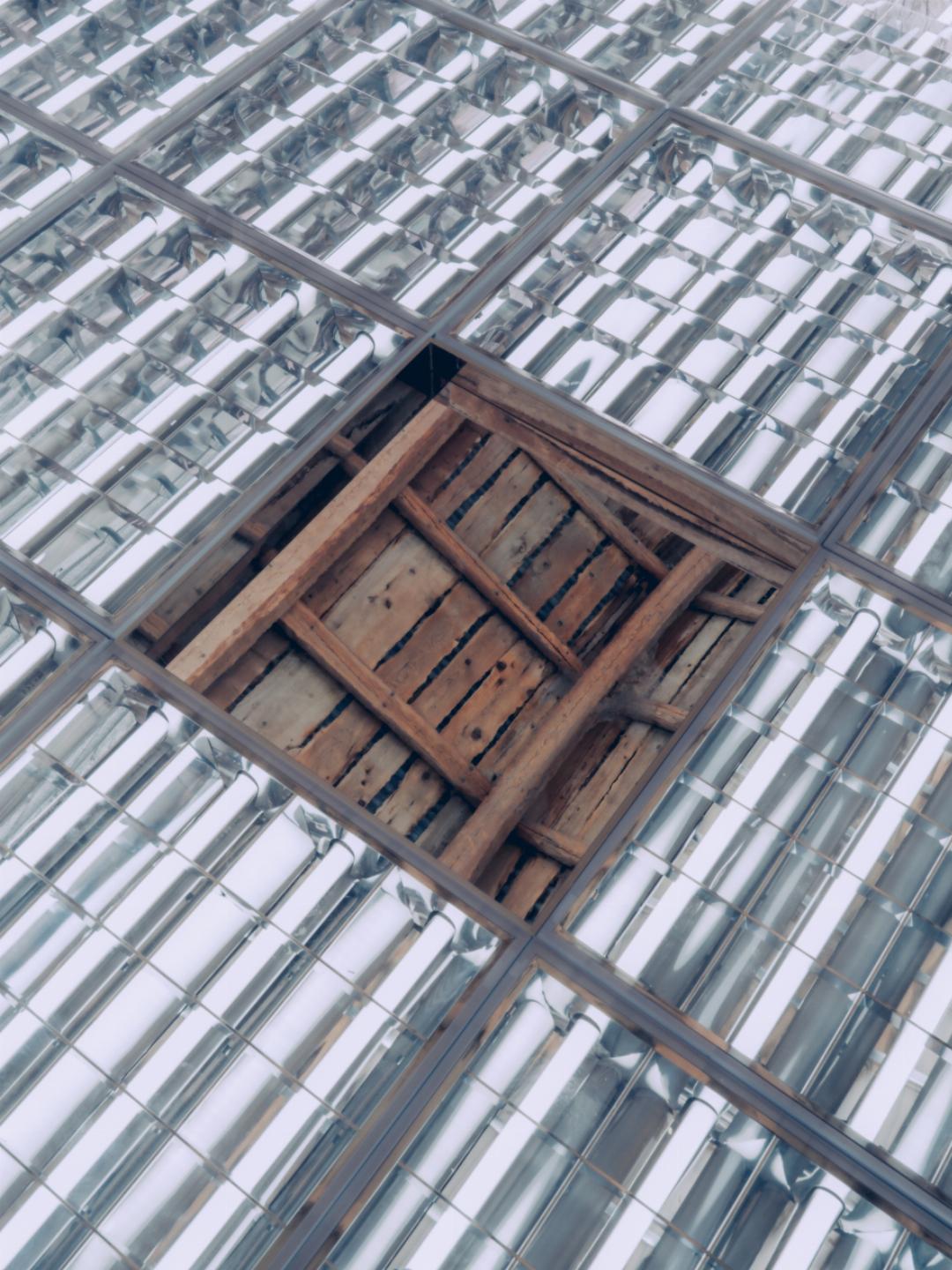
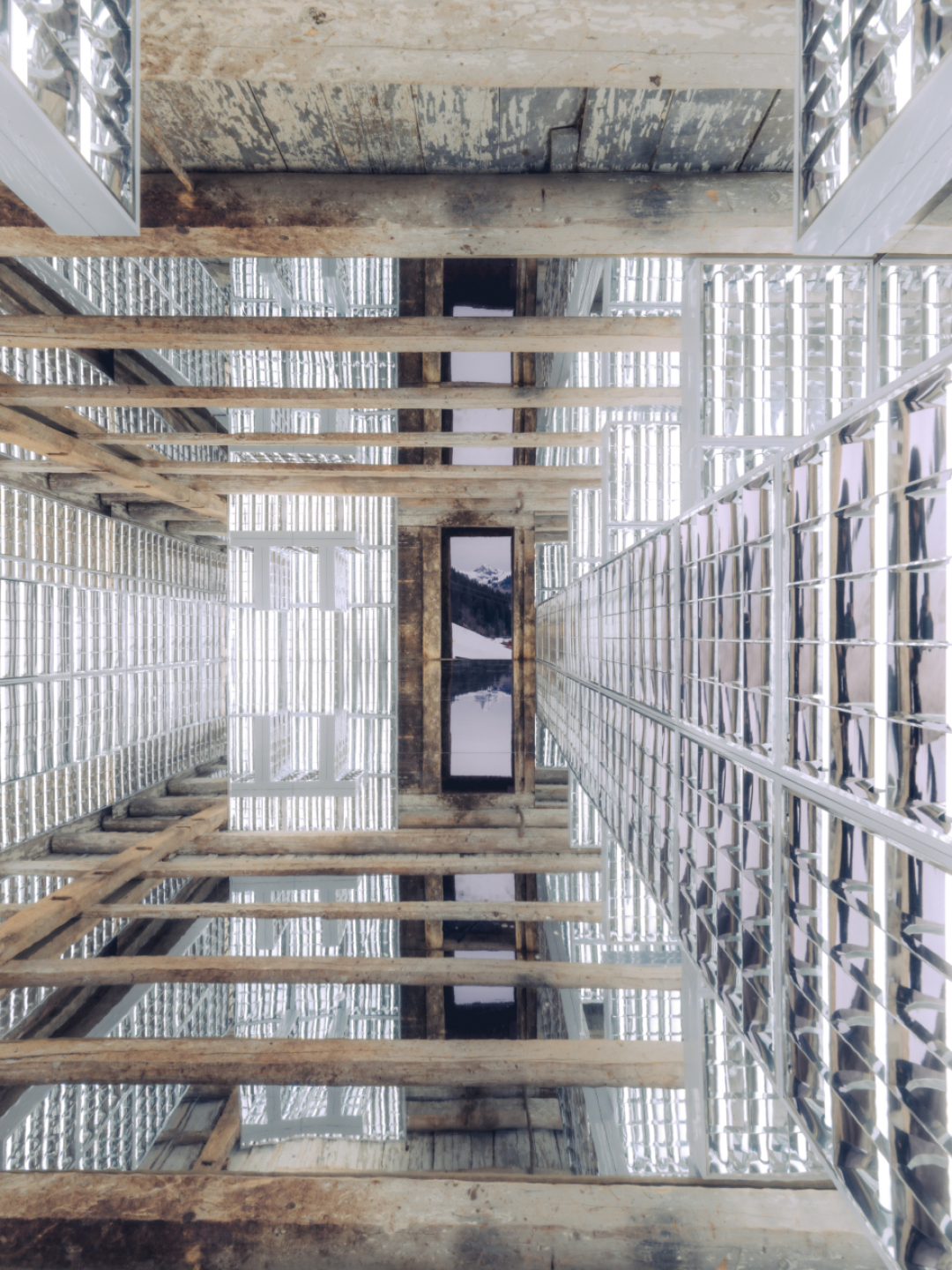
On the upper floor, de Betak develops an abstracted chashitsu, the space of the Japanese tea ceremony. A grid of light, mirrors and shadow suggests the geometry of the tea room; an opening at the back recalls the hearth where water is heated.
In the lower section, where cows would normally stand, he positions a torii: the iconic gate of Japanese shrines, in dialogue with the preserved feeding stations. The original wooden structure of the stalls has been carefully restored and deliberately left visible, allowing the former animal habitat to become part of the artistic narrative.
From London to Saanen, and on to Japan
The Saanen barn is not de Betak’s first exploration of light and architecture. In London, during Frieze Art Fair, he presented a similar installation in his studio, transforming a historic and rather modest space into an atmospheric environment of light, reflection and mirrored surfaces.
Saanen marks the next chapter. His plan is to take the project into the Japanese mountains, again transforming a rural, traditional building into a resonant space between Alpine and Japanese architecture, this time, as he notes, with a “Bernese accent.”
In parallel, he is developing freestanding light sculptures that function like small buildings and could appear in very different contexts in the future.
A travelling dialogue of light
De Betak sees his work in Saanen as the beginning of a longer journey. The barn installation is, in his words, a preview of ideas he intends to develop further on a larger scale within the framework of the upcoming Venice Biennale: an ongoing dialogue between light, space and historic architecture, taking on new forms in different parts of the world.
He speaks of “freedom and no rules” as a recurring thread, from London to Saanen to Japan. Sometimes as site-specific interventions within existing buildings, sometimes as autonomous light architecture in contrast to its surroundings. What matters most, he says, is that a conversation emerges: between past and present, between rural vernacular architecture and contemporary art.
Office light that warms and barns that need care
Part of the installation’s appeal lies in de Betak’s use of a light source rarely associated with poetry: the long tubes typical of office ceilings. He commissioned fixtures that formally resemble these sober lamps, yet transform them into warm, almost meditative light. In the evening, the tones soften; the barn is bathed in a flattering glow where timber, reflections and visitors merge.
Behind the project lies a concern. The barns – in Swiss German called the Schürli –are solidly built, yet one day they may decay if no one uses or values them. “They need love,” says de Betak and attention, purpose, stories unfolding within their walls.
With this installation, he hopes to spark exactly that: a renewed, affectionate gaze toward the simple rural buildings that make the Saanenland so distinctive.
Based on AvS | Claudia Heine
https://www.instagram.com/alexdebetak