



A stellar evening of piano
13.02.2026 Arts & Culture, Concerts, Events, Sommets Musicaux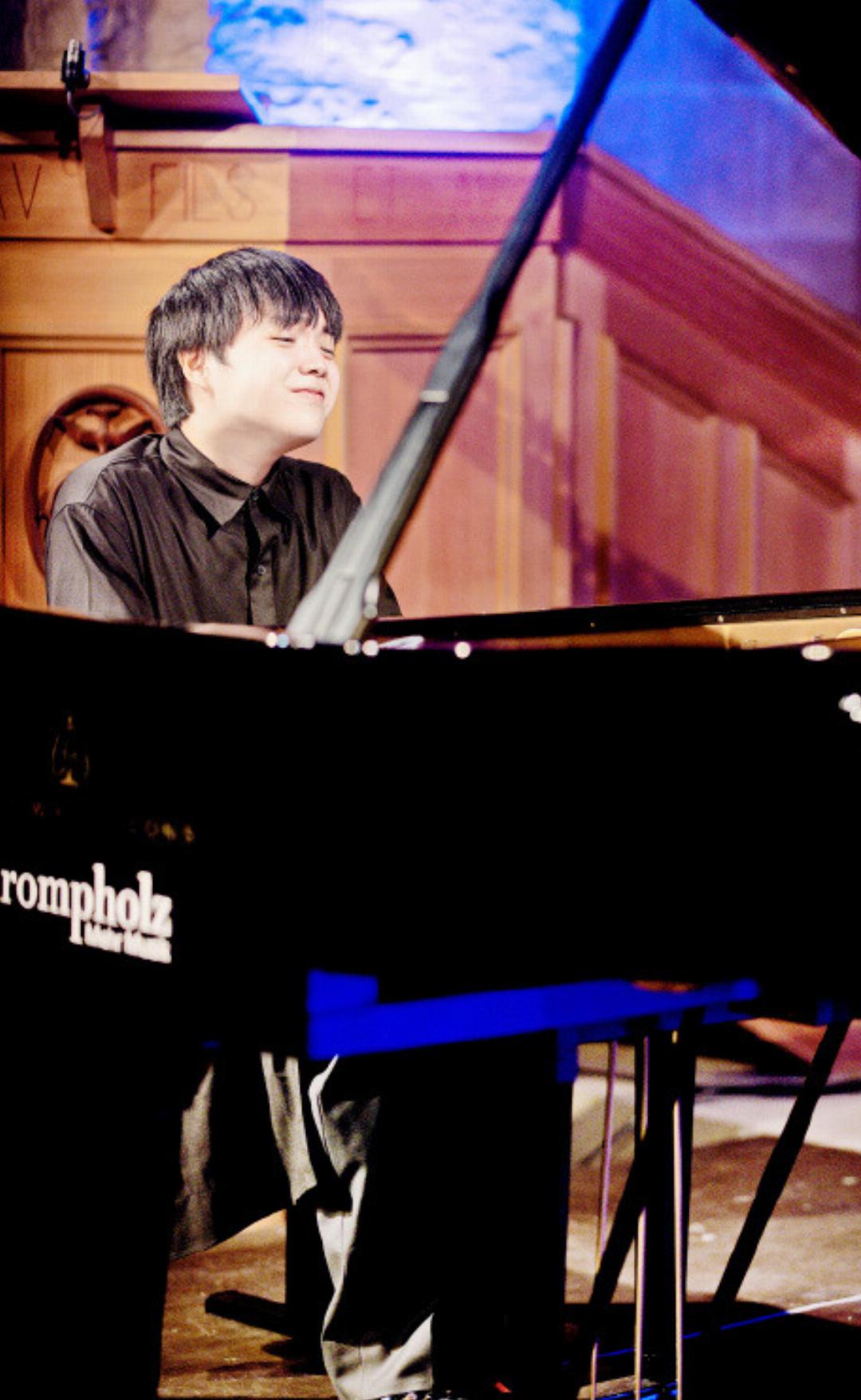
As part of the Sommets Musicaux de Gstaad, the young pianist Mao Fujita enthralled a full church in Rougemont with a demanding programme drawn from the Romantic repertoire. It was one of those rare evenings that resonate long after the final note has faded. The programme brought together ...
As part of the Sommets Musicaux de Gstaad, the young pianist Mao Fujita enthralled a full church in Rougemont with a demanding programme drawn from the Romantic repertoire. It was one of those rare evenings that resonate long after the final note has faded. The programme brought together works by Beethoven, Wagner, Berg, Brahms and Liszt.
Born in Tokyo in 1998, Mao Fujita began playing the piano at the age of three. His international career gathered momentum after winning first prize at the Clara Haskil Competition in Vevey in 2017, since when he has been invited to perform at major festivals and prestigious concert series worldwide.
The evening’s refinement was evident in the programme, which traced contrasting facets of Romantic music with great intelligence. Beethoven and Berg marked the stylistic boundaries at the outset. Beethoven, still largely rooted in Viennese Classicism, stood on the threshold of Romanticism, while Berg, represented here by his early, still tonal works, embodied late Romanticism. Between these two poles stood the monumental First Piano Sonata by Johannes Brahms. Rich in allusions to Beethoven yet forward-looking in its treatment of musical material, the work bridges tradition and innovation.
All the pieces performed place exceptional demands on the pianist, both technically and musically. In this respect, Mao Fujita appeared entirely unbounded. His playing radiated joy and assurance; tempi were finely judged, accents precisely placed, and the palette of sound colours remarkably nuanced.
Beethoven, Wagner, Berg
Beethoven conceived even his first piano sonata in four movements, a form otherwise reserved for string quartets and symphonies; genres intended for public performance. With this, he made a clear statement: his piano sonatas were not merely domestic music, but works of equal artistic stature. Dedicated to his teacher Joseph Haydn, the sonata still bears traces of Haydn’s influence, yet already speaks in an unmistakably Beethovenian voice.
One of Wagner’s rare piano works followed: the Albumblatt, composed in Paris in 1861 and dedicated to Princess Metternich. Given the social conventions of the time, Wagner chose a restrained, almost discreet musical language. This was immediately contrasted by Alban Berg’s Twelve Variations on an Original Theme, written during his student years with Arnold Schoenberg. Though tonal and highly expressive, the piece already reveals Berg’s characteristic motivic density and structural complexity – traits that would later lead him towards atonality and the twelve-tone method.
Brahms and Liszt
At the heart of the programme stood Brahms’s First Piano Sonata, described in the programme by mistake as the much later First Violin Sonata in a piano arrangement. The sonata is excessive in the best sense: brimming with youthful energy, passion, pianistic density and virtuosity. Brahms deliberately chose this work as his first published composition, presenting himself to the public with striking confidence. Beethoven’s influence is audible throughout, not least in the powerful opening chords, which recall the Hammerklavier Sonata.
Brahms was himself an outstanding pianist, and the technical demands placed on the performer are formidable. Mao Fujita met them with astonishing ease, navigating fast, densely textured passages at full volume while maintaining a consistently high level of expressive control. The enthusiastic ovations that followed were more than justified.
The programme concluded with Liszt’s piano transcription of Isolde’s Liebestod from Wagner’s Tristan and Isolde. Through tremolos, arpeggios and massive chordal writing, Liszt translates the orchestral sound world to the piano, evoking swelling climaxes and shimmering string textures. Liszt created many such transcriptions to perform Wagner’s music himself and make it accessible to a wider audience. As an encore, Mao Fujita chose a calmer piece, gently returning the audience to the reality of an otherwise ordinary Monday evening.
BASED ON AVS