

A SHARED SENSE OF TIME
13.02.2026 Profile, Gallery & Exhibitions, Jewellery & Watches, Events, Arts & Culture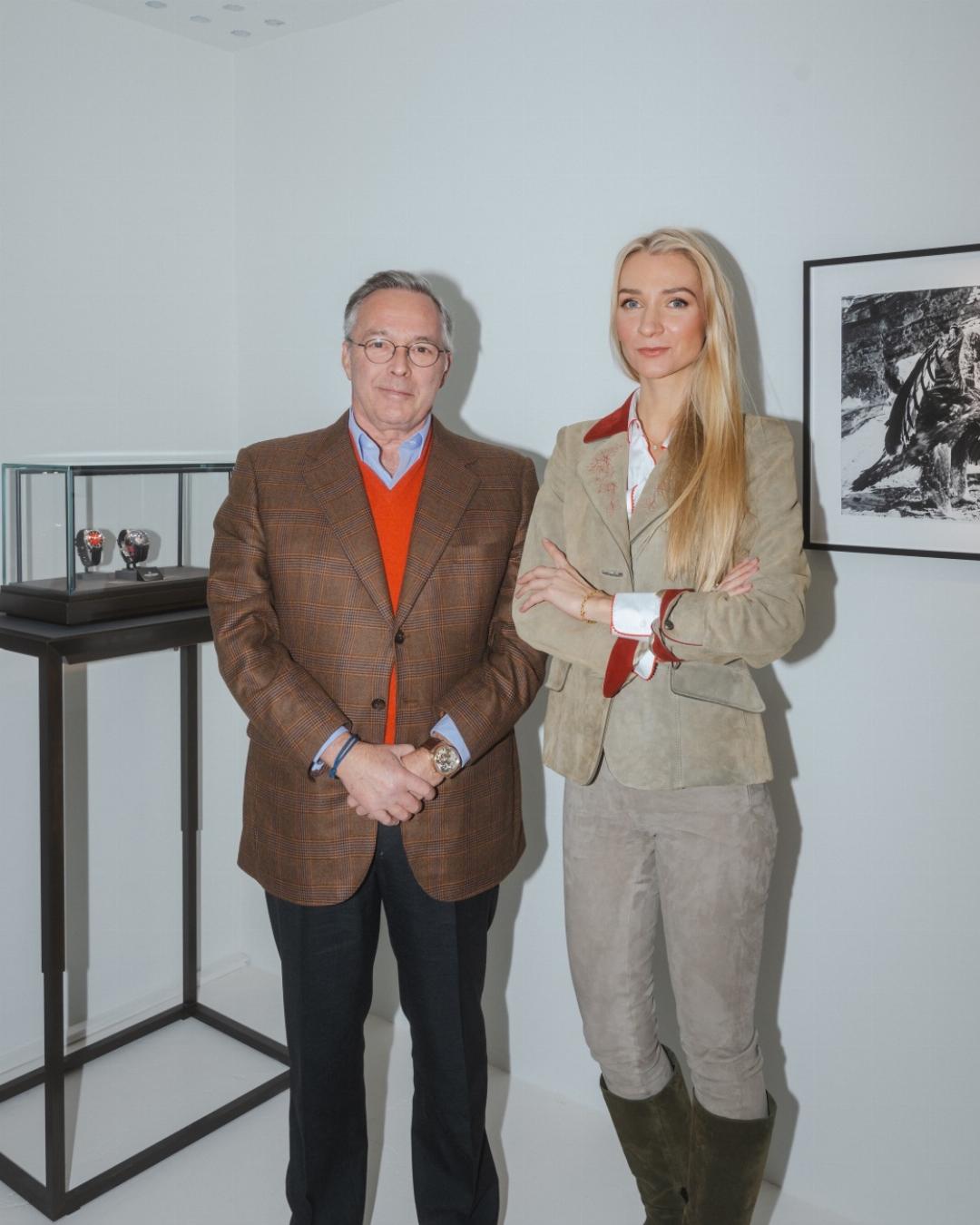
Art in Time makes its Gstaad debut through a personal collaboration between Studio Naegeli and Karl-Friedrich Scheufele.
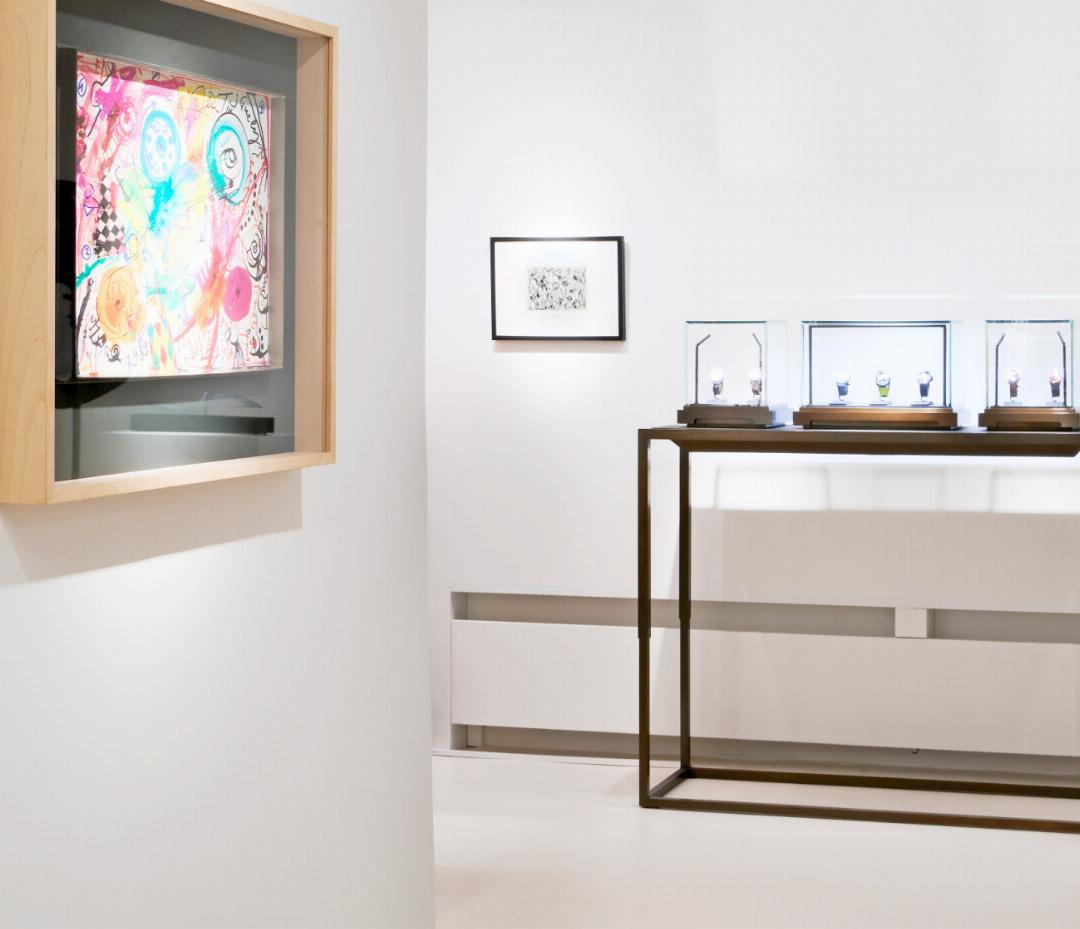
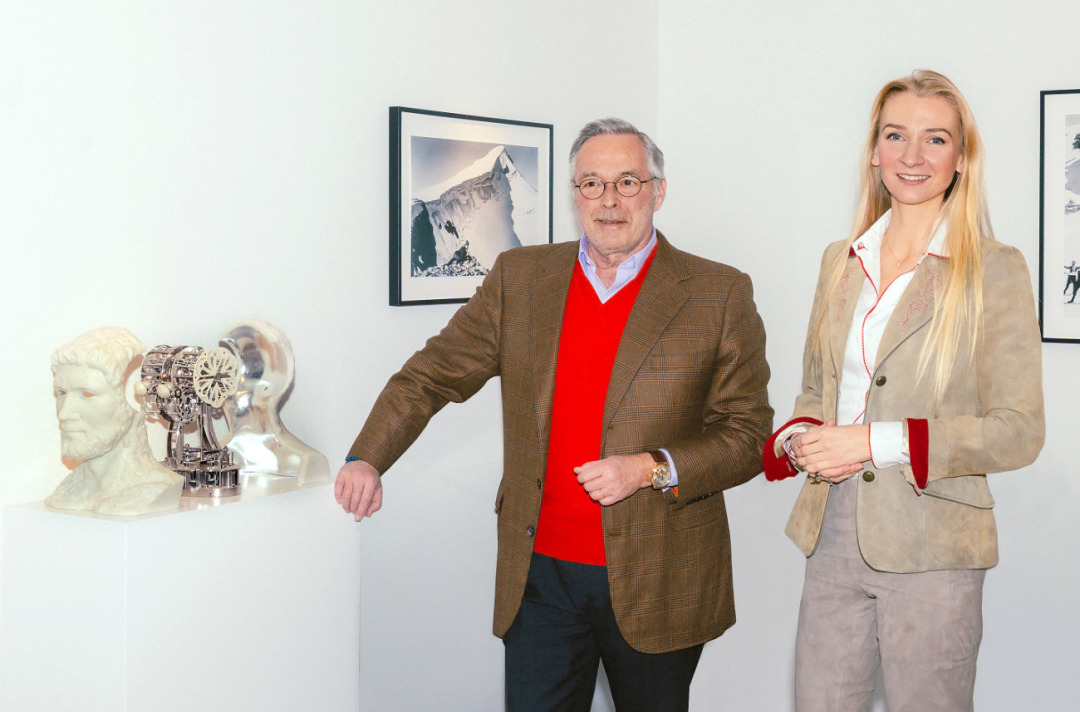
Gstaad provides a fitting setting for Art in Time’s first appearance in the region: a place where discretion, craftsmanship and long horizons quietly define value. Founded by Karl-Friedrich Scheufele, Art in Time is a curatorial initiative shaped by personal relationships with independent watchmakers and artists. Its collaboration with Anna Högl and Studio Naegeli is expressed alongside “Temporal Matter”, an exhibition that reflects a shared interest in time as something lived, made, and felt, not merely measured.
It is from within this shared terrain of art, mechanics and attention that the conversation with Anna Högl and Karl-Friedrich Scheufele unfolds, not as an explanation of the exhibition, but as a reflection on how time is shaped, preserved and experienced. For Anna Högl and Karl-Friedrich Scheufele, this attentiveness is not incidental. It is the shared ground on which contemporary art and independent watchmaking meet: quietly, deliberately, and without hierarchy.
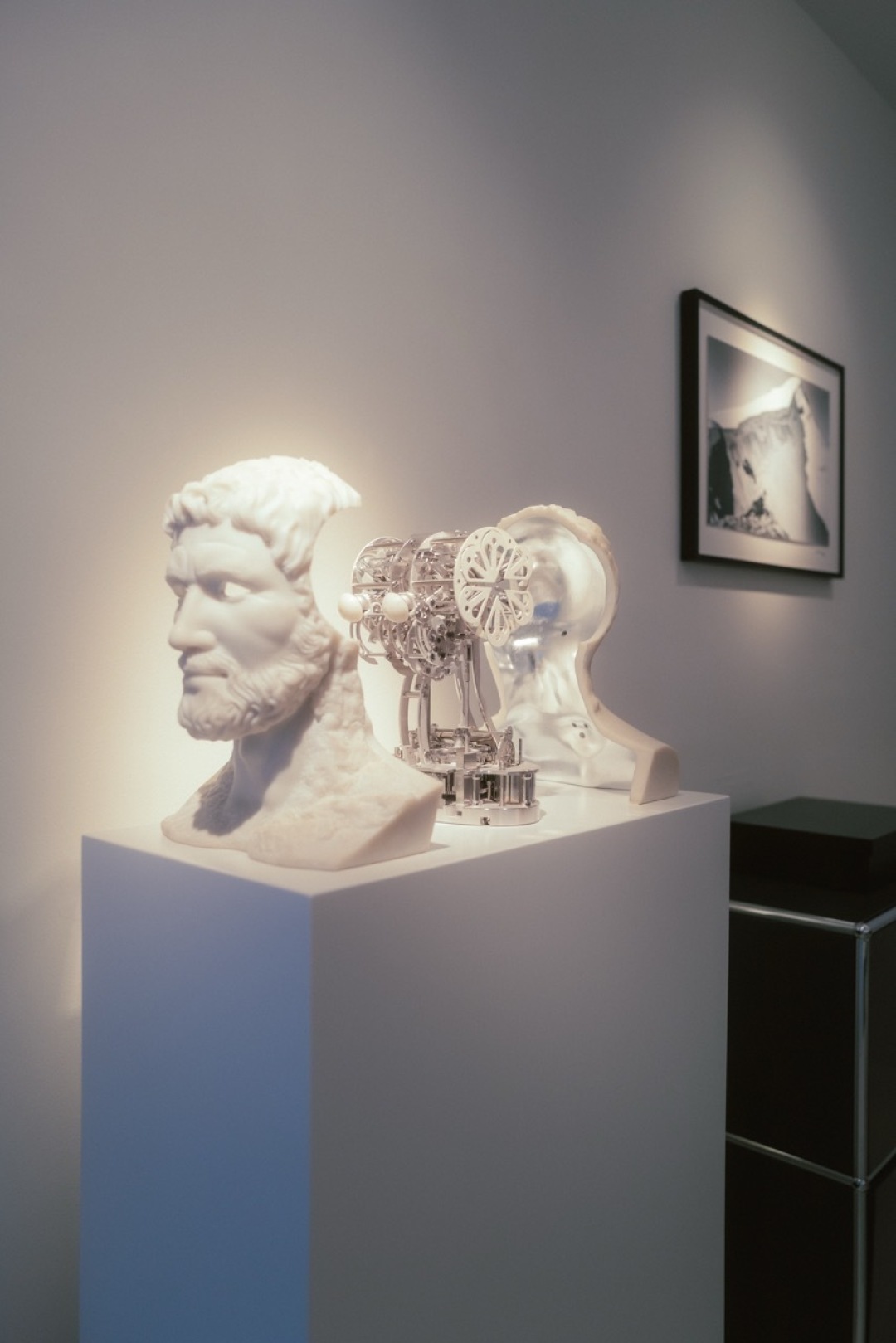
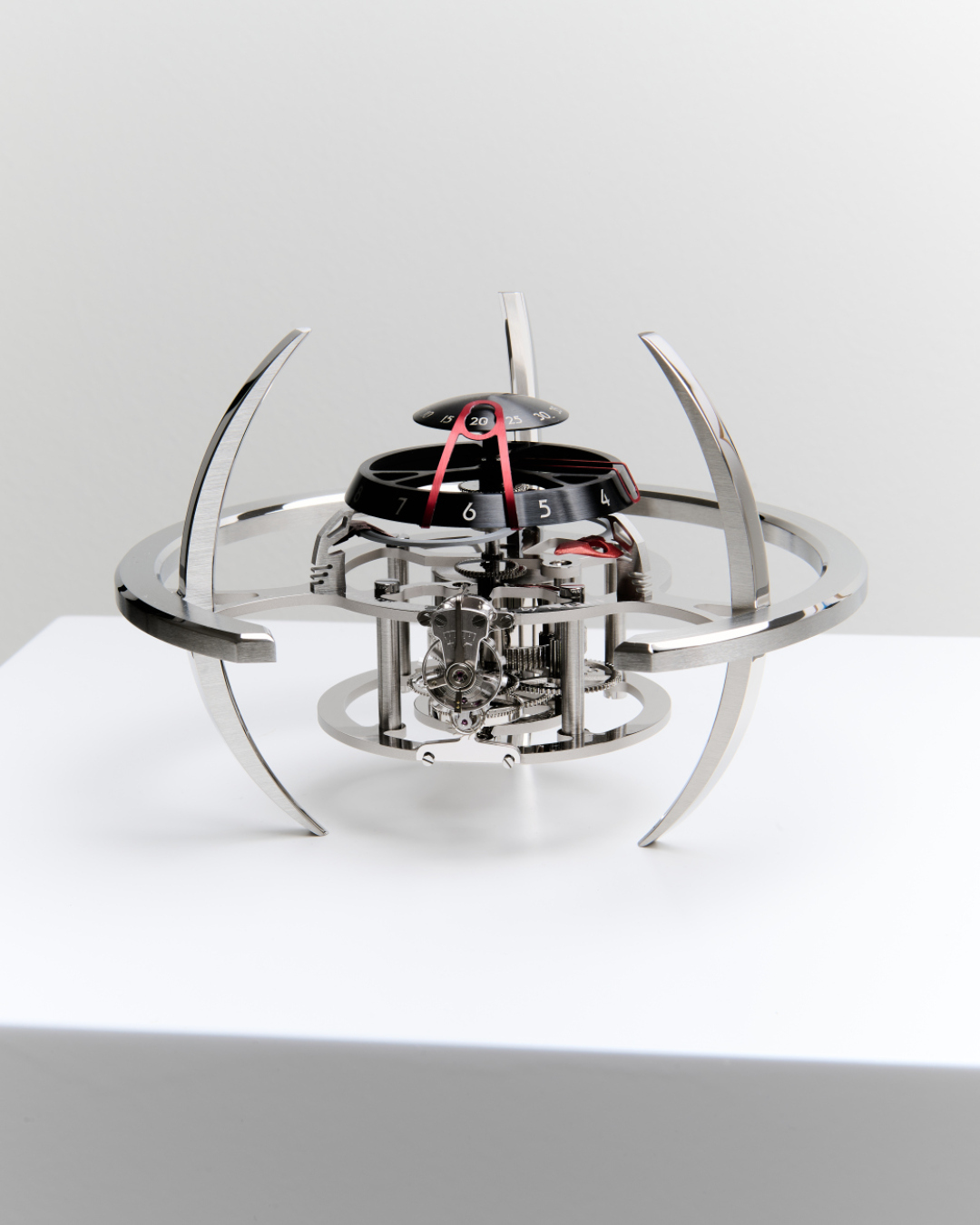
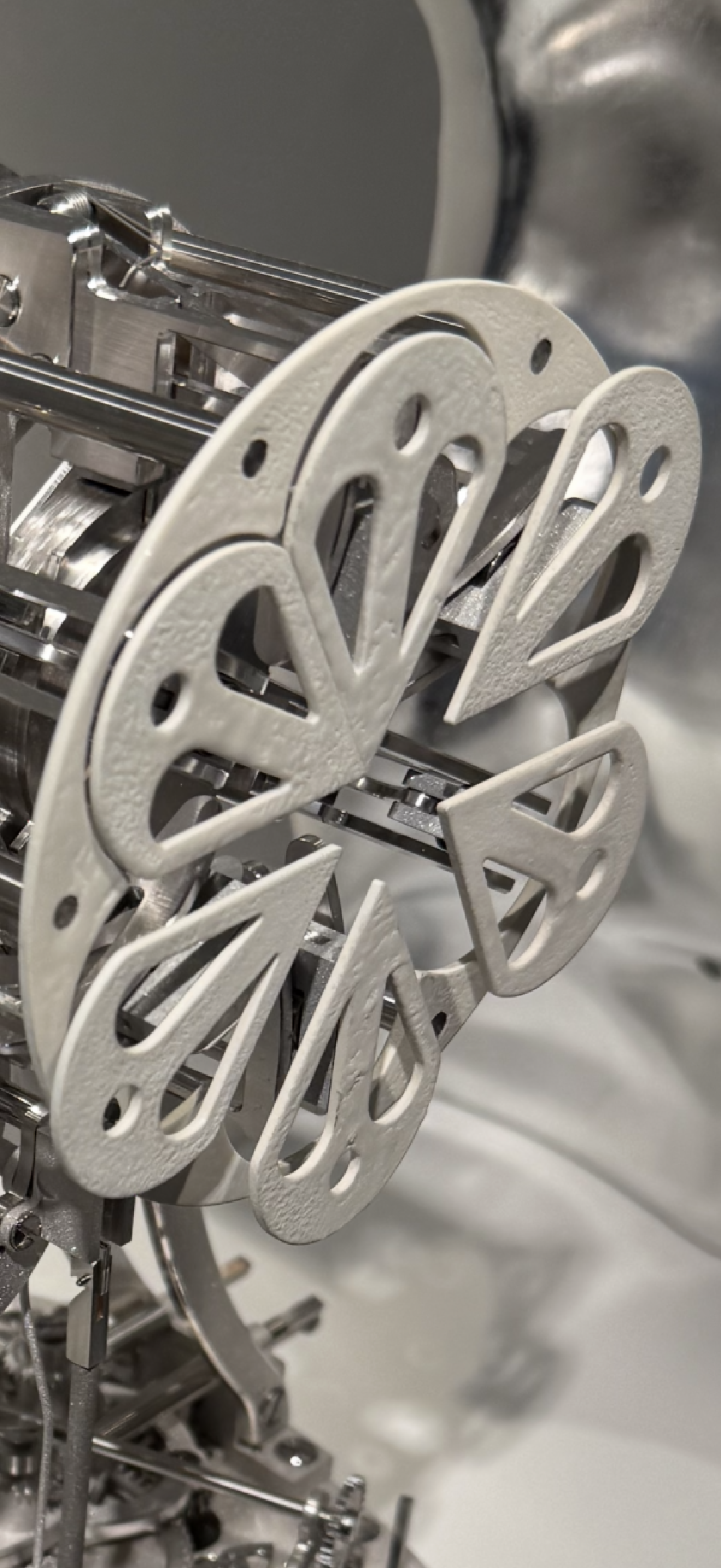
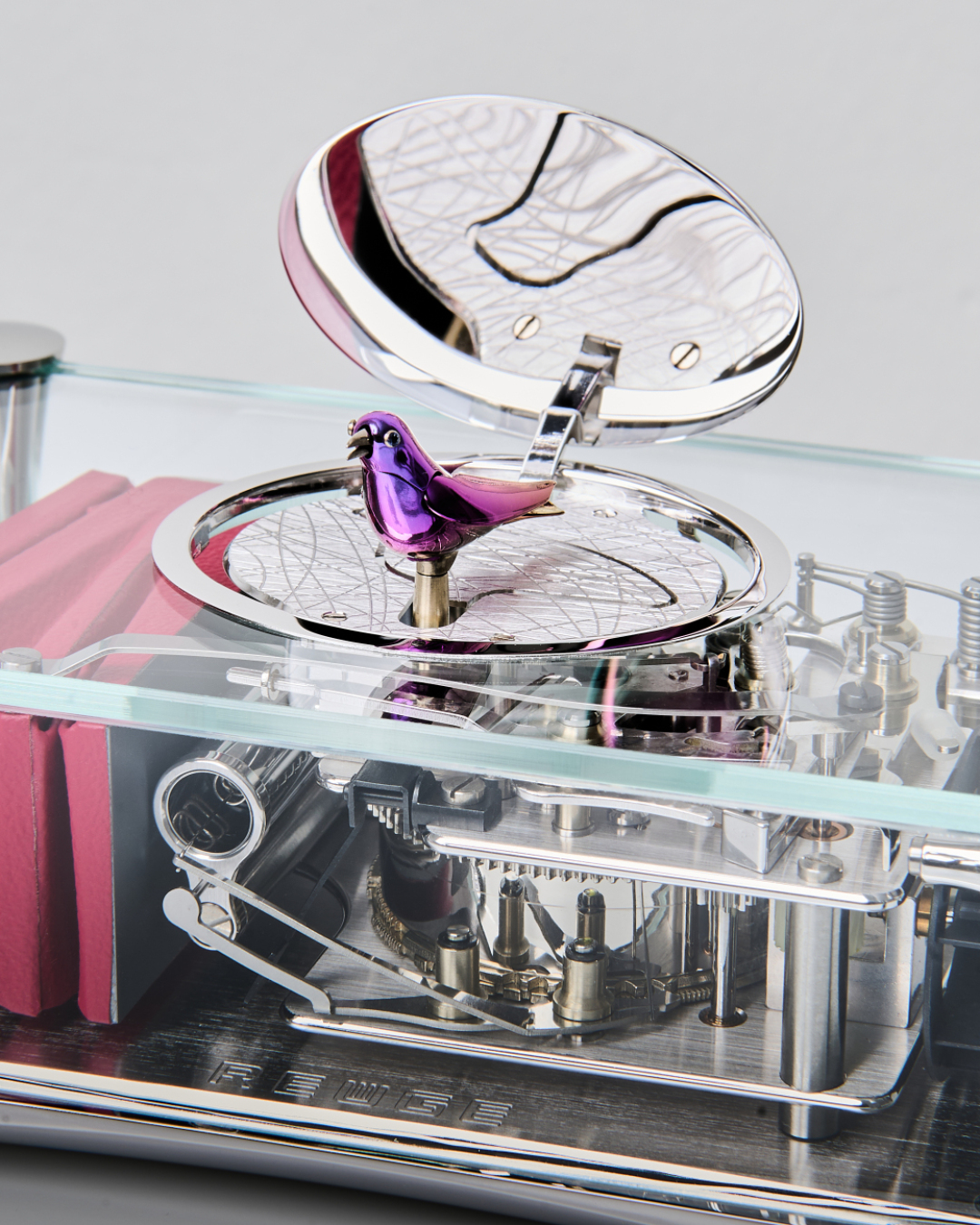
Scheufele, founder of Art in Time, gestures towards a sculptural mechanical object that dominates the space. “I could speak about this piece for the rest of the afternoon,” he says, smiling. The object engages more than sight. “It requires all senses: hearing, touch, even smell. And yet it’s mechanical.” At its centre, a flower-like petal structure marks the passing of hours as individual elements slowly emerge, accompanied by sound. “You cannot pretend that you need this to tell the time,” he adds. “That’s not the point.”
Time, in Scheufele’s view, does not need explaining, but it does need reminding. “It never stops,” he says. “Whether we notice it or not. These devices exist to make us aware. We are surrounded by time. It’s our consciousness.”
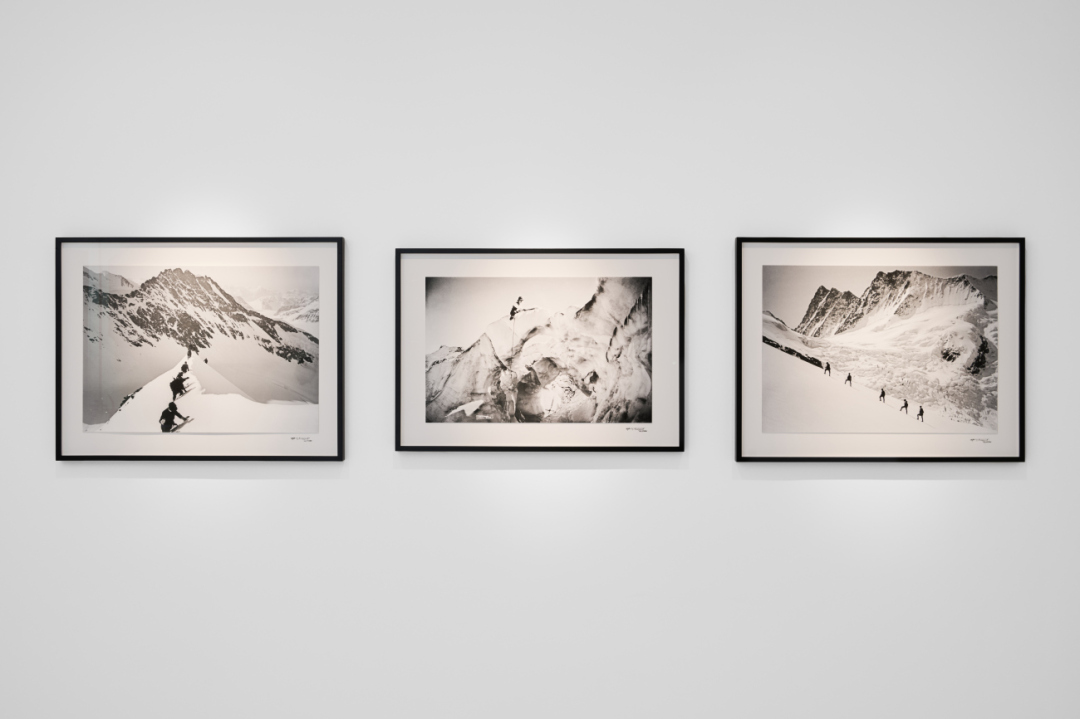
What sealed the connection was Scheufele’s long-standing interest in Jacques Naegeli’s photographic archive: mountains and glaciers captured as witnesses to geological time. “He owned the book before we even met,” Anna Högl recalls. “There were already signs of a future encounter.”
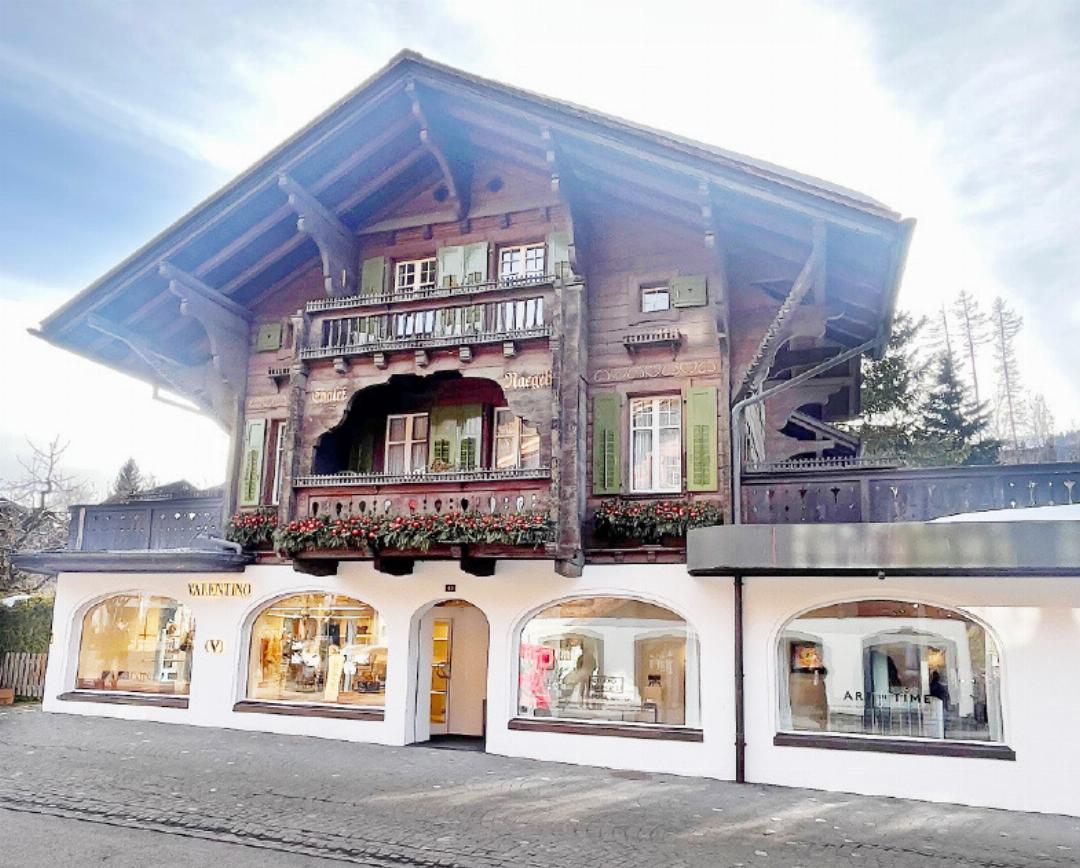
That awareness finds a natural counterpart in Studio Naegeli, housed in the former photographic studio of Jacques Naegeli. For Anna and her partner Christian Högl, the collaboration with Art in Time had been imagined long before it took shape. “We were open to working with watchmaking,” Christian adds, “but only if it was very specific."
We work with the photographic archive of Jacques Naegeli (1885–1971), which is an integral part of Studio Naegeli’s activities and one of the few remaining cultural witnesses of the region’s local history. For us, presenting this heritage is just as important as developing a strong and relevant contemporary program that reflects the region’s growing engagement with contemporary art.
The region is increasingly opening up to contemporary art, with festivals such as Elevation 1049, new galleries, and now also an art fair attracting a new audience. Our visitors often share an interest in both contemporary art and high-quality collectable objects, including fine watchmaking. That is why the collaboration with Art In Time feels especially organic and meaningful in this context.
For Scheufele, such continuity matters. “Any collaboration has to make sense,” he says. “I’m passionate about mountains, photography, and art. But also, about showing the side of watchmaking, people rarely see the craftsmanship, the workmanship, the human knowledge behind it.”
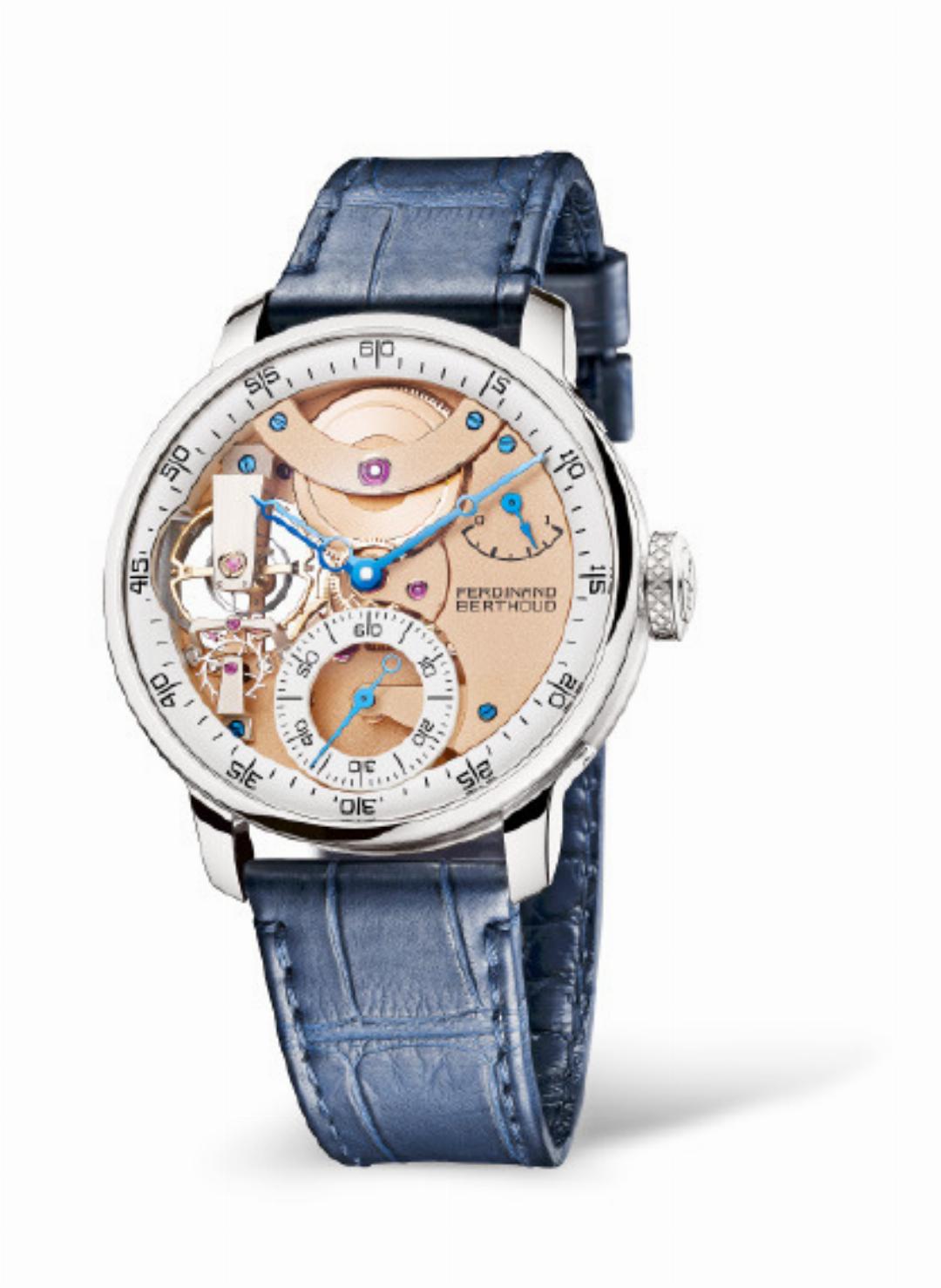
That conviction led him to found Art in Time in Monaco in 2019, after reviving the historic watchmaker Ferdinand Berthoud years earlier. “I realised how difficult it was to find people who could truly explain these watches,” he says. “Independent watchmakers produce only a few pieces a year. They don’t have platforms. It’s like artists without galleries.”
Art in Time became exactly that: a forum rather than a marketplace. Scheufele avoids the word “brands.” “We gather names,” he says. “Friends.” Some grow and move on; others remain intentionally small. “If someone wants to make one watch, they make one. If they want to make ten, they make ten.”
At this point, it would be easy to misread Scheufele’s insistence on durability and craft as resistance to the present. Listening to him speak, however, reveals something far more measured. He is not anti-technology, nor nostalgic. What concerns him is not innovation itself, but fragility.
Mechanical objects, he argues, are intelligible across generations. A clock made three centuries ago can still be wound, repaired, and understood. Digital devices, by contrast, are opaque and short-lived. “A phone might end up in a museum,” he observes, “but in 200 years’ time you won’t be able to switch it on. The clocks we already have, they still work.”
This is not an argument against progress, but a concern for continuity. Progress, in Scheufele’s view, only makes sense if it does not sever our ability to transmit knowledge, skill and meaning. That position underpins both Art in Time and Temporal Matter.
The parallels between art and watch collecting run deep.
Both, Scheufele believes, preserve knowledge. “A mechanical clock that is 300 years old still works today,” he says. “You wind it. You repair it.”
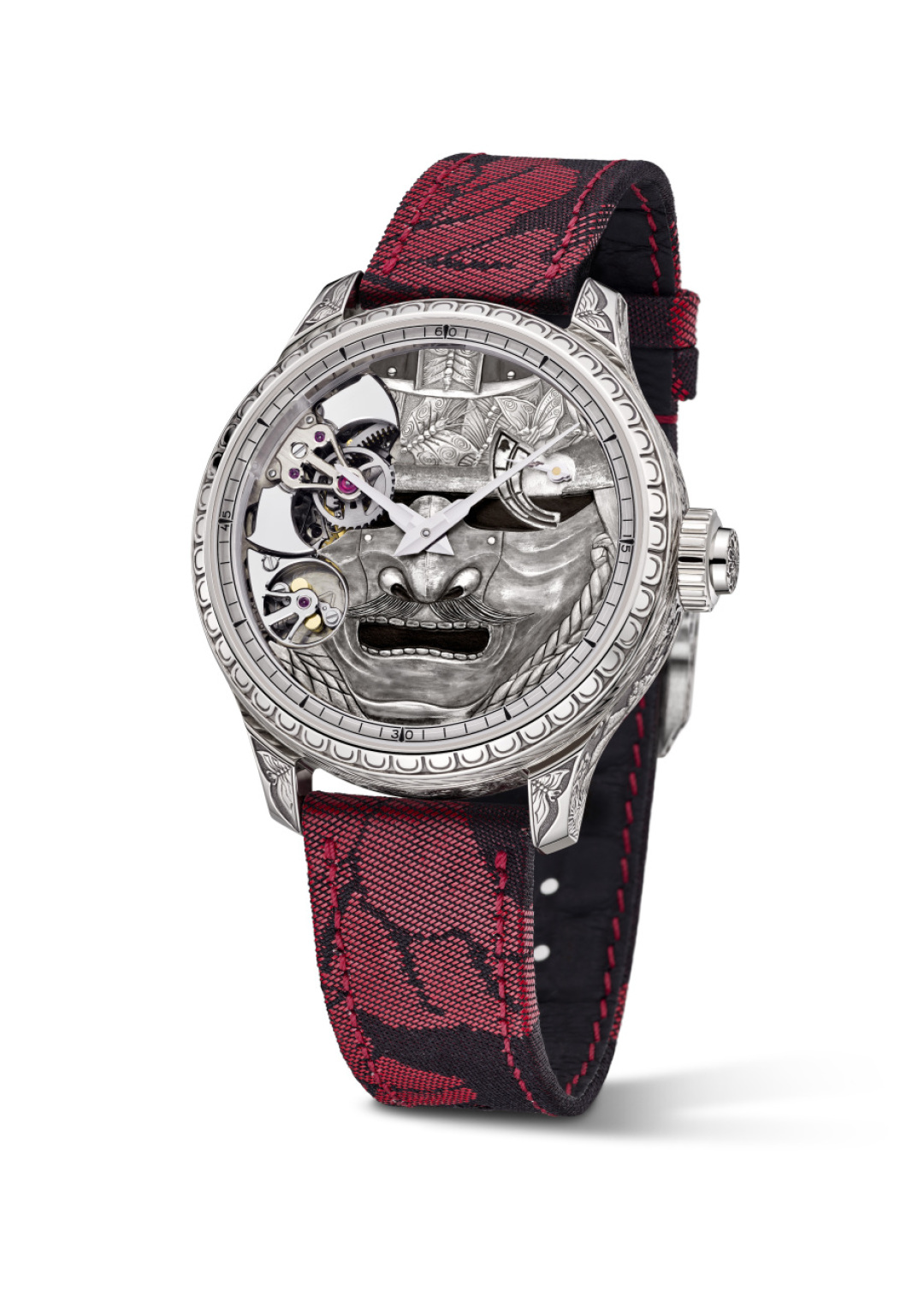
This concern for durability extends to craft. Enamelling, hand engraving, urushi lacquer – skills that are becoming rare. “Once knowledge disappears, it’s very hard to recover,” he says. “We’re lucky to work with masters who also want to teach.”
Anna Högl echoes this thinking from a curatorial perspective. “We live between two movements,” she says. “On one side, rapid digitalisation. On the other hand, a growing appreciation for physical knowledge and authenticity.”
For Anna Högl, time has long been a subject of research.
From an anthropological perspective, she examined how cultural, social, and bodily practices shape how humans experience and inhabit temporal reality.
“It is one of the themes I find especially interesting to return to and wish to further develop in future curatorial projects.”
One example was her curatorial project Waiting Society, devoted to the experience of timelessness – the period of waiting, being in between. The project grew from her research into societies that spend long periods in transition, shaping a collective sense of anticipation. Högl explored contrasting cultural models: in some, waiting is a harmonious pause; in others, it is seen as “lost time,” a system failure where everything must be fast and efficient.
In contrast, the current exhibition invites you to feel this unique moment, to dedicate your time to exploring the works, to immerse yourself in the process, and perhaps pause for a while. To sense how many hours of handcraft went into creating each timepiece and other works, and to give yourself the chance to appreciate it fully.
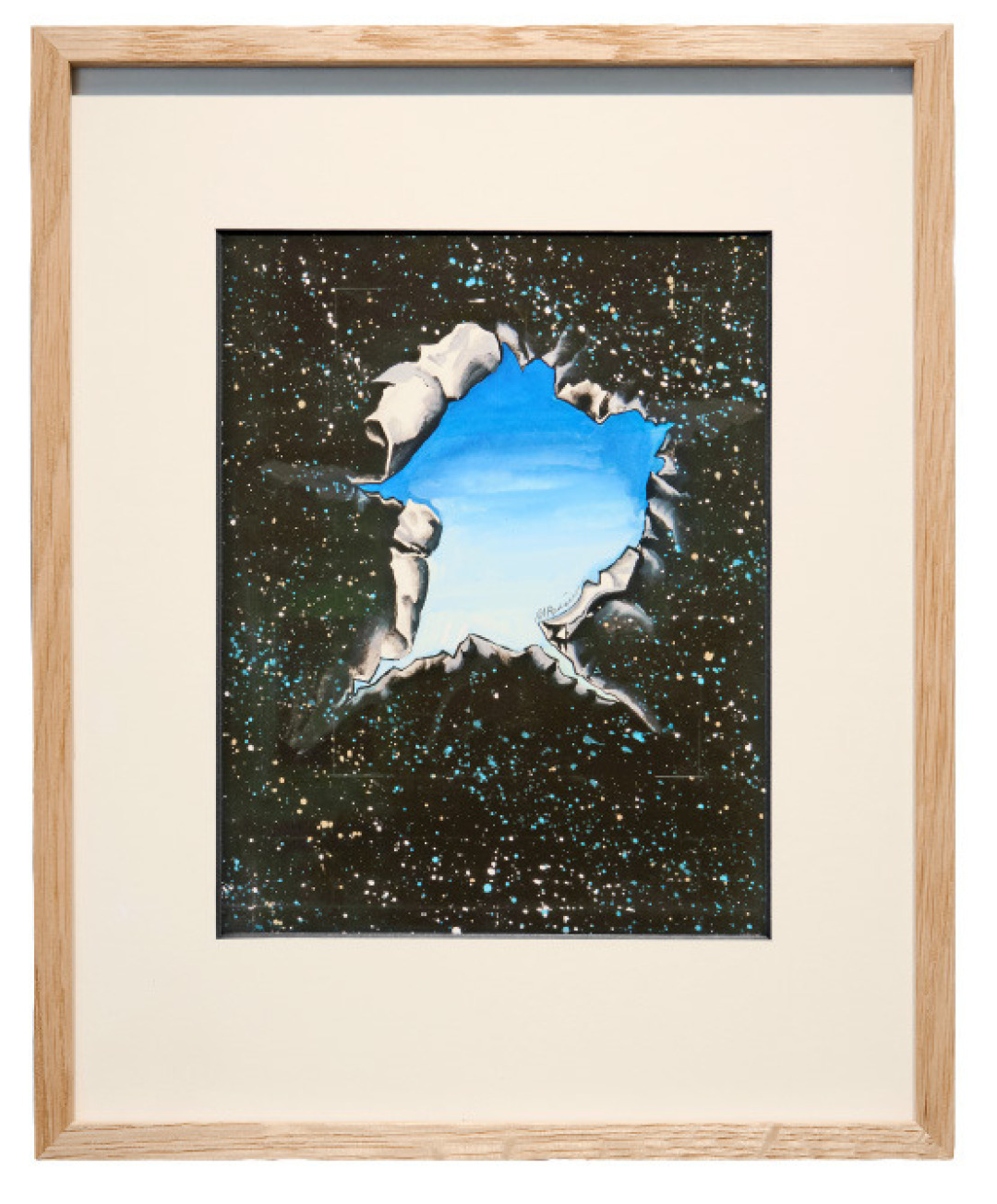
In Temporal Matter, that tension becomes visible: miniature paintings alongside cosmic imagery; mechanical precision next to conceptual pauses. “Time perception cannot be explained in one way,” she adds. “It’s human, but also universal.”
Mikhail Romadin’s illustrations from 1978 on space exploration, as well as his painting Reflections, engage with themes of time and cosmic space, recalling his approach in the film Solaris.
This reflection became the foundation for Temporal Matter. The title suggests that time is not only abstract but also tangible, with density, rhythm, and texture. Curator Anna Högl invites viewers to experience all these facets:
“Just walk quietly and listen to the ticking of the clocks, to realise I am here now, I am living in this moment, this is my time.”
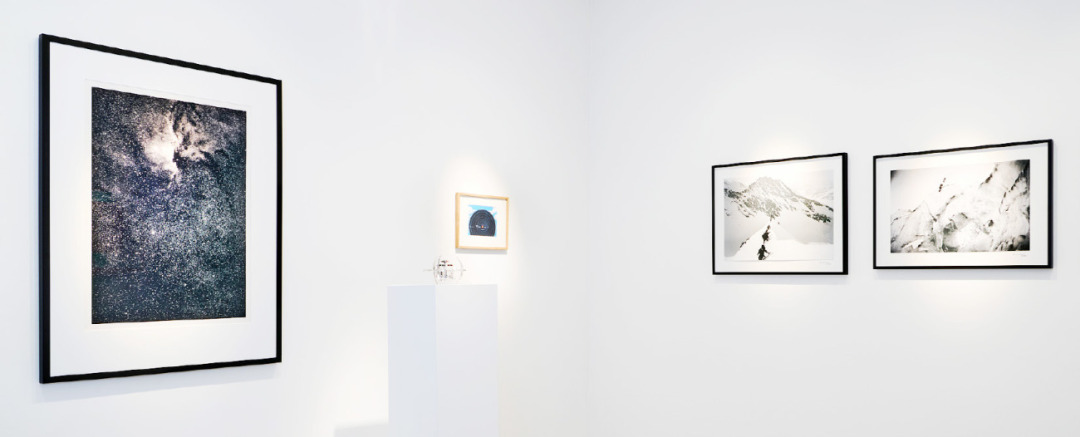
The exhibition explores different scales of time. Thomas Ruff’s photographs of constellations evoke cosmic cycles far beyond human life. Jacques Naegeli’s archive captures vanished glaciers and landscapes, recording forms, some of which no longer exist, and conveying the delicate passage of time. As early as the 1940s, Naegeli’s work shows a deep awareness of how moments unfold in nature, emphasising the value of perceiving the fleeting present; the rhythm of melting ice, shifting clouds, and changing terrain becomes a meditation on temporality itself.
Each photograph was the result of a painstaking, slow process, in stark contrast to the speed and immediacy of contemporary photography. His images invite contemplation of both historical duration and immediate experience, connecting past, present, and memory.
Carl Andre’s textual and material works highlight perceptions of duration and spatial presence, while Olga Tatarintsev uses philosophical texts from earlier eras to describe her present state. Fanny Brennan’s miniature surreal compositions invite slow, attentive observation while Jean Tinguely’s sketches for his kinetic works emphasise movement and rhythm, making time visible as a process.
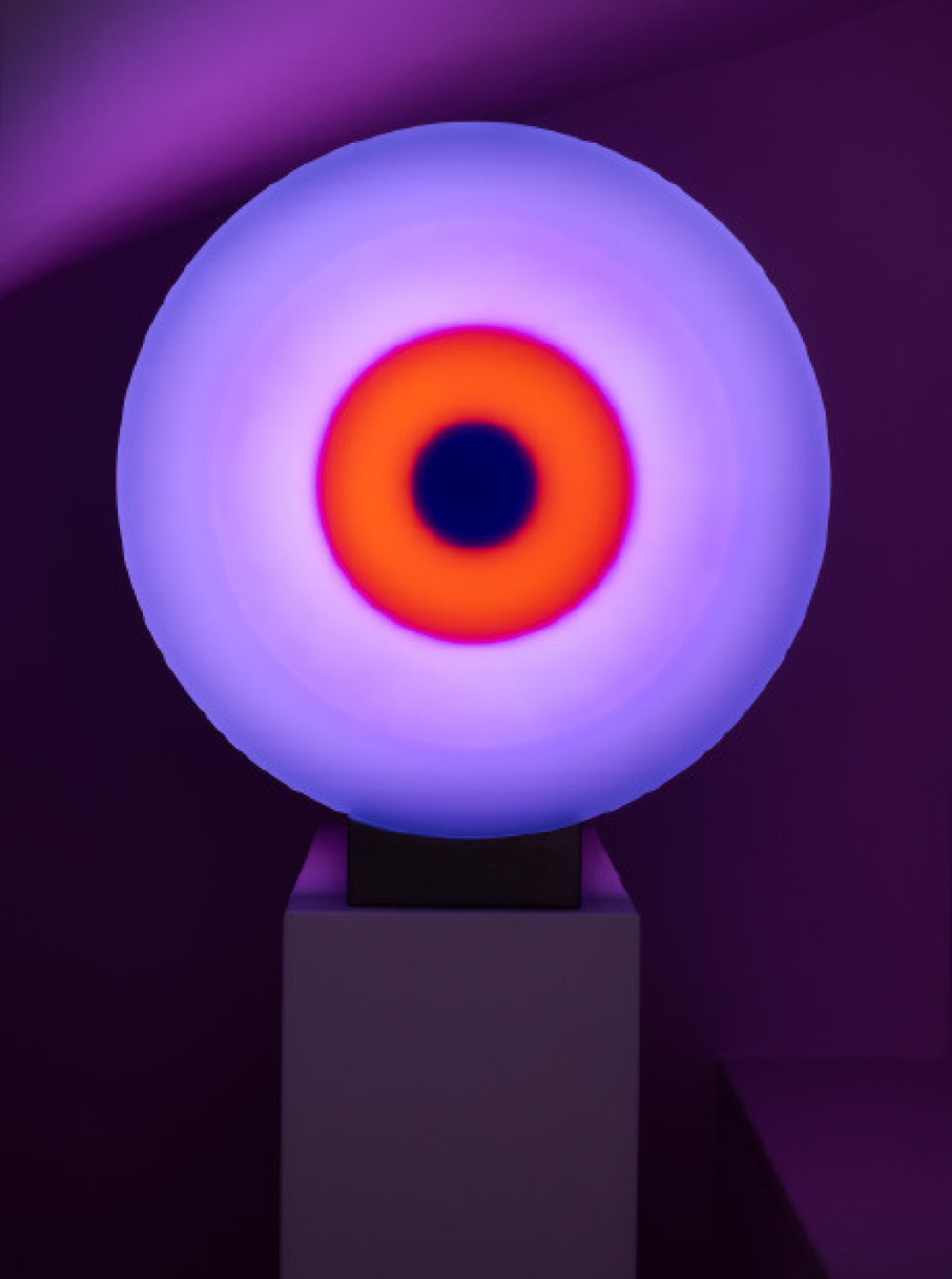
Finally, Jonas Wyssen accelerates centuries-long processes of rock formations using AI technologies, while Philippe Vermeulen's colourful light installations invite viewers to slow down and fully experience the present.
One of the works at Temporal Matter is You Are Here, by the Dutch artist Philip Vermeulen, known for his sound-visual “hypersculptures” that investigate human perception. This time Vermeulen transforms speed and intensity from his immersive large-scale installations into a sculpture of stillness.
In You Are Here, static and dynamic meet, inviting viewers to sense the flow and suspension of time. The sculpture's almost cosmic circular form enhances the experience, evoking both presence and infinity. Placed in a cosy corner, the work becomes a special discovery at the exhibition, offering visitors a meditative space for reflection.
The exhibition was curated organically, through dialogue rather than sequencing. “Some combinations happened almost by coincidence,” Anna notes. “But they felt right.” There is a path through the exhibition, though not a linear one. It is an invitation to slow down, to remain present.
Scheufele’s own relationship with art began early. Drawing, painting, sculpture, and he almost chose a different path. “Watch dials are like canvases,” he says. “That’s how I see them.” His private art collection, largely centred on time as a subject, remains unseen. “For now,” he adds.
Perhaps the most radical gesture in this exhibition is its resistance to speed. “Fast consumption is dangerous,” Scheufele says. “We’ve forgotten what it means to wait.” His favourite dictum – borrowed from wine and attributed to Gauguin – returns more than once:
What takes time, time will respect.
As the conversation draws to a close, the scale widens again. Time as philosophy, time as measurement, time as material.
“It’s almost a universe,” Scheufele says.
“That’s the point,” Anna Högl replies. “To open doors.”
JEANETTE WICHMANN
Anna Högl & Christian Högl Studio Naegeli
Founded by Anna, the art curator and Christian, the great-grandson of Jaques Naegeli, Studio Naegeli is housed in the former photographic studio of Jacques Naegeli (1914) on Gstaad’s Promenade.
The gallery operates both as a contemporary exhibition space and as custodian of the Jacques Naegeli archive, managed in collaboration with the Swiss National Library. Studio Naegeli has presented exhibitions ranging from Mikhail Romadin and the Lalannes (François-Xavier and Claude), in collaboration with the Mitterrand Gallery, to Soundwalk Collective with Patti Smith, to the architectural figures Trix and Robert Haussmann, with a consistent focus on dialogue, process, and context rather than spectacle.
Karl-Friedrich Scheufele Art in Time · L.U.C.EUM
Karl-Friedrich Scheufele, co-president of Chopard, is a leading figure in contemporary independent watchmaking and a committed advocate for traditional craftsmanship.
Beyond reviving the historic brand Chronométrie Ferdinand Berthoud, he founded Art in Time in Monaco in 2019 as a platform dedicated to exceptional independent watchmakers.
In 2006, he opened L.U.C.EUM in Fleurier, a private museum that explores time, from its earliest instruments to contemporary horology.
He is strongly committed to linking mechanics, art, and cultural heritage while actively fostering the transmission of knowledge, crafts, and savoir-faire.