



Winter in motion
05.12.2025 Local News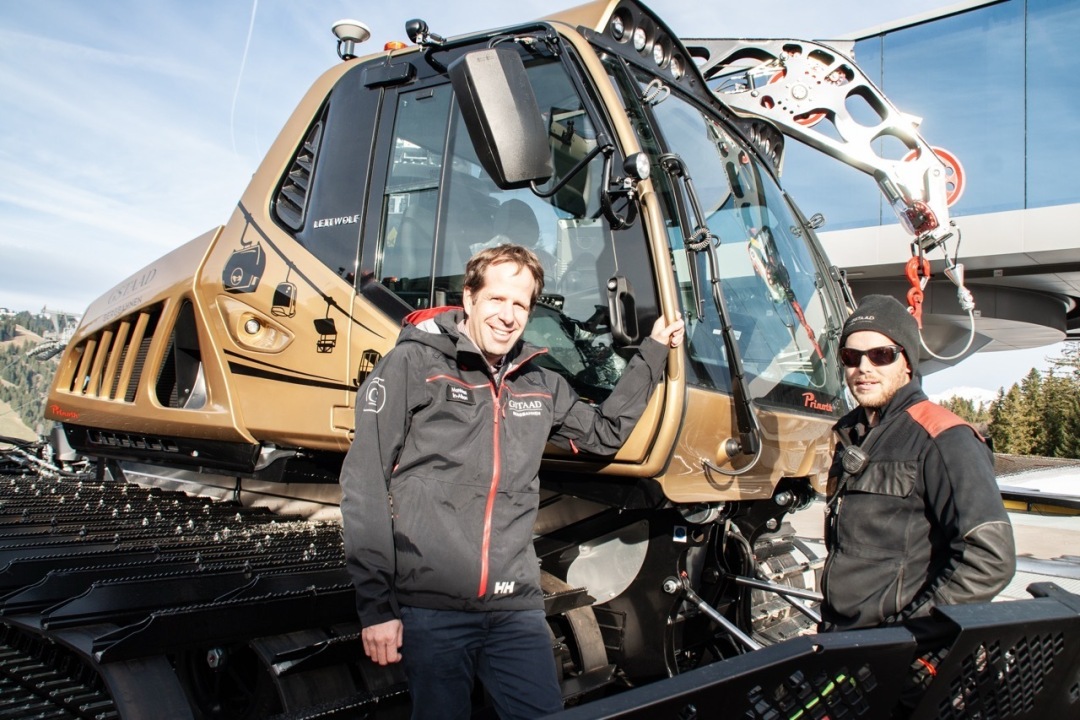
Smoother access, better snow, bigger vision(s) BDG CEO Matthias In-Albon on 10 years of change — and what to expect this winter
As he marks ten years at the helm of Bergbahnen Destination Gstaad (BDG), Matthias In-Albon reflects less on milestones and more on the region itself. “I’m grateful to work in a place I deeply appreciate, with strong communities and people who genuinely care about “ünseri Bärgbahni,” he says.
The past decade has been anything but quiet: new lifts, restructuring, the pandemic, the energy crisis, and now the transition to the Magic Pass. And yet, one message runs through the conversation: Gstaad’s mountain lifts remain essential infrastructure, not just for skiers, but for the entire local economy.
The Magic Pass: why now, and what does it change?
After years in the Top4 alliance, BDG observed a clear shift: prices were increasing, and guest numbers were declining. Meanwhile, Magic Pass expanded quickly, and Gstaad now sits at the centre of its catchment area.
“Staying outside an alliance would have meant continuing to lose guests,” In-Albon says. “Magic Pass fits us geographically, in price, and importantly: it is a year-round product.”
The first summer already brought noticeably more guests and greater local value creation. Roughly 40% of Magic Pass summer users were locals, showing that the product also resonates with the resident community.
With the pass now valid in winter, BDG expects more visitors, which is good news for lifts, restaurants, ski schools, sports shops, and the broader local economy.
What’s new this winter
GstaadLife readers will notice three concrete changes:
• Earlier start to the ski day – many lifts will now open at 8:30.
• Around 1,000 additional temporary parking spaces across the main access points.
• More visitors thanks to the Magic Pass. Snowmaking has been strengthened in Zweisimmen, Rübeldorf and Chalberhöni, supported by five new groomers with snow-depth measurement, a meaningful step toward more reliable early-season openings.
Smoother arrivals = better ski days
More guests mean more cars, but BDG says it is ready. With nearly 4,000 parking spaces throughout the area and improved public transport from the Bern side, the system can manage peak days — especially as locals and hotel guests tend to arrive at different times. Together with the municipalities, BDG has introduced additional signage, a clearer traffic regime, more parking stewards, and is preparing an updated guidance system for next winter. Strengthening Zweisimmen as a main entry point is essential: direct trains make it ideal, and the improved snowmaking on the valley run aims to encourage more skiers to start there rather than drive further up the valley towards Gstaad.
A game-changer for snow reliability
One of the most significant future projects, and most relevant to skiers, is the expansion of the Hornberg reservoir.
The new lake will be five times the size of the current one and will enable BDG to snow an entire sector, including valley runs, within 72 hours, provided temperatures are sufficiently cold.
Today, the existing lake empties after a single day of snowmaking. The upgrade will make early-season openings far more reliable and allow BDG to fully use short cold spells, something increasingly vital in Alpine winters.
Approval processes are ongoing; the earliest possible opening will be winter 2028/29.
A vision for the next decade
Asked what he hopes for ten years from now, In-Albon keeps it simple:
“That we preserve what makes the Saanenland special, while staying open to the steps needed for the future. The success of our region will always depend on how well we stand together.”
BASED ON AVS