

The Texas Longhorns of Saanenland
17.07.2026 Lifestyle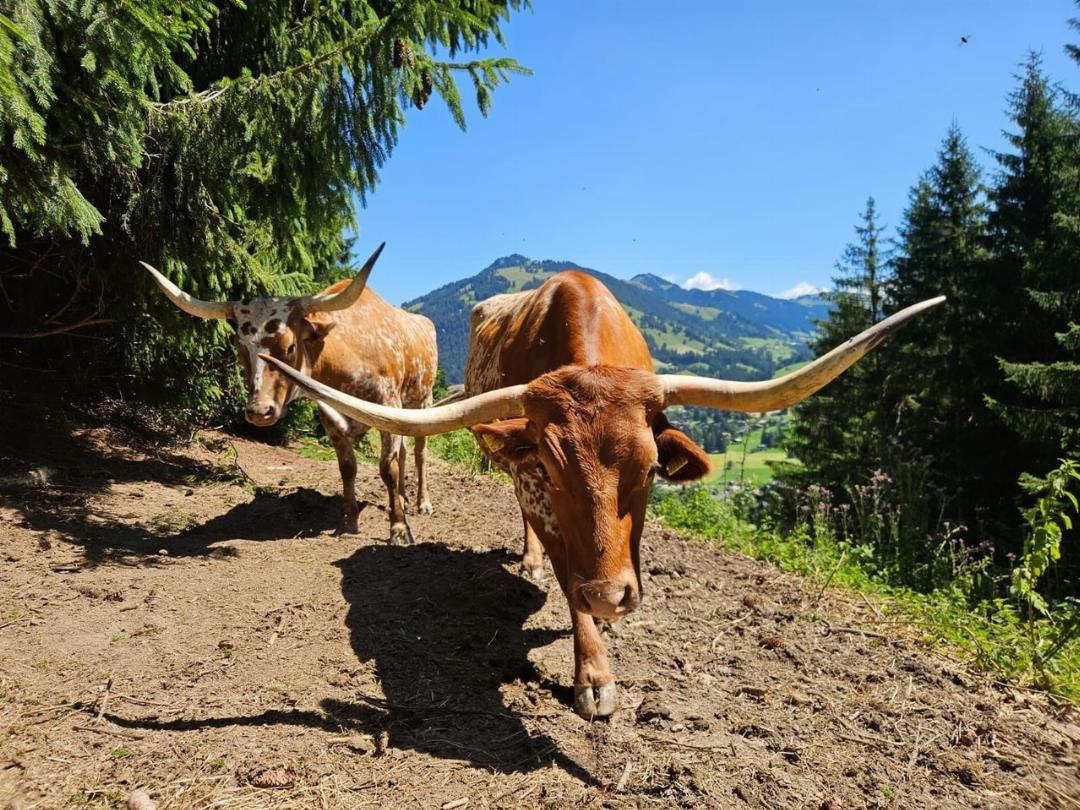
IN CONVERSATION WITH FLAVIO HAUSWIRTH
If you drive along the road from Saanen to Gstaad and glance to your right, you will see something that does not quite fit. These are not the fawn-coloured Alpine cattle you see everywhere else in the Saanenland. ...
IN CONVERSATION WITH FLAVIO HAUSWIRTH
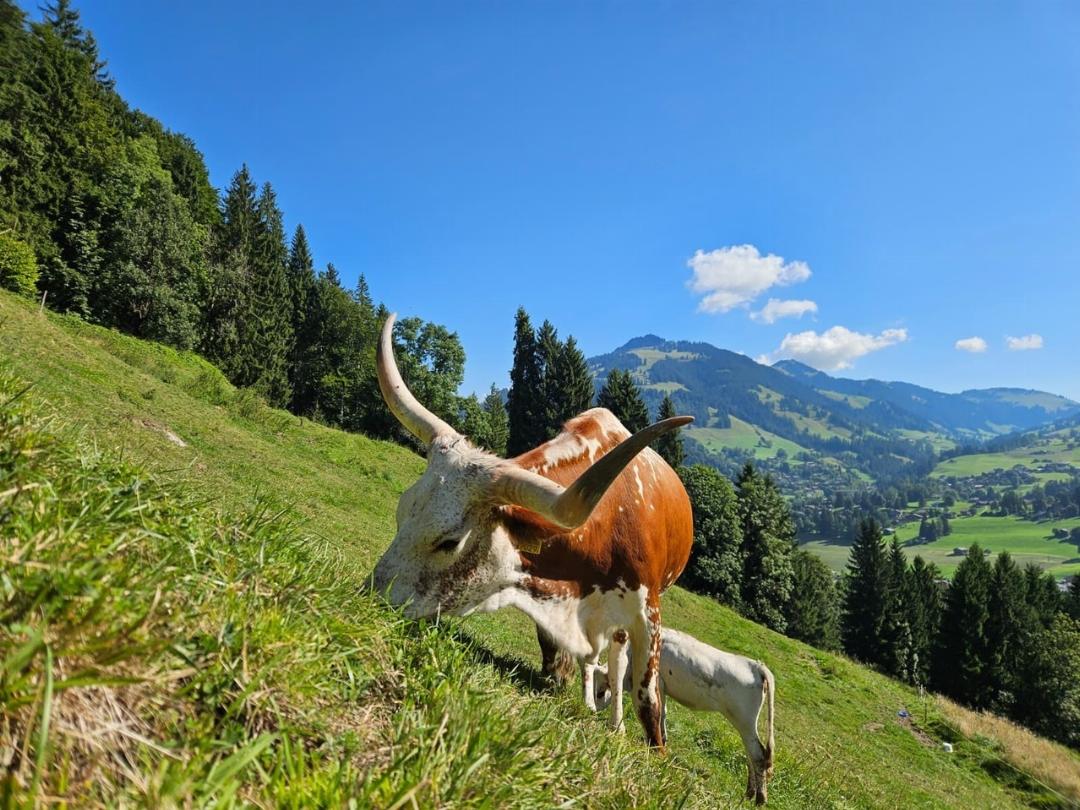
If you drive along the road from Saanen to Gstaad and glance to your right, you will see something that does not quite fit. These are not the fawn-coloured Alpine cattle you see everywhere else in the Saanenland. I slowed down the first time I passed them, genuinely unsure what I was looking at. Buffalo, I decided - which, as it turns out, shows how much I know about cattle. In fact, they are Texas Longhorns.
I learned this when I met Flavio, not on the farm but at his day job at Daniel Reichenbach AG, the firm behind some of the most beautiful custom fireplaces and restored ceramic stoves in the region, work I have written about for this magazine before. We were chatting when he mentioned, almost in passing, that his family own the cattle on the Saanen road. He runs the farm with his wife, Nicole, and their children, Elias, Lina, and Delia.
Texas Longhorns in the Saanenland … I had to learn more.
AN UNLIKELY IMPORT
Texas Longhorns first came to Switzerland in 2004. Flavio and Nicole acquired their herd in 2022 from two Swiss breeders, thereby becoming part of a small and growing community of farmers drawn to a breed with no obvious Alpine precedent. Their reason for choosing them is straightforward and rather appealing. "We wanted something that nobody else in the region had," he says.
It turns out to be a practical choice as much as a distinctive one. Longhorns are undemanding, resilient and long-lived; antibiotics are virtually never needed, and their relatively light frame makes them surprisingly well-suited to Alpine terrain. They are sure-footed, adaptable and easy on the land. They thrive on lower-quality pastures and cause minimal ground damage, contributing to the landscape while standing out in it. The horns grow naturally into their dramatic shape without intervention, and they come in almost every possible coat colour. No two look quite the same.
PEACEFUL GIANTS
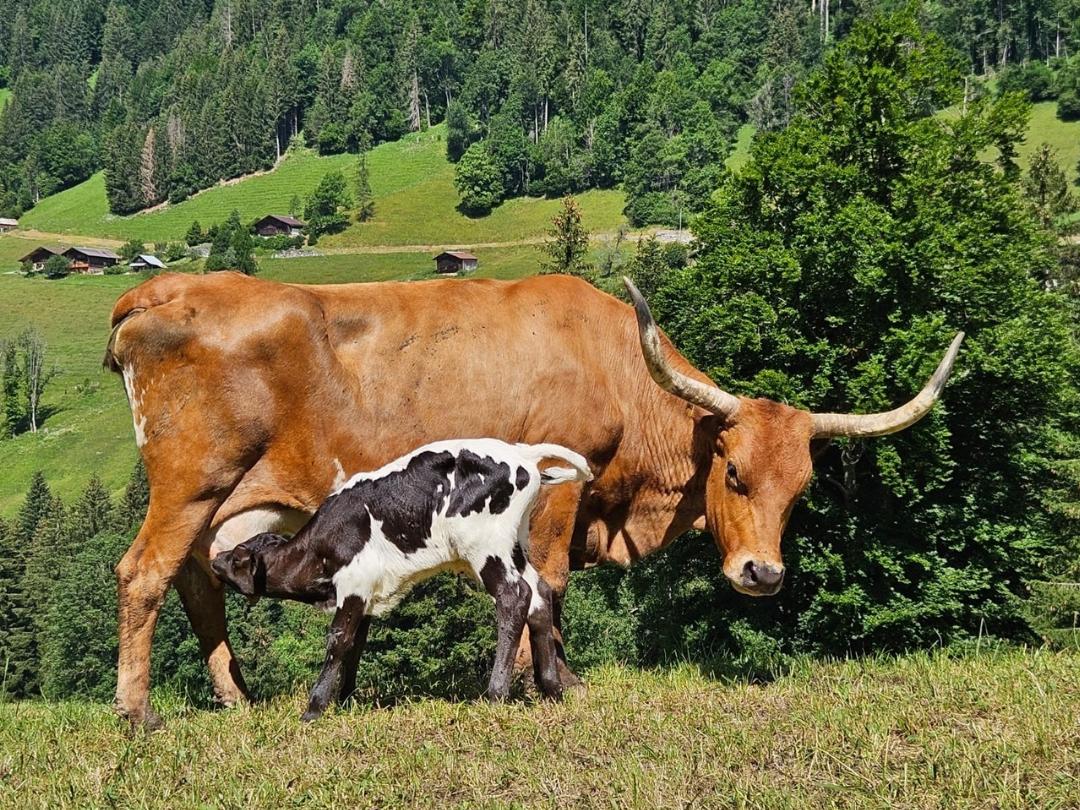
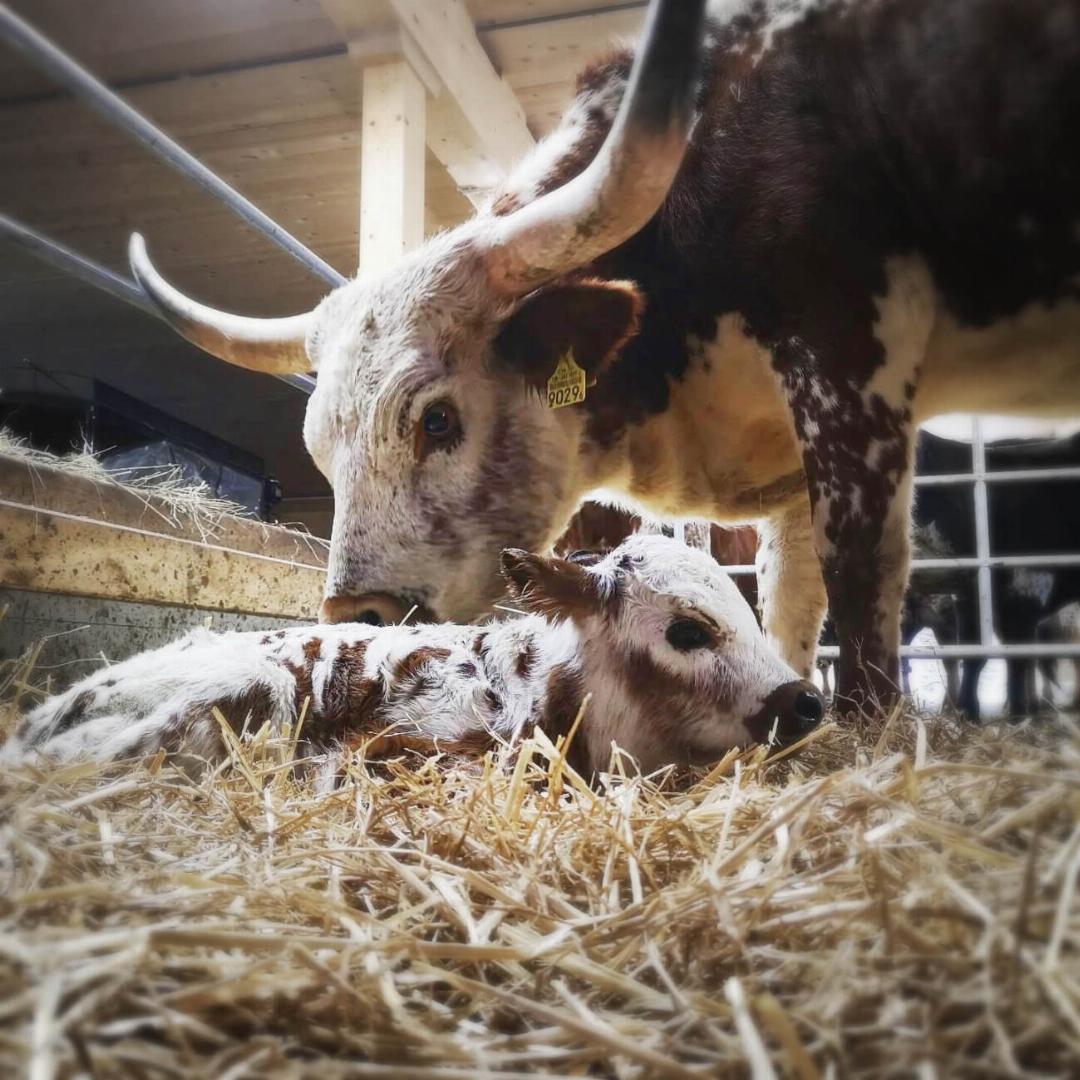
The breed's temperament surprises most people. Despite the imposing spread of those horns, Flavio describes his herd as thoroughly peaceful - calm with each other, calm with people and notably unfazed even when cows have young calves. Injuries are rare. The calves themselves, he explains, have their own ideas about how life should be lived. They disappear into the bushes or forest to hide, sometimes for hours. In the early days, Flavio would go looking for them. Now he has learned to leave them alone. They always come back on their own.
In summer, the herd moves to the pastures. In winter, they are in the open barn. The routine, as Flavio describes it, is unhurried: they are either lying around or eating. It is, by any measure, a good life.
MORE THAN A CURIOSITY
The farm sits along the main road, which means the Longhorns have become an unlikely attraction. The "wow factor," as Flavio puts it, is considerable. Visitors and passing tourists regularly stop to photograph them, drawn by the same double-take that first caught my attention.
But the cattle are more than a roadside spectacle. The herd is bred primarily for meat, all of it marketed directly by the family. Each year, a few animals are sold to the Posthotel Rössli. They are in no hurry to expand the business. This is a small operation done well, and the family intends to keep it that way. There is something fitting about a man who works with antique ceramic stoves and custom fireplaces, also keeping a herd of Texas Longhorns in the Swiss Alps. Both involve an appreciation for things built to last, and that stop people in their tracks.
Next time you drive the Saanen – Gstaad road, look to your right. You will know them when you see them.
ANNA CHARLES