

THE OLD KASTLANEI -A Baroque Revolution in Saanen
19.06.2026 Traditions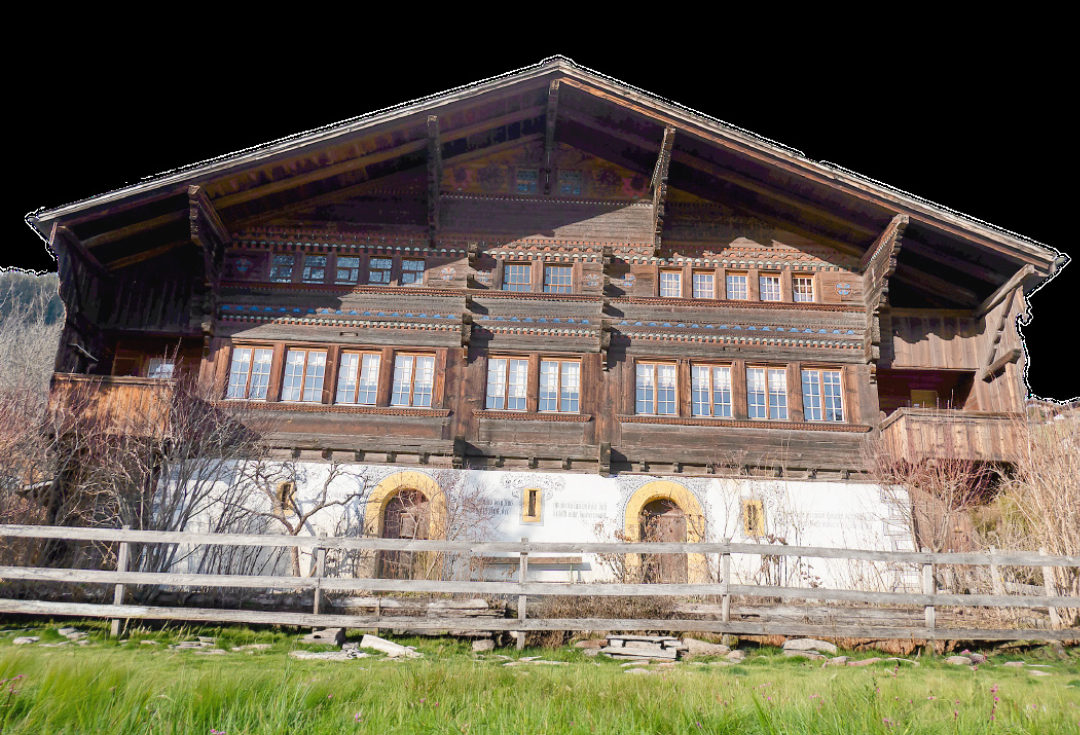
Few buildings have left a greater mark on the appearance of Saanen than the Old Kastlanei. Standing near the former hospital, the house may appear at first glance to be simply another fine example of traditional Saanen architecture. Yet when it was built in 1670, it represented something entirely ...
Few buildings have left a greater mark on the appearance of Saanen than the Old Kastlanei. Standing near the former hospital, the house may appear at first glance to be simply another fine example of traditional Saanen architecture. Yet when it was built in 1670, it represented something entirely new. Its richly decorated façade introduced a bold Baroque style to the valley and helped shape the visual language of local building traditions for generations to come.
The man behind this transformation was master carpenter Hans Tüller. By the time wealthy Saanen official Balthasar Rufi commissioned him to build his residence, Tüller had already established a reputation for pushing architectural boundaries. His earlier work, including the imposing Matti House above Saanen Church, demonstrated both technical skill and artistic ambition.
With the Old Kastlanei, Tüller took things a step further.
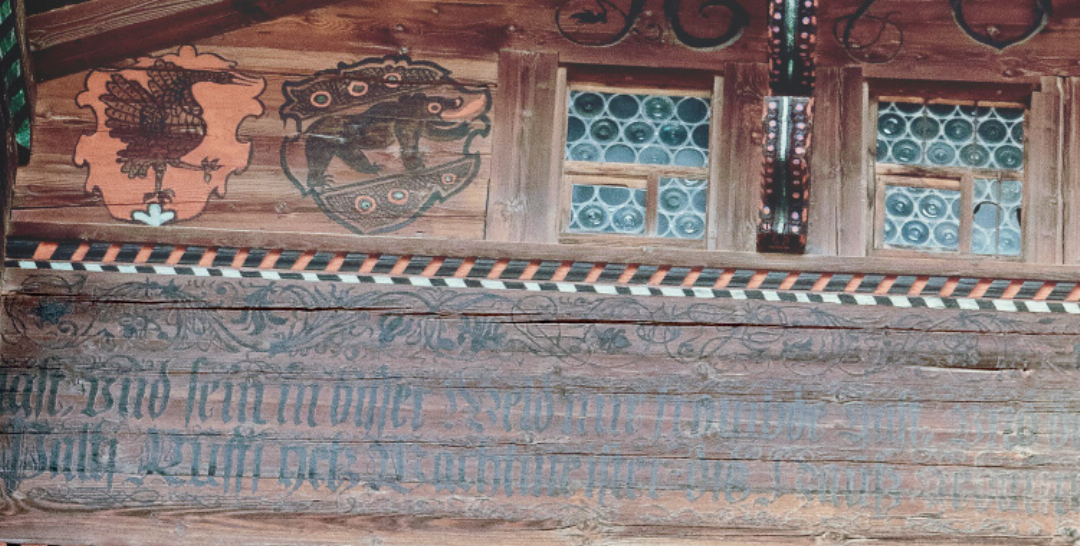
For the first time in Saanenland, an entire façade was treated as a decorative canvas. The Baroque movement, which swept across Europe during the 17th and 18th centuries, celebrated grandeur, drama and ornamentation. The Old Kastlanei embraced these ideas wholeheartedly. Curved roof-mounted wooden brackets, elaborately carved and brightly painted window sills, circular decorative motifs and an entirely new style of house inscription combined to create a colourful architectural statement unlike anything previously seen in the valley.
Decorative innovation
Among Tüller’s most distinctive contributions were decorative blind arches carved directly into the façade. Painted in vivid colours, they added rhythm and movement to the design. He mixed these new elements with more traditional geometric motifs such as cubes and diamonds, creating a rich visual tapestry.
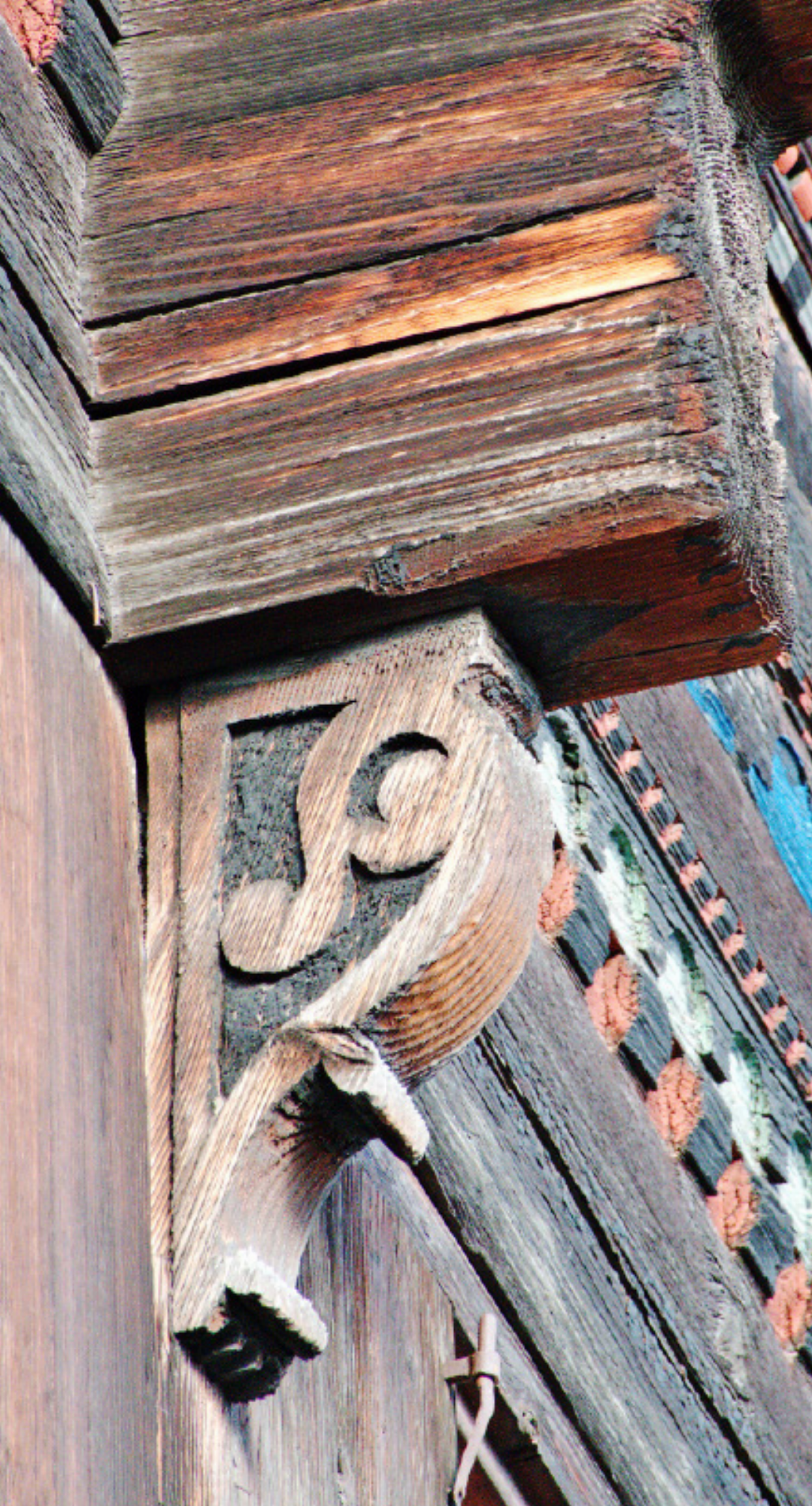
Another innovation appeared beneath the projecting beam ends. Small spiralshaped brackets seem to support the structure, but their purpose is purely decorative. These so-called “false consoles” became a recurring feature on later Saanen houses and remain part of the region’s architectural vocabulary today.
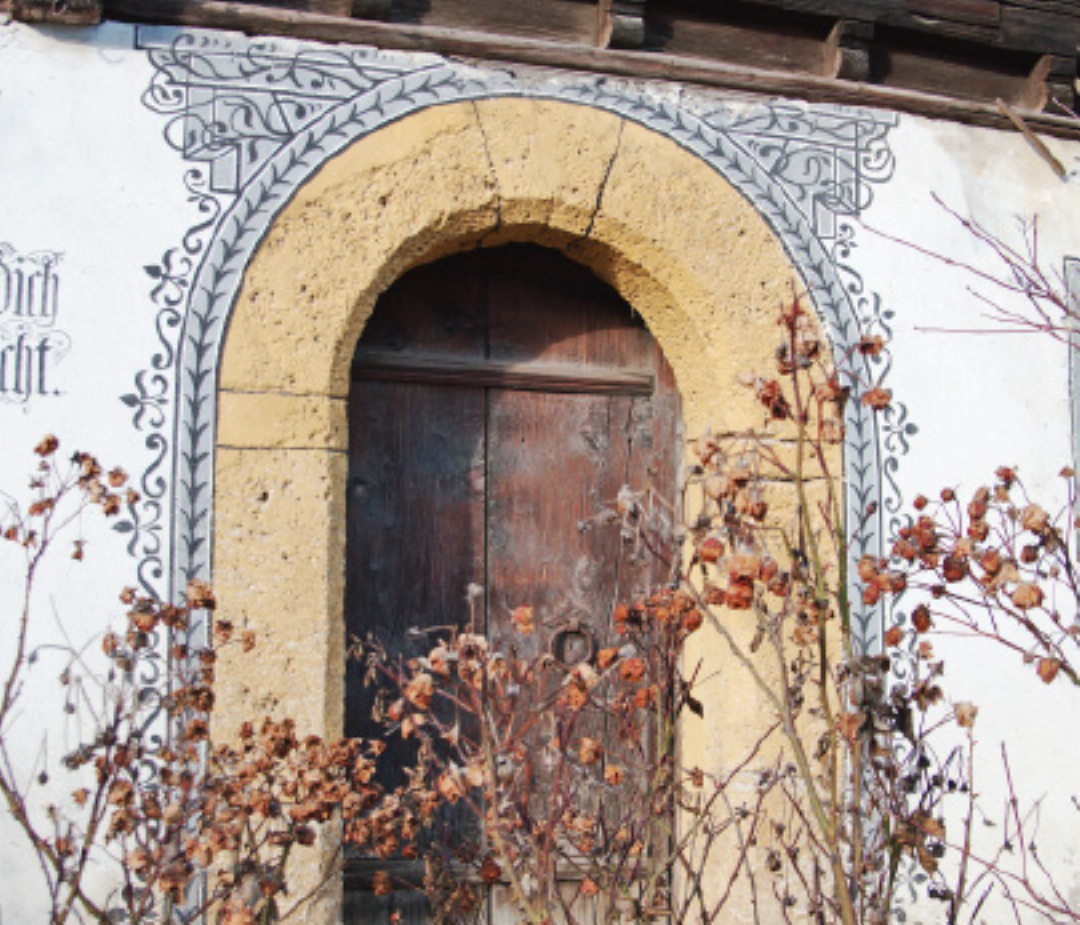
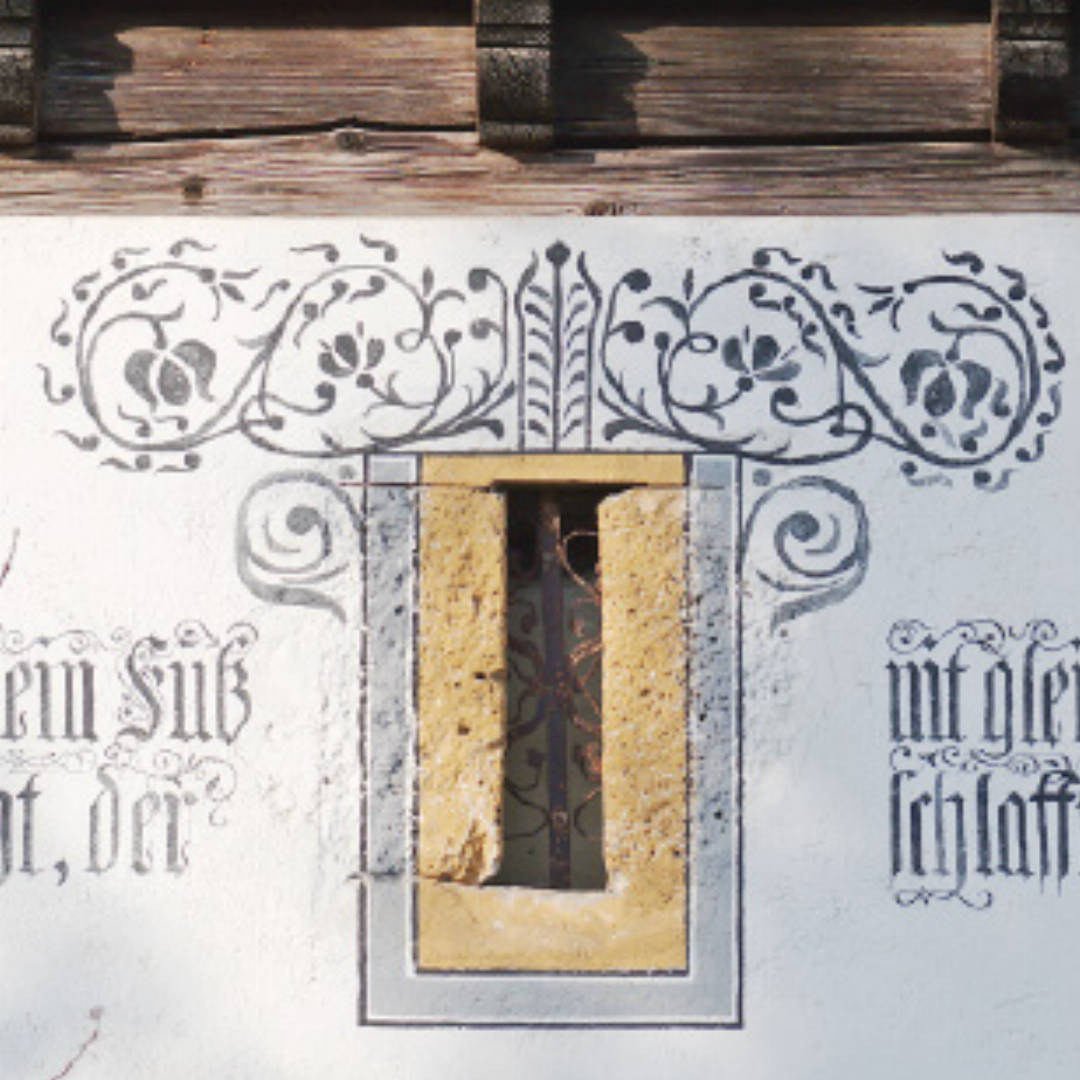
Visitors with a keen eye may also notice traces of delicate floral ornamentation on the cellar walls and upper part of the wooden facade. These black-painted designs, known as mauresques, were inspired by Moorish decorative traditions and had been fashionable in Bern as early as the 16th century. Their appearance in Saanen was comparatively late and brief. By around 1680, the trend had largely disappeared again.
The beauty of a new script
The Old Kastlanei also introduced another novelty to the region: Fraktur or blacklettering. Originating in Germany, this ornate script is sometimes described as Gothic, although its elaborate flourishes fit perfectly within the Baroque aesthetic. Unlike the older Roman- style inscriptions that had previously been carved into timber, Fraktur was generally painted, allowing for much greater artistic expression.
The inscription on the Old Kastlanei is particularly elegant. Historians believe it may have been executed by a local notary, whose professional training in calligraphy would have made him an ideal candidate for such decorative work. Over time, Fraktur became a defining feature of many buildings throughout the Germanspeaking Bernese Oberland.
A house with many lives
The origin of the name “Old Kastlanei” remains the subject of some debate. Most likely, the house acquired its name after passing through inheritance to the influential Matti family, who held the office of Kastlan, or castellan.
Later ownership brought less fortunate chapters. In the 1870s, the Haldi family was forced to sell the property following a financial guarantee scandal. The building subsequently served as an emergency medical facility, effectively becoming a predecessor to the neighbouring hospital.
In the late 1940s, the house was purchased by another Hans Haldi, probably unrelated to the previous owners. Remarkably, his descendants remain custodians of the property to this day.
A lasting legacy
More than 350 years after its construction, the Old Kastlanei remains one of the most significant historic buildings in the Saanenland.
Its importance lies not only in its age, but in the way it transformed local architecture. The decorative ideas introduced by Hans Tüller – his arches, ornamental brackets, painted inscriptions, and colourful façades – became enduring features of the traditional Saanen house.
What began as an ambitious commission for a wealthy official evolved into a building that helped define the character of an entire region.
MARTIN GURTNER-DUPERREX
SERIES: HISTORIC HOUSES OF THE SAANENLAND
The Saanenland is home to some of Switzerland’s most remarkable historic farmhouses and residences. Behind their carved façades lie stories of wealthy landowners, master craftsmen, ambitious builders and changing artistic fashions that shaped the valley over centuries. Drawing on research by Christian Rubi, Bendicht Hauswirth and the extensive documentation of the Rubi Fund, local journalist and photographer Martin Gurtner-Duperrex explores a selection of these buildings and the people connected to them. Many have been carefully restored with support from the Rubi Fund and the Bernese heritage authorities, ensuring these architectural treasures remain part of the region’s cultural landscape. This series offers a glimpse into the craftsmanship, history and personalities behind some of the Saanenland’s most significant historic homes.
NEXT IN THE SERIES
From wealthy landowners and ambitious master carpenters to forgotten scandals and changing fashions, the historic houses of the Saanenland offer a fascinating window into the region's past. Join us in future editions as we continue our journey through the valley's architectural treasures: one house, one family and one story at a time.