
THE MESSAGE - INTERVIEW WITH David Montalto
30.12.2025 Profile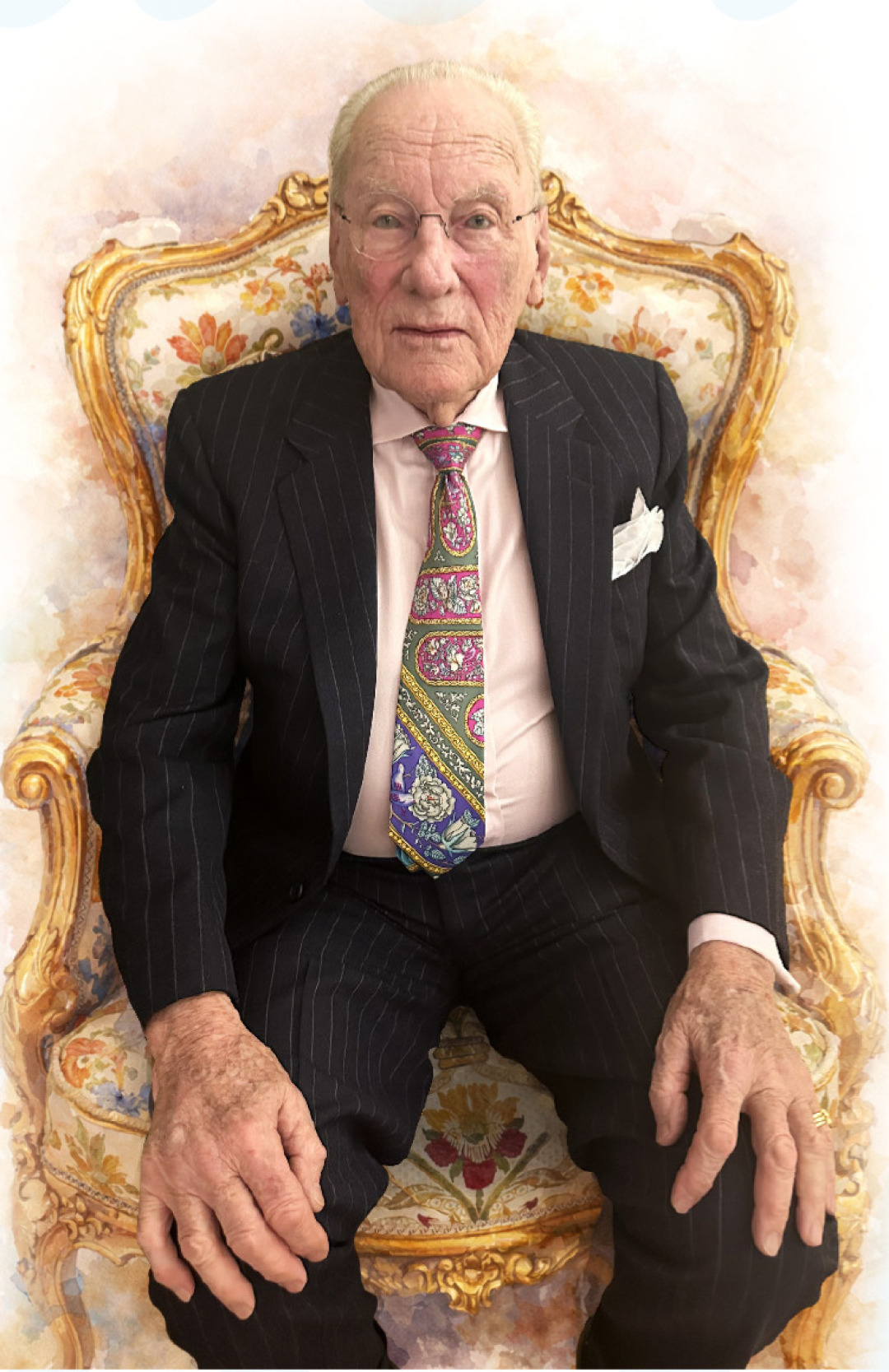
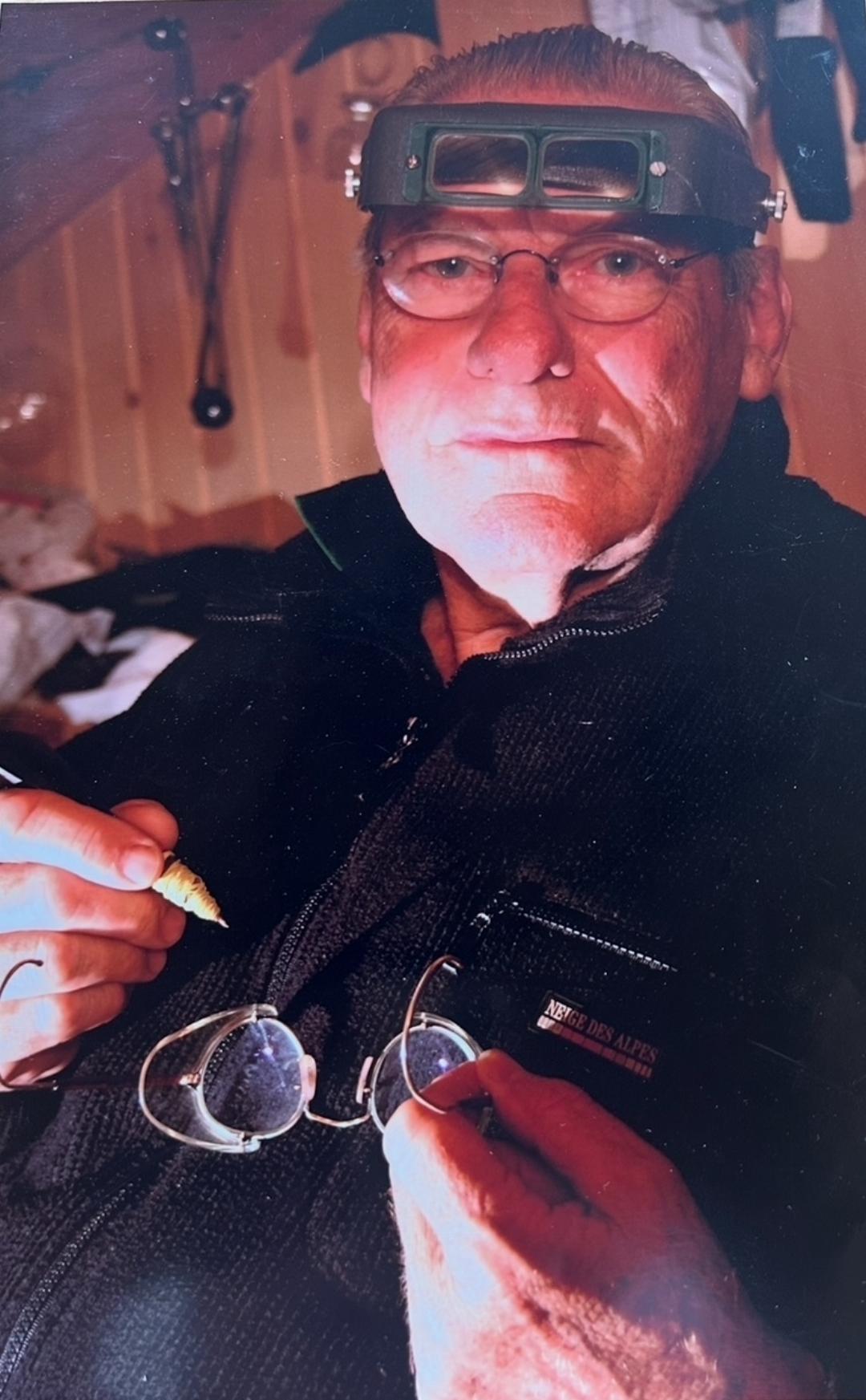
David Maude-Roxby-Montalto Di Fragnito is a multi-talented British artist living in Château-d’Oex and the very definition of master craftsman. An accomplished glass sculptor, diamond-point stipple engraver and painter, he also designs unique and ...
David Maude-Roxby-Montalto Di Fragnito is a multi-talented British artist living in Château-d’Oex and the very definition of master craftsman. An accomplished glass sculptor, diamond-point stipple engraver and painter, he also designs unique and exquisite jewellery. Montalto’s work is featured in major museums and private collections around the world, and he kindly met with GstaadLife to talk about his work, visions and the purpose of life.
Such a pleasure to meet you, David. Let’s start with your early life. When did you first realise you wanted to be an artist?
I never realised I wanted to be an artist – I was born an artist. I was thinking like one and creating from a very young age. My earliest works were plasticine sculptures when I was six. Happily my parents kept them and they featured as part of my retrospective exhibition this summer in the Musée du Pays-d’Enhaut, Château-d’Oex.
How were your talents nurtured through childhood?
I was sent to Geelong Grammar School in Australia at the age of 12.
My mission was to visit the Great Barrier Reef in order to write and illustrate a book on its insects. As a result of this project, I was offered the opportunity to study under Dr. Ludwig Hirschfeld-Mack, a member of the Bauhaus movement. He nurtured my creative talents, teaching me how to sculpt in clay, paint, draw and carve wood.
After graduating from English Public School, I attended The Sorbonne University in France. While there I had the great opportunity to ride horses – which I had done in my youth at home – entered small competitions and was under the tuition of Mr Mermet at the Bois de Boulogne, who was teaching other candidates to compete in the Olympic Games. After completing my studies in Paris, I moved to the Academy of Fine Arts in Florence at the invitation of famous artist Primo Conti who asked me to join his studio as he was impressed by my talent. I came under the tuition of Professor Goffredo Trovarelli who knew Picasso; he opened my eyes further in the world of painting. I won several prizes including the Annigoni prize at Montecatini.
You are best known for stipple engraving on glass, working with a diamond-tipped stylus. What drew you to this technique?
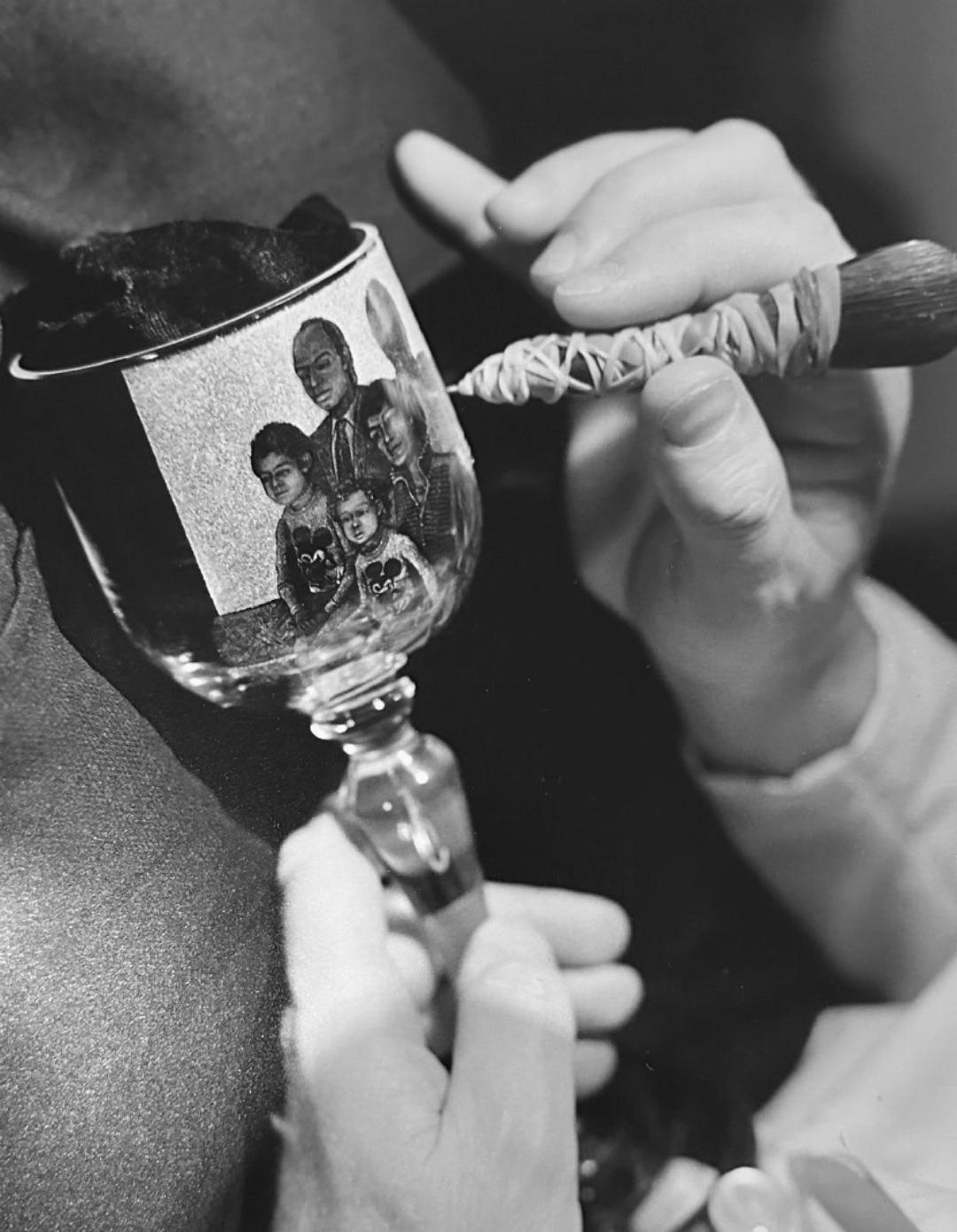
I have studied painting, sculpting, ceramics, wood and ivory carving and enamelling, but find glass engraving to be the most satisfying medium because it reflects pure light and you can only see the work through the reflection of light.
My work comes from an accidental ability to control an involuntary muscle in my arm which produces the tiny repeated motions required for stippling. You cannot see the shape or structure of the diamond tip on the stylus, so every point behaves differently and the engraver must adjust their strokes each time.
The stipple technique demands total concentration. When this is achieved, you enter another dimension where time no longer exists. I have even played the radio and listened to concerts to try to reduce my concentration, because too much can fool you into overworking a small detail that no longer integrates with the whole. A mistake takes a great effort to hide, which for me has always improved the work. And of course, an important part of each piece is knowing when to stop.
Let’s turn to one of your most recognised commissions – the Peace Pen.
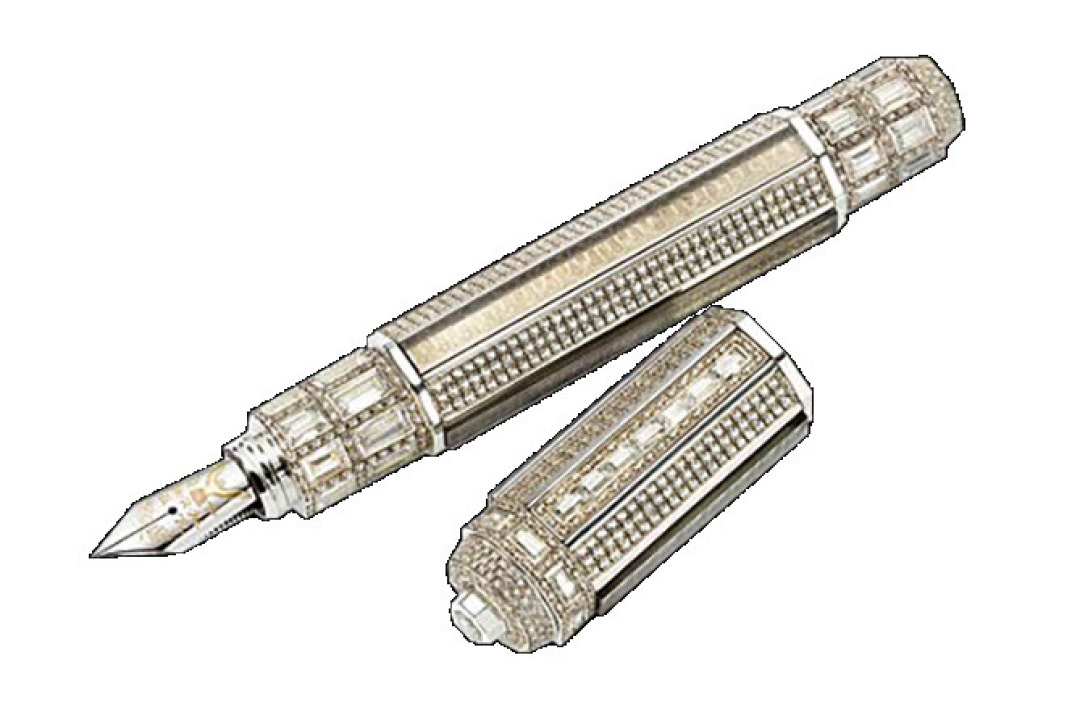
The Peace Pen was a commission from the famous Montegrappa. It was made in platinum with Baccarat crystal panels and set with a large number of diamonds. The project took several years to complete. It was created in support of the Peace Parks Foundation, so the idea was to produce a writing instrument that also carried a symbolic message. My role was to design and engrave the piece, working with the different materials and ensuring the final object reflected the theme of peace.
The peace pen shows how your work often carries meaning beyond its materials. Has symbolism always been important to you?
Yes, very much so.
It all began at a young age when I had eight visions. I wrote to my parents about them and although they may have thought their son was maybe overimaginative, they kept my last letter, written on 30 June 1959, in which I mentioned the vision of a cross.
In the vision I was show n t he cross I had to make. I did not want to forget the symbols on it and although I had drawn them, I knew I had to create a wooden model to retain them in my mind. It was important to make everything clear and precise, exactly as the vision showed me and as I had been told to do.
My parents saw the completed wooden cross and encouraged me to enter it into an exhibition at the town hall in Taunton, Somerset, held in June 1968. The event was covered by the Western Gazette newspaper, which provided proof of my visions, because the cross is full of symbols of events I predicted would happen way before they did.
In December 1968, during the Apollo 8 circumnavigation of the moon, the astronauts read from the Bible as they came back into communication – exactly as one of my symbols had shown. From that moment, the predictions on the cross started to happen.
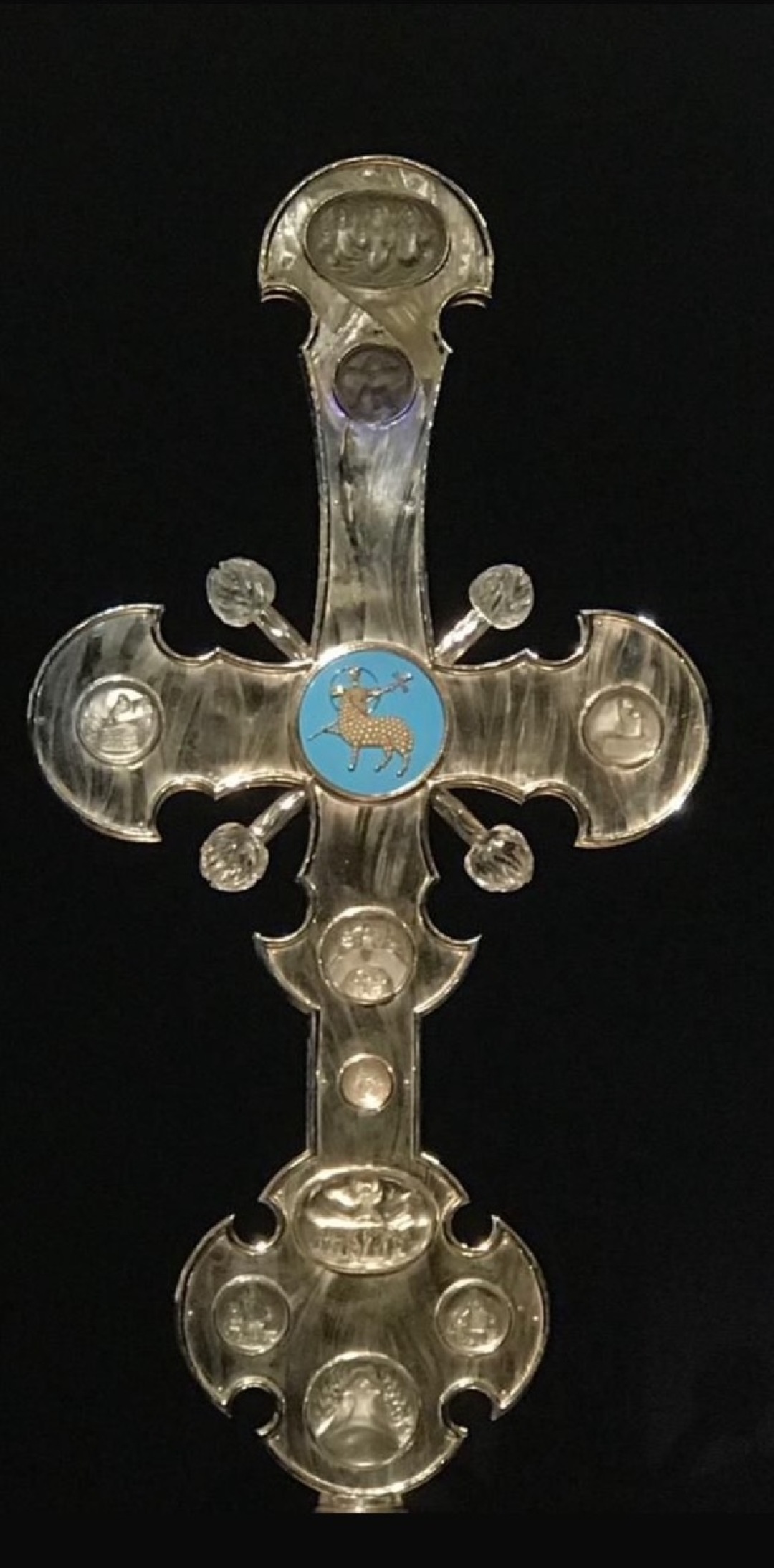
The most extraordinary part came decades later, when the final prediction came true. In the original vision, when the cross existed only as a wooden maquette, I was shown that real moondust had to be placed into the moon symbol at the base of the silver cross. This would create a direct link between the earthly and the cosmic – a physical connection between humanity and the wider universe. Forty-two years later, I finally obtained the moondust and that moment allowed me to fulfil the prediction and complete the genuine silver Cross of the Cosmos, a sacred work uniting the Old and New Testaments with humanity’s cosmic journey.
What was the process of bringing the cross into physical form?
I worked with Plowden & Smith to create it. They brought together the many craftsmen needed for the work. Everything had to be made by other specialists, except for my engraving of the crystal panels. I signed each panel minutely and invisibly, using my full name.
When the moondust was finally placed into the moon symbol on the cross – together with actual fragments of the lunar landing module – my private visions became something people could realise. The letter I wrote to my parents, the wooden cross with the symbols predicting events that have since come to pass and the silver cross containing the moondust now stand together as one continuous record of the vision.
This was the moment t he public had tangible proof that the visions happened, because they could hold the letter and see the wooden cross from 1959 – years before anyone could have imagined bringing moondust to Earth. With the predictions fulfilled, the deeper meaning of the visions became clearer.
How did it feel when you saw the finished item?
Seeing the completed cross was profoundly moving. I felt a huge sense of satisfaction, but also the realisation that it was the beginning of the second part of the story, where the cross now exists for people to see and learn about. Until then it had only been in my mind.
As the story of the cross unfolded, its personal meaning also deepened for you. You said the whole purpose of your life started with these visions?
When you start, you have no idea what’s happening. You receive a story and it begins to evolve and come into being. Then it strikes you that this is more than a dream, that it is touching on a truth. And then I asked: why should this come to me?
Every step was something I had already been told – and then it happened. The word that comes to mind is intended, like hands coming together in prayer or pieces of a puzzle fitting together. It gave me a sense of structure and peace knowing that each step was intended. The story developed at the right moment, as if it were already planned. I want people to ask: how does this happen? And why does this happen?
What are your answers to those questions?
It took something like fifty years before I found the answer: that this cross is for everyone.
In one of my earlier visions I was spoken to by an angel, who told me that the most important word in the Bible is ‘Emmanuel’, God is with us. I want people to understand that this is a message: God is with us or within us. And it is for every single individual, for people with a religion and for people with no religion. It’s a universal message that we should understand and love one another. That is the message of this cross.
For me it is extraordinary that I received this message. And that the visions predicted facts that have since come about but which, at the time, were totally impossible for any human being on earth to know. So every prediction, for me, has been an underlining of the message I received. And this is what has driven me, because I saw it wasn’t about me, but about my having been given such a mission.
I felt this was a message for everyone. So I spoke to Rabbi David Rosen to recount the story of the cross. He invited me to the Assembly Religions of Peace in Lindau, Germany which involved 980 representatives – people from different religions, celebrating together.
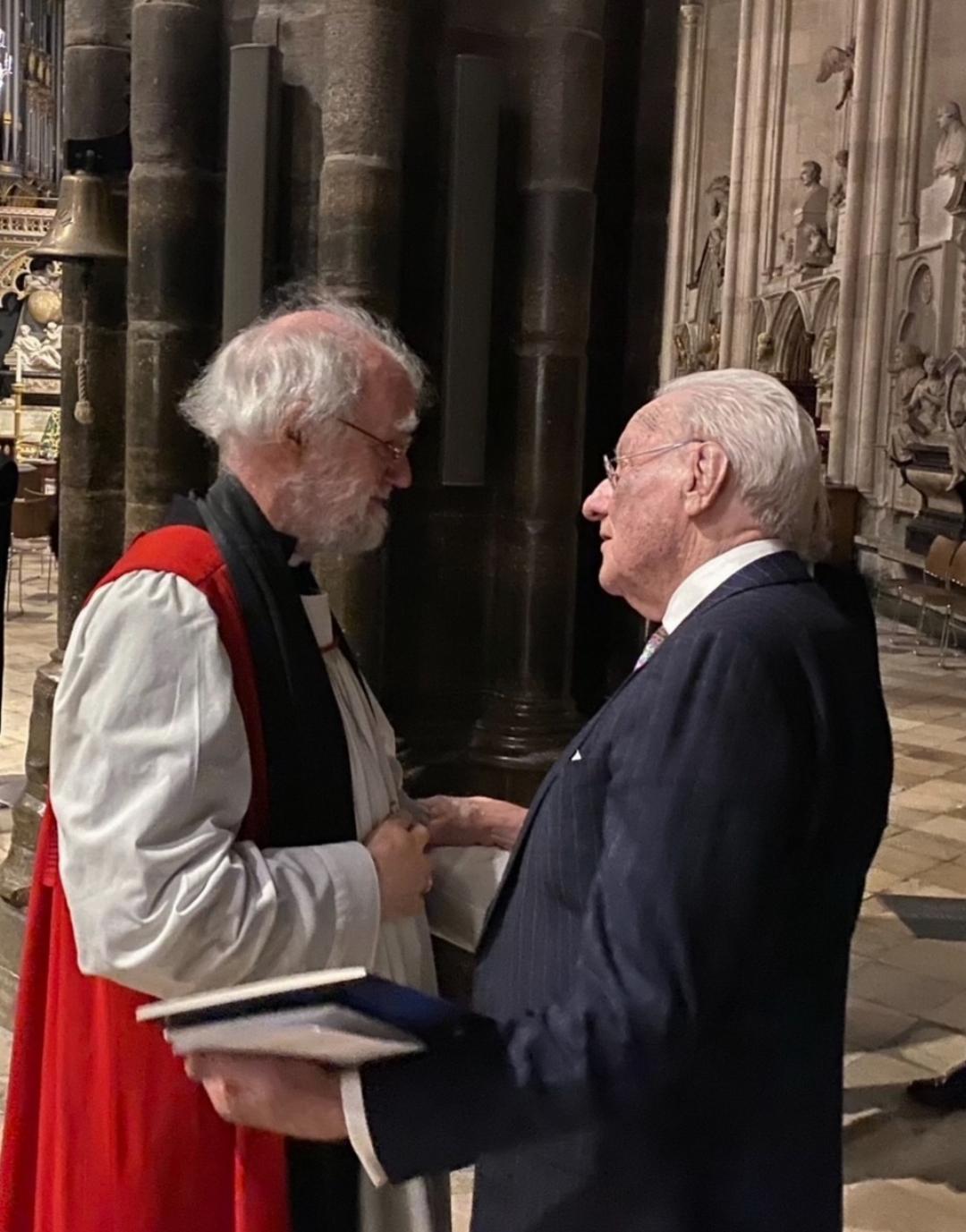
As a result of this, I was called by Bishop Lord Rowan Williams, former Archbishop of Canterbury and a top theologian, who asked me to tell him the story of the cross. He confirmed that my visions were in the correct theological order.
So how does someone like me, who never studied theology, come to have a series of visions arranged in that way? Does it come from some special source? I believe the spiritual force gave me these predictions about the cosmos, predictions that were impossible for anyone at that time to know, to underline the importance of this message.
On its completion, the cross was consecrated at Westminster Abbey?
Yes. My meeting with Lord Bishop Williams of Oystermouth inspired him to inform Her late Majesty Queen Elizabeth II the story of the cross, and she expressed her wish for it to be consecrated at Westminster Abbey in London on 21 November 2021.
There was no active publicity about the service, but word somehow spread. In the end, representatives from 26 nations and six different religions attended, which is impressive. The service included a reading by The Darbar Shree Navab Mir Jaffar Imam, who recited a poem he had written in Urdu. It was a unique occasion for the Christian and Muslim faiths.
Let’s move talk to the future – where will the cross be housed?
The silver Cross of the Cosmos will eventually be placed on permanent display in King's College Chapel at the University of Cambridge, together with the wooden maquette.
This chapel, one of the most beautiful in the world with four hundred thousand visitors a year, has already used the crosses four times in Easter services, so its destination for posterity could not be more befitting.
However, before being taken to Cambridge, the cross made a special trip to Château-d’Oex at the request of the people in the Pays d’Enhaut. The public here wanted to see both crosses exhibited, so the congregation at St Peter’s church ran a fundraiser. When the Musée du Pays-d’Enhaut learned how much had been raised, they agreed to cover the balance of the costs needed to bring the crosses to the museum. It is an extraordinary story from the little village of Château-d’Oex and the Pays d’Enhaut.
This was the first and last time the crosses will be exhibited outside of King’s College Chapel, Cambridge University.
Looking back over your life to date, what would you like your legacy to be?
To inspire others to try the very complicated craft of stipple engraving and, more profoundly, to uplift people in some abstract way.
Finally, what is your own favourite spot in the region?
My favourite place is the comfortable terrace of our chalet, where I can contemplate the undisturbed countryside, hear the wind and the bells of the cattle that surround us, and watch the undulating fields as the crows fly out to start their day or return home to roost. This total peace gives me the profoundest pleasure.
ANNA CHARLES