

Rooted in Gstaad and connected to the world
14.08.2026 Advertising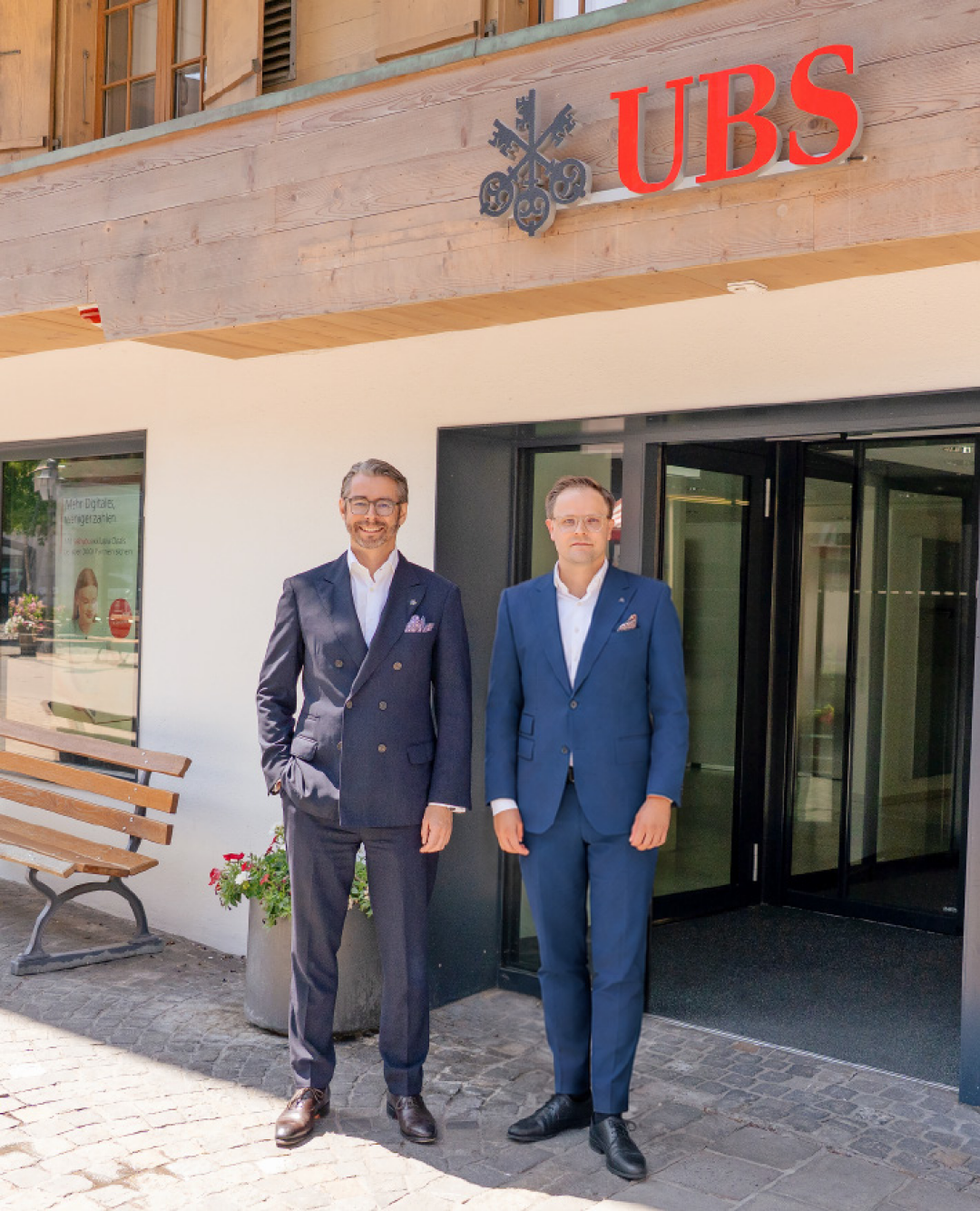
Christian Zach and Lukas Häberli explain why personal advice, local expertise and a global network remain the foundation of modern banking.
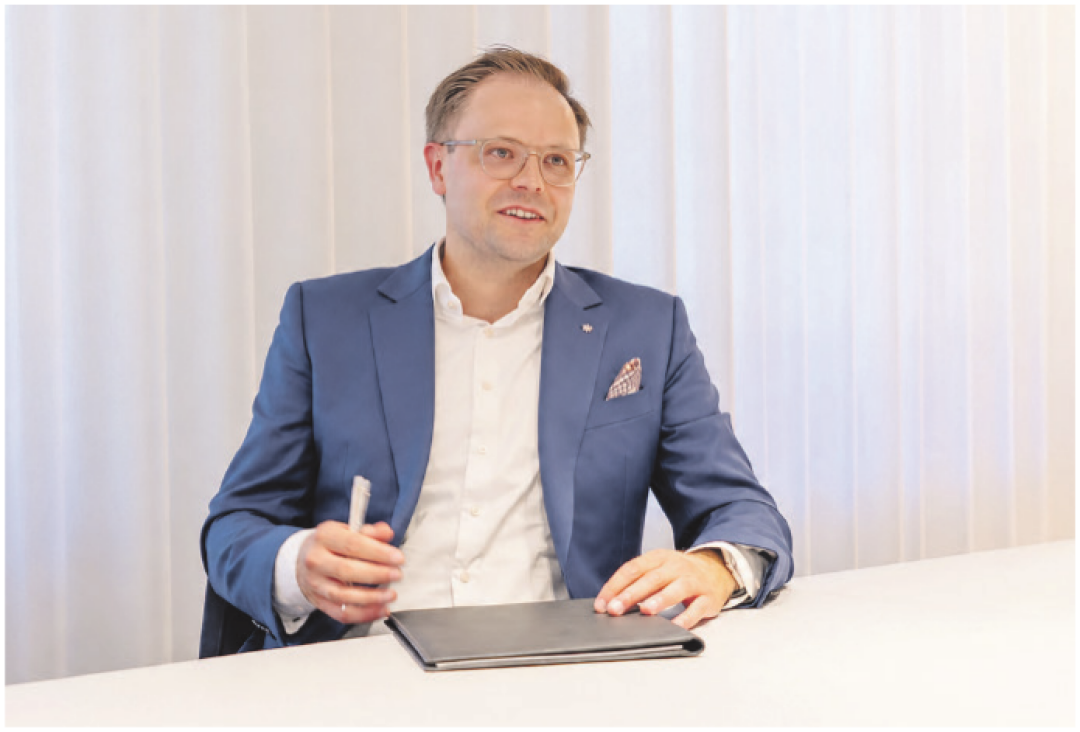
Almost a year ago, Christian Zach took over as Head of UBS Gstaad and assumed responsibility for the local Wealth Management business. Since then, the branch has continued to evolve: the team has grown stronger, with Lukas Häberli taking over as Branch Manager in July and overseeing the retail business in Gstaad.
In this interview, the two discuss why personal advice remains indispensable in the digital age, why UBS continues to invest in Gstaad, and why the bank aims to be there for local residents just as much as for international visitors.
Christian Zach, since taking over as Head of UBS Gstaad and Wealth Management last October, you've helped shape the branch's next chapter. Looking back on your first year, what stands out? Christian Zach (CZ): It has been an intense, exciting and, above all, successful first year. What I enjoy most is Gstaad's unique combination of a strong local community and an international atmosphere. That diversity makes our work interesting every single day.
With markets experiencing considerable volatility over the past year, it was particularly important to me that our team could provide clients with stability, perspective and confidence. On a personal level, getting to know the people and becoming part of the local community has been equally rewarding. My family and I feel very much at home here and are discovering the beauty of the Saanenland one step at a time.
Lukas Häberli, you became Branch Manager at the beginning of July. What attracted you to this role?
Lukas Häberli (LH): I was drawn to the unique character of Gstaad. It preserves its strong regional identity while remaining open and international, a balance that is hard to find anywhere else. I was also impressed by the experienced and well-established team, which provides an excellent foundation for further developing the branch together.
You grew up in Spiez and have known the Bernese Oberland for many years. What does the region mean to you personally?
LH: Quite a lot, actually. I spent many holidays here as a child and even worked as a postman in Gstaad during my studies. The region has always fascinated me. Although I currently commute from Spiez, I can certainly imagine making Gstaad my home in the future.
Many readers may wonder: what exactly is the difference between a Branch Manager and a Location Head?
CZ: As Location Head, I represent UBS externally and oversee the strategic development of our business in the region. An important part of my role is ensuring seamless collaboration across all areas of the bank, allowing clients to benefit from the full breadth of UBS expertise in a coordinated and efficient way. This applies equally to private individuals and businesses of all sizes.
LH: Together with my team, I am the first point of contact for clients and visitors at our Gstaad branch. Whether someone is seeking day-to-day banking services or looking for financing, we want people to know that UBS Gstaad is here for everyone. That requires more than financial expertise; it requires people who listen carefully and understand each client's individual needs and aspirations. Strengthening that personal connection is something I look forward to doing together with my colleagues.
Gstaad is known around the world. What distinguishes the expectations of your international clientele? CZ: Wealth management often involves highly complex matters, from multiple residences and different tax systems to succession planning. Many international clients spend time in Gstaad themselves and appreciate direct, personal conversations rather than managing everything through a family office. When needed, we can connect them with specialists across UBS's global network. At the same time, many members of our team grew up in the region, giving us invaluable local knowledge and strong relationships within the community.
As you mentioned earlier, many people first open an account or arrange a mortgage. When does a bank become a long-term partner? LH: It often begins with a child’s first savings account or an account for an apprentice’s salary. Later may come milestones such as starting a family, buying a home, planning for retirement or, eventually, estate planning. Our aim is to support clients throughout every stage of life.
We also help people understand the financial implications of difficult situations such as divorce or unemployment. It is during those times that trust and longterm relationships become especially valuable.
You also advise entrepreneurial families on succession planning. What does that involve?
CZ: Passing on a family business is often one of life's most emotional decisions. Frequently, several generations are involved, and discussions extend far beyond financial figures to questions of responsibility and differing expectations. That's why we encourage families to start planning early and even offer workshops for the next generation, helping future successors prepare for their responsibilities well in advance.
How important is personal contact with your clients?
LH: Extremely important. In a place like Gstaad, the branch often feels like a meeting place. People don't always stop by because they need a banking service. Sometimes they simply want to say hello or tell us about their holidays. There's a genuine sense that many people feel at home here, and that's something we value enormously. It's an atmosphere we want to preserve.
These days, many people do most of their banking on their phone. Why does personal advice still matter?
LH: Digital solutions have become an essential part of banking and make many everyday tasks much easier. UBS being named Switzerland’s most digital retail bank by the Lucerne University of Applied Sciences and Arts for the fifth consecutive year this year reflects our continued focus on innovation.
But there are situations where personal conversations remain irreplaceable, such as when making important investment decisions or planning long-term wealth strategies. Technology allows us to spend more time on precisely those conversations; it doesn't replace them.
So the traditional bank branch still has a future?
CZ: Absolutely, particularly in Gstaad. That is why we continue to invest in our branch and will modernise it in the near future. For us, this is a clear commitment to Gstaad. We want it to remain a place where people feel genuinely welcome.
Mr Zach, if we were to meet again in a year's time, what would make you feel that UBS Gstaad had taken another important step forward? CZ: I would like people to say that UBS is more than a bank; that we are a trusted partner to the region. We want to deepen existing relationships, welcome new clients and create opportunities for young people, including by training apprentices again and giving local talent a pathway into banking.
If, as a team, we continue to grow together and our clients recognise that we meet them with expertise, openness and genuine personal commitment, I would consider that our greatest success.
FACTBOX: LUKAS HÄBERLI
Position: Branch Manager, UBS Gstaad
Born: 11 September 1996
Residence: Spiez
Education: Master's degree in Business Administration from
Bern University of Applied Sciences, including an exchange semester in Melbourne.
Career: Private Client Advisor at UBS Thun since 2024. Appointed Branch Manager of UBS Gstaad in July 2026.
Outside work: A keen sports enthusiast who enjoys tennis, skiing and travelling, and is also involved as a J+S ski instructor and supports the Spiez Winegrowers' Cooperative.
UBS Switzerland AG
Promenade 67 3780 Gstaad
+41 33 748 85 11 | ubs.com