

Interview with Nathalie Hall Rosat
23.01.2026 Traditions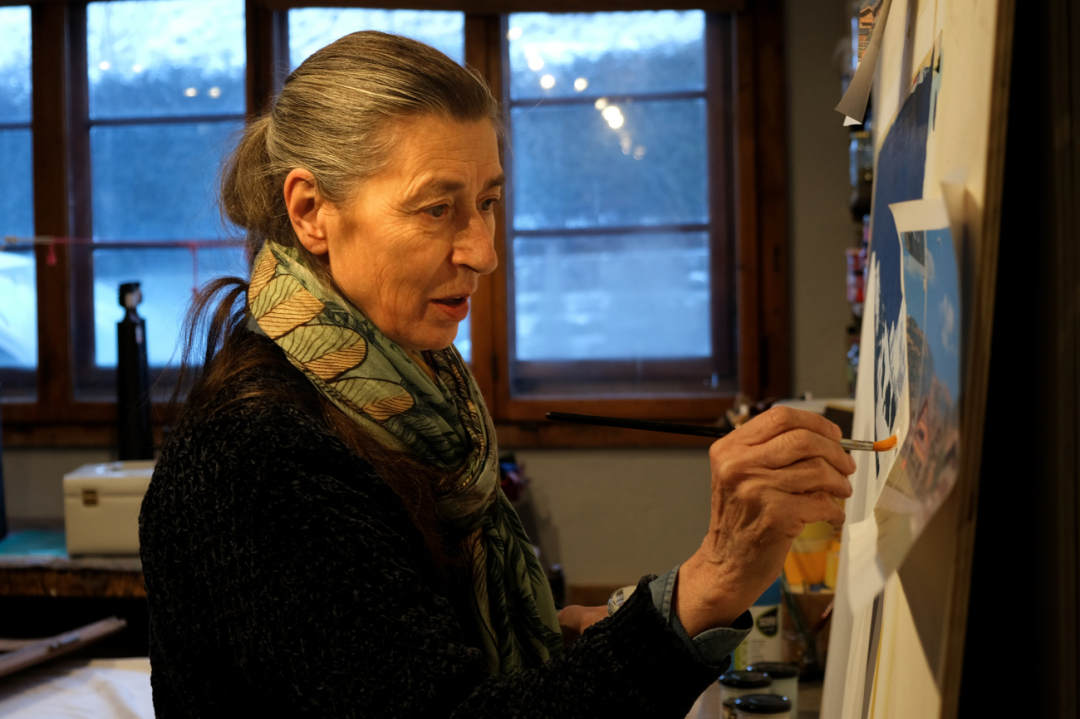
Artisan Nathalie Hall Rosat is best known for her trompe l’oeil work, transforming flat, modern surfaces into convincing illusions of wood, structure and depth. Trained at the Van der Kelen school in Belgium, she has worked internationally on interiors, decorative objects and ...
Artisan Nathalie Hall Rosat is best known for her trompe l’oeil work, transforming flat, modern surfaces into convincing illusions of wood, structure and depth. Trained at the Van der Kelen school in Belgium, she has worked internationally on interiors, decorative objects and architectural elements. Now back in her home region, her practice focuses on painted surfaces that look and feel entirely different from what they really are.
How would you describe your work?
At heart I am an artisan. I trained in interior decoration when I was around twenty and then worked in different countries. I have always enjoyed working with different formats. I produced a range of decorative objects for a time; among the most popular were items made with feathers, such as lampshades and trays.
When I lived in England, I worked in interior decoration with a team where everyone had their own forte. That taught me precision and collaboration. When I returned to this region eight or nine years ago, I was inspired by Naive art. While Poya art is the most traditional here, I chose the Naive style to depict everyday country scenes such as laundry day or chopping wood as a family. Even then, I saw everything with a decorator’s eye because decoration is really my world.
Some artists work with ideas or statements. My aim is simple. I work with feeling. I want to make something beautiful that feels right in the space and that makes people happy.
Your trompe l’oeil work has become a defining part of your practice. Where does that come from?
It comes very naturally from my relationship with wood. My big forte has always been architectural work rather than figurative painting. I grew up surrounded by wood and understand it instinctively, how it ages, how it reflects light, how it feels. Finding the exact right colour is a massive part of my profession. It has come through years of experience and trial and error; that mastery of colour and technique is really what makes this art form so special.
How do you use trompe l’oeil in your work today?
In the past, a "painter-decorator" worked from floor to ceiling, but today the work is more contemporary and specific. Interiors are more pared back, which makes trompe l’oeil even more powerful. People want continuity in their spaces, so I often add subtle details like making one door appear as two, or creating fake moulding. If you touch it, you feel it is flat. Butaif you stand two metres away, it does not look flat at all. That moment of doubt, when the eye is convinced but the hand is surprised, is exactly what interests me.
What is most rewarding about trompe l’oeil work?
When people stop and look twice. When they say, “I know it is painted, but it looks real.” That reaction is everything. From two metres away it should convince you. Up close, it should still be beautiful. I am very meticulous and precise. My finishes have to be impeccable. That discipline is part of the craft.
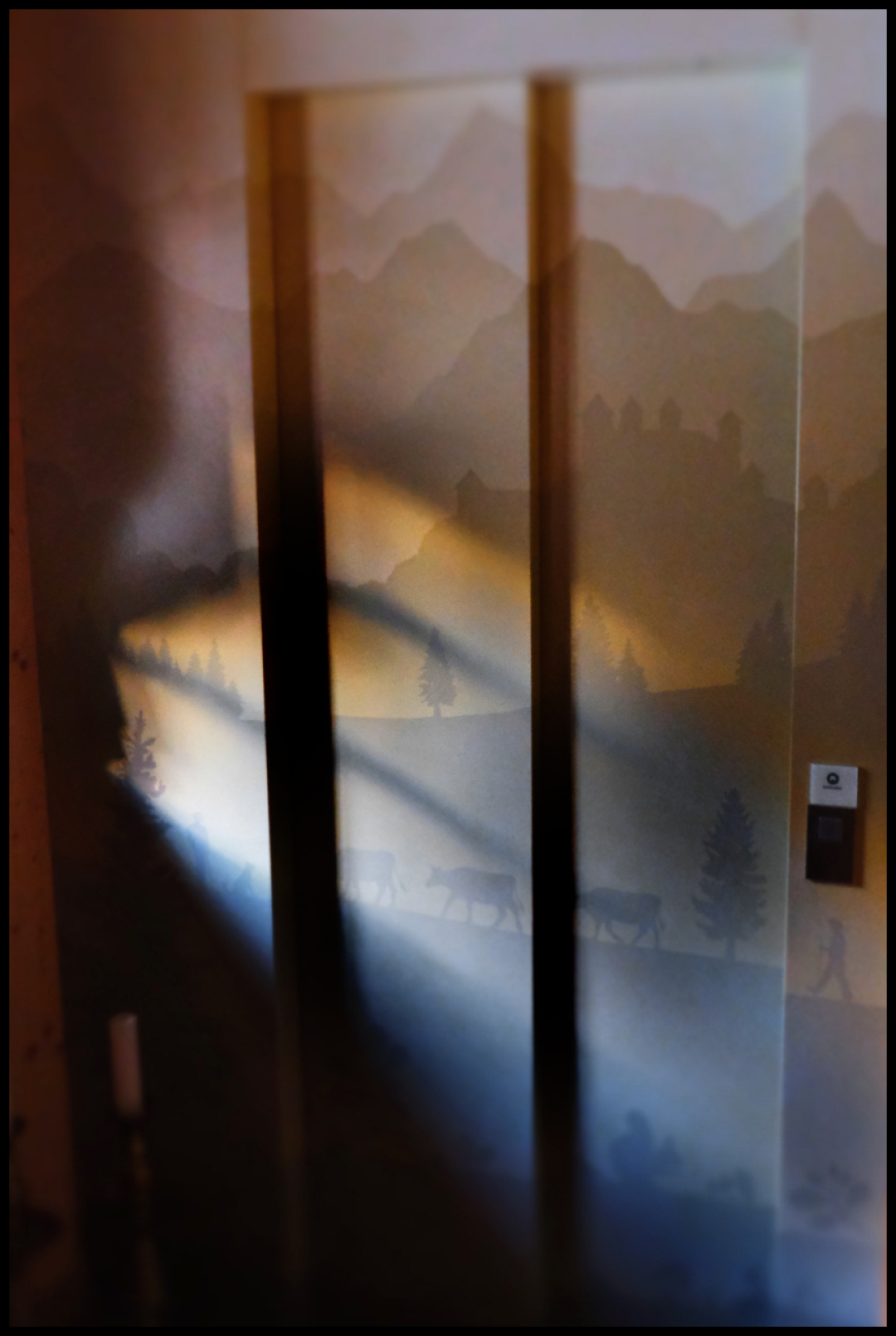
I work on many different projects, but one that truly reflected my talent was painting the metal doors of an elevator so they blended seamlessly into the surrounding wood of a chalet.
What feels most important about being an artisan now?
My work is my passion. I love being in my studio. In a world where images can be created instantly, beauty created by hand still matters. It takes time, attention and responsibility. You cannot rush the work. For me, being an artisan is a way of seeing life, cherishing the hard work and skill required to put expression into precision. It’s about continuing to bring beauty to the practical objects we see and use every day.
ANNA CHARLES