

Interview with Christine Baumgartner
13.02.2026 Traditions
Ceramicist Christine Baumgartner creates functional crockery and sculptural objects for sale in her shop alongside bespoke commissions for chalets and private clients. Her work follows a traditional, hands-on approach, with each piece made carefully from start to finish. Her ceramics ...
Ceramicist Christine Baumgartner creates functional crockery and sculptural objects for sale in her shop alongside bespoke commissions for chalets and private clients. Her work follows a traditional, hands-on approach, with each piece made carefully from start to finish. Her ceramics offer a counterpoint to speed and mass production.
How would you describe your work?
At heart, I am an artisan. I do everything myself, from the first idea to the finished piece. That is very important to me. In the modern world, people often do just one small part of a process. For me, what is most interesting is seeing it through from A to Z, from being able to influence the outcome at any stage.
Where do your ideas and motifs come from?
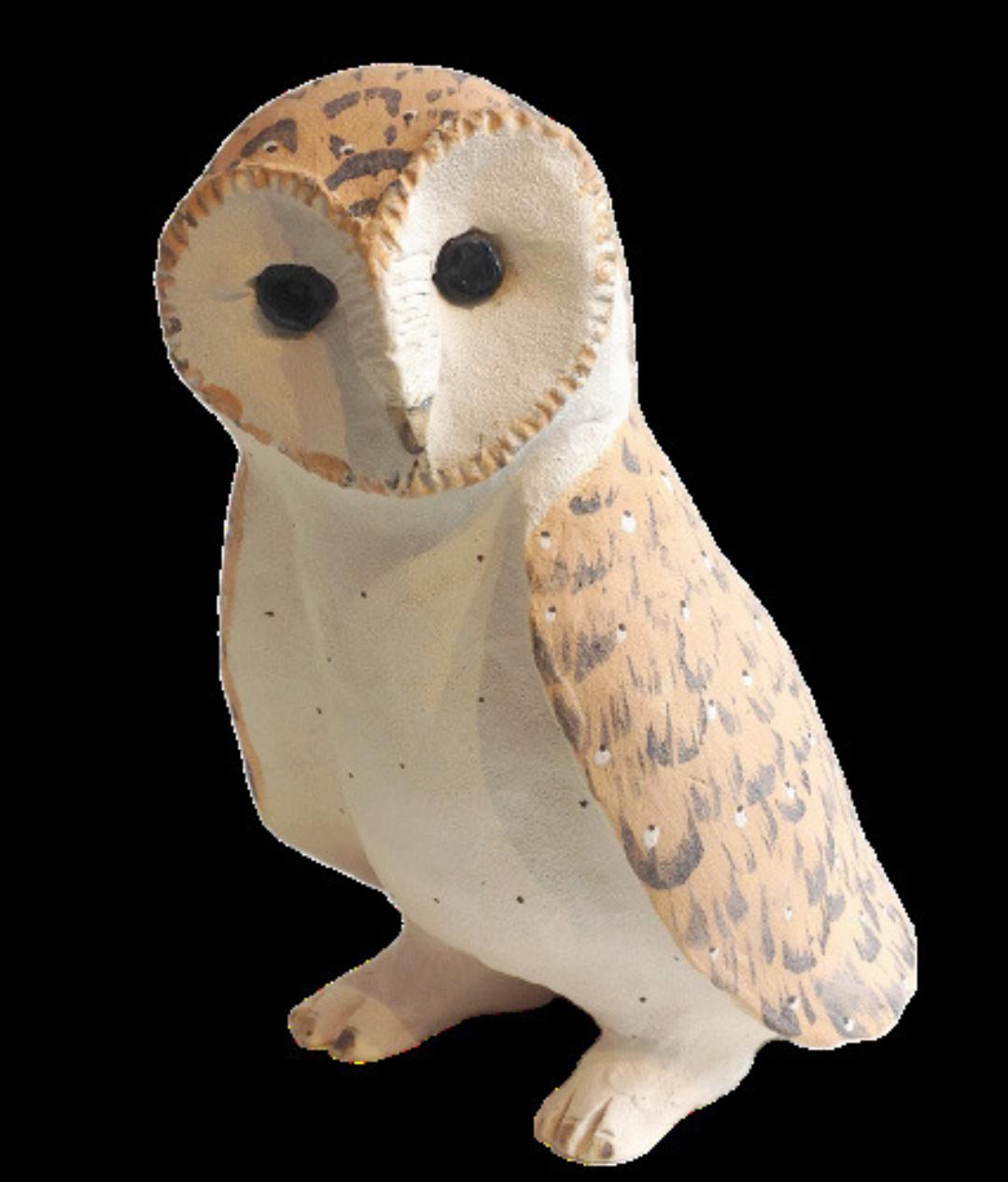
Often, the ideas come from where we live. Being in the Saanenland, it feels natural to work with animals that belong here, such as the large ceramic goats I have made for this region. With other motifs, like owls, I prefer to focus on one subject at a time. At the moment, I work only with barn owls, so I can stay close to a single form and really understand it.
Sometimes clients come with very specific requests. One village asked me to create ceramic fish as trophies for special achievements. The main winner received a large fish, while others received smaller ones. That kind of project is very interesting for me because it is unusual and personal, and it allows me to solve new creative problems.
How much freedom do clients give you?
It depends. When people commission pieces for their own home, they often have clear ideas and want something that feels very personal to them. In those cases, my role is to interpret their wishes through my own perspective. For instance, we make custom crockery series for chalets, so the pieces fit naturally with the space.
When someone comes to me for a special gift or a one-off object and says, “Show us what you could do,” then I have much more freedom. That is when the work becomes very playful and creative.
What qualities do you think are essential for your craft?
You have to be a little bit crazy about it. You need real passion. It is not an easy way to earn a living. There are long hours, evenings spent working and not always regular holidays. If you don’t truly love the work, it becomes very difficult. Happily, I do.
Has the role of the artisan changed over time?
Yes, very much. In my training, we learned the craft first, entirely by hand. Today, many people are trained in design first and then either go on to learn the craft itself or work with someone else to produce the object. The process is upside down. I am grateful for my education, which gave me a solid foundation. I began my apprenticeship at eighteen and have been based in Saanen since 1992. Knowing the material deeply allows you to create with confidence.
What do you find most rewarding about your work?
I think it is having work that gives me opportunities for patience and silence. Many jobs today mean people are always in contact with others, with phone calls and things happening all the time. You cannot really stop properly.
With pottery, even though there are customers coming and going, you can always go back to the work and stay on your own, doing your thing. You are not always disturbed. That is very important. With this work, you have moments where you can focus and be calm. That time is very precious.
What do you hope people experience when they use your pieces?
I hope they like to use them and to have them around them for a long time. The things we make are really sustainable. They are made to last. I want people to live with them, not just look at them. I want them to be used and enjoyed every day and kept over time. If they become part of someone’s life and daily routine, then the work has done what it is meant to do.
ANNA CHARLES
Contact Christine
033 744 23 02,
www.enziankeramik.ch