

GSTAAD HOUSE TAKES SHAPE
30.12.2025 Local News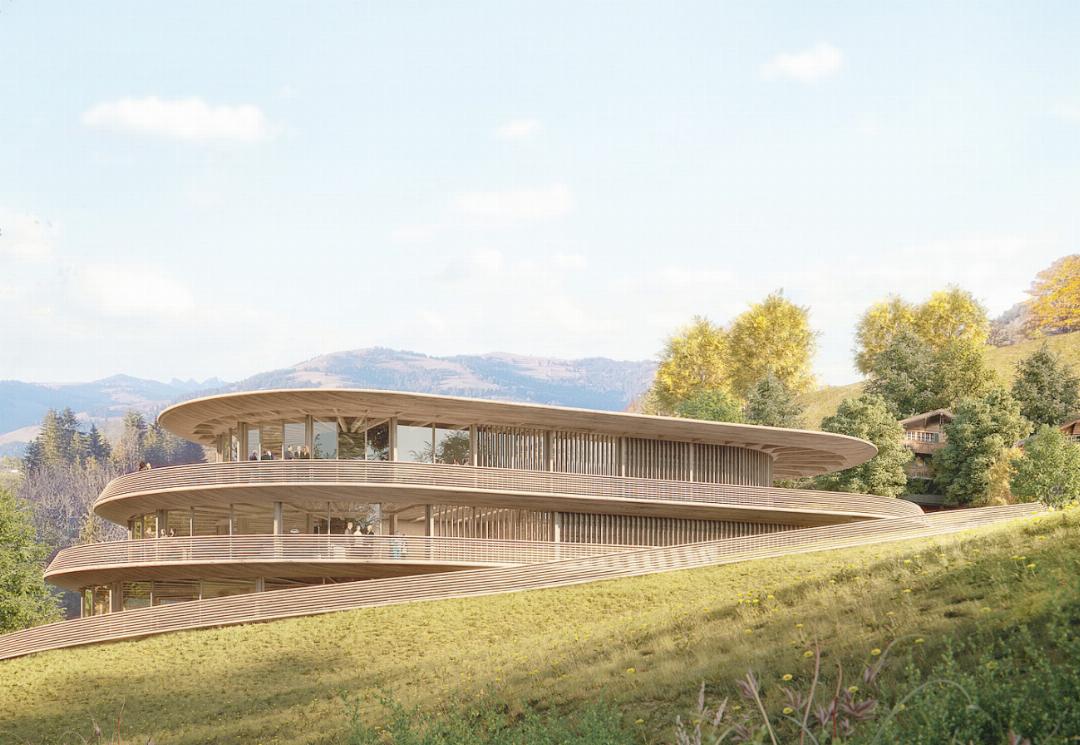
Conceived as a discreet yet ambitious cultural hub, Gstaad House brings together art storage, exhibitions and private events in a purpose-built setting above Gstaad. Managing Director Siamak Siassi and the municipality of Saanen outline the project's rationale and its place within the Tomi site.
Conceived as a discreet yet ambitious cultural hub, Gstaad House is built around three core pillars: the secure storage of art, its presentation, and its exchange. While Gstaad is home to many important private collectors, until now it has lacked a purpose-built, high-security facility designed specifically for their needs. Gstaad House aims to fill that gap.
The idea grew from a local paradox, explains Managing Director Siamak Siassi: while discretion is deeply ingrained in Gstaad’s culture, many residents also enjoy sharing their passions, be it art, design or collectable cars, within trusted circles. Gstaad House is intended to provide precisely that setting: a secure environment where valuable assets can be stored and, when desired, revealed in an intimate, curated context.
Though clearly a business, Siassi describes the project in broader terms. Gstaad House is conceived as a holistic artistic concept, an ecosystem where architecture, art, culture and community form a coherent whole. A place for exchange, dialogue, and carefully staged experiences rather than spectacle.
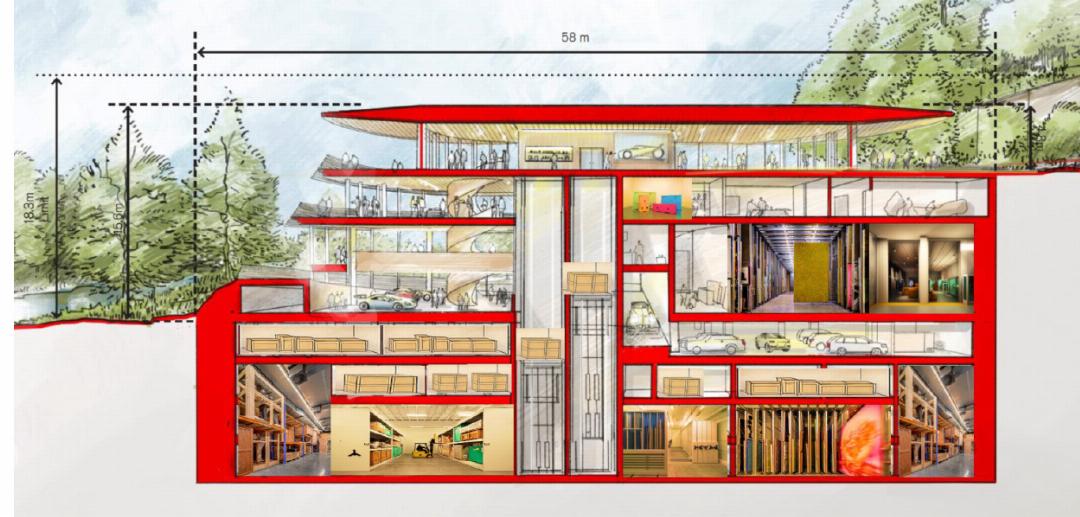
Architecturally, the building is organised across several levels, each operated by specialised partners. A significant portion is dedicated to high-security, duty-free art storage, run by an officially licensed operator from the canton of Bern. Advanced 5D scanning technology will allow artworks to be digitally documented, producing detailed condition reports and data used for authentication, restoration and insurance.
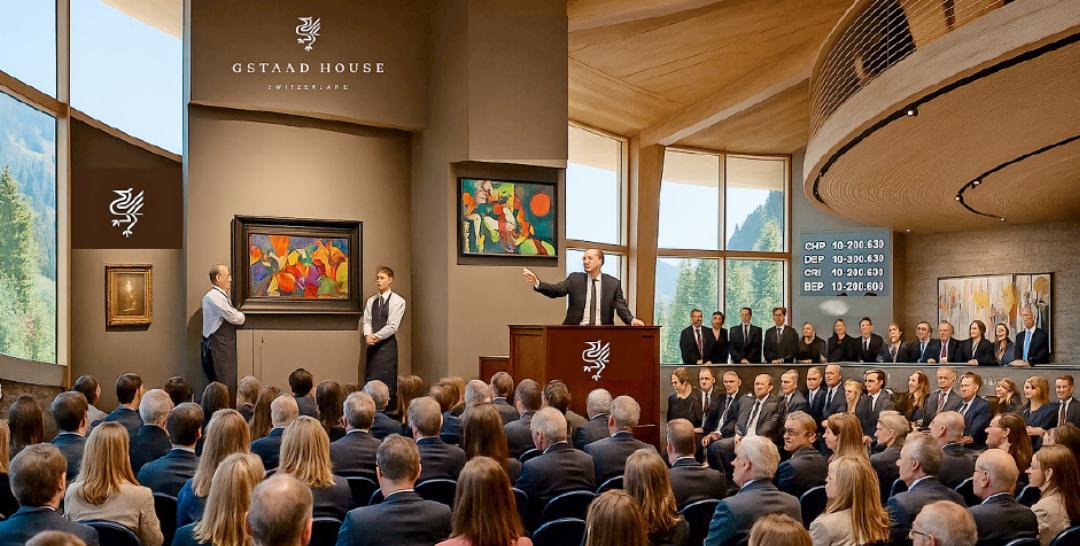
Above, a multifunctional hall will host exhibitions, auctions, lectures and selected performances. Capacity is deliberately limited, typically between 80 and 200 guests, allowing for refined formats rather than large-scale events. A private members’ club occupies the top floor, with an external operator running the space and curating a programme of member-only gatherings.
Gstaad House does not see itself as competing with established cultural institutions or festivals in the region. On the contrary, dialogue with the Saanenland’s major music festivals is considered both natural and desirable. The project is positioned as a complementary platform, open to collaborations where artistic vision and scale align.
While private collectors remain the primary focus, Gstaad House is also in discreet discussions with museums and cultural institutions interested in a trusted presence in the region. Its services are designed to accommodate the seasonal rhythm of Gstaad life, offering flexible access, temporary storage and coordination with shipping, conservation and curatorial support.
An international group of partners privately finances the project. Names remain confidential, but exhibitions will be curated by an established art-world partner with access to major fairs, studios, and global networks, offering members privileged access to the international art scene.
After several years of planning and negotiation, the project reached final approval in June 2025 and plans to begin construction once funding is fully secured. Due to the sloping site,
much of the building will be underground: approximately 4,000 square metres above ground and around 10,000 square metres below ground.
For Siassi, the choice of Gstaad over a global metropolis was deliberate. Beyond security and political stability, the appeal lies in something less tangible: peace of mind. “For many collectors,” he says, “it’s not just about logistics, it’s about trust, discretion and a community that understands the value of art.”
The Municipality of Saanen: what matters
Approximately 20 percent of the Tomi industrial zone has been allocated to Gstaad House under a long-term landlease agreement. The land remains publicly owned by the municipality of Saanen; outright sales are not permitted. Formal registration in the land register will follow once the remaining procedural steps have been completed.
The remaining area of the zone has been assigned to other local businesses, following a public application process. As part of the agreement, Gstaad House fully financed the access road and site infrastructure, an investment that also benefits neighbouring plots.
The Tomi zone is designated exclusively for commercial use. Residential development is not permitted, and specific activities, such as food production or retail, are contractually excluded. Architectural regulations in the industrial zone are more flexible than in residential areas, allowing for contemporary design rather than traditional chalet style, provided the use justifies it.
Once the Tomi area is fully developed, the municipality will have virtually no remaining industrial land available, making the site and its future use particularly significant for the region.
GSTAAD HOUSE
Gstaad House was designed by Foster + Partners, the internationally renowned architecture studio led by Lord Norman Foster. Known for their clarity of form and contextual sensitivity, the practice has shaped landmark cultural and institutional buildings world-wide. For Gstaad House, the design responds to the alpine setting with a largely subterranean structure, minimising visual impact while allowing for contemporary architectural expression.
Based on AvS | edited by Jeanette Wichmann