

FERRARI AMALFI
14.08.2026 Lifestyle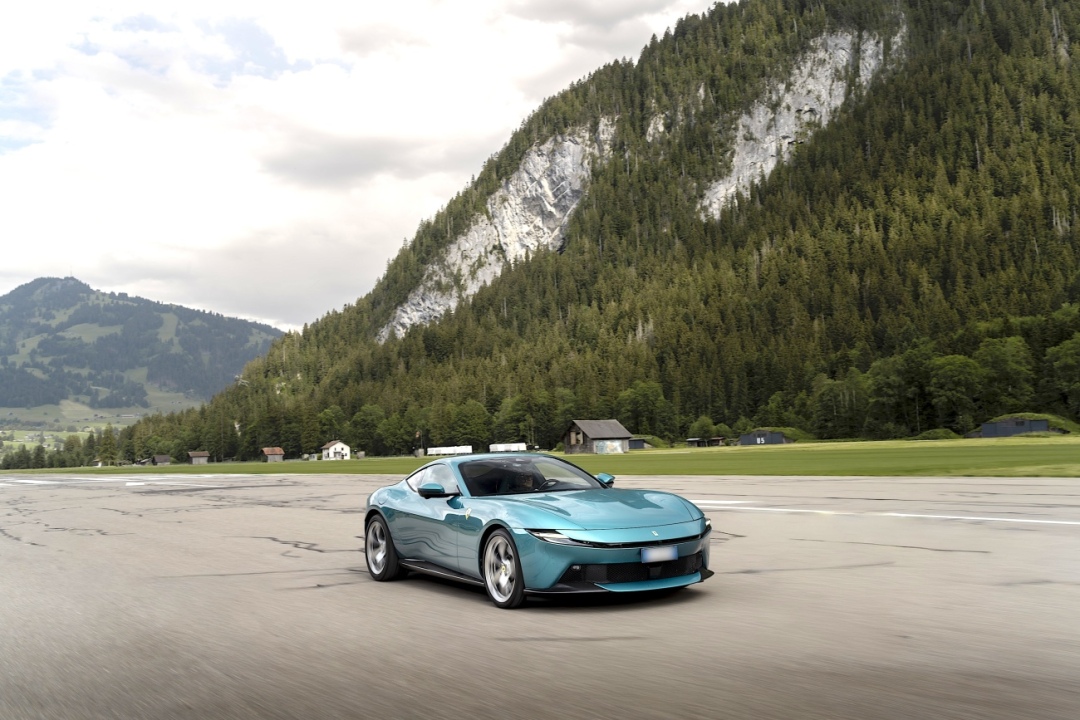
Alpine Odyssey: Bond, Saanenland, and the Heart of Passion
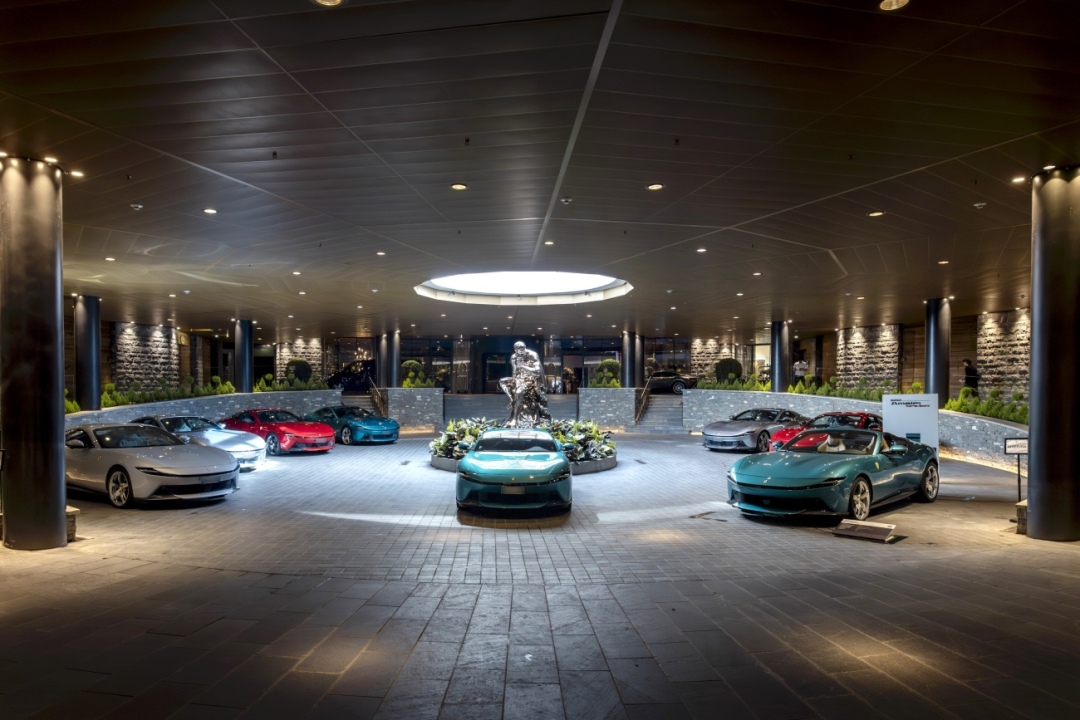
Disclaimer: This is written for Gstaad Life readers who live for cadence, colour, and the way a car speaks to the road. The test day began at the Gstaad Alpina, with its familiar “James Bond-like” entrance, where eight Ferrari Amalfi s were lined up in the circular drive, a perfect visual tease for the driving experience to come in the wonderful, sunny Saanenland. The Ferrari’s pulse was tangible from the first moment - mythic, intimate, and insistently passionate.
My first impression of this “entry-level” Ferrari’s exterior was very positive. The updated GT silhouette is, in my opinion, a very successful evolution from the already beautiful Roma. The Amalfi has a gorgeous, modern GT form that respects Ferrari’s lineage while insisting on a sculpted, contemporary future. The front-mid V8 sits under a long, clean bonnet, hinting at speed even when stationary. A floating rear wing, slim headlamp detailing, and precise lines convey a design language that is sharp without shouting. “Verde Costiera” is the chosen launch colour; it was initially to me a strange decision, but an interesting one – and arguably the right one considering the name. The venue showcased all the classic colours, and I must admit, I am still leaning towards my personal favourite Ferrari colours - red or silver, contouring every surface with life. This car’s design communicates passion through quiet authority: every line purposeful, every surface deliberate.
Compared to the Roma, the interior is more generous in space and clarity, with clean lines, tighter sightlines, and a sculpted central tunnel. The interior material choices are vast and will certainly meet any Ferrari enthusiast’s tastes, underscoring race-car sportiness wrapped in refined luxury. Personally, I love the return of tactile buttons – a human touch in a present world of glass and touchscreens. And there is a back seat, perfect for a set of Dachshunds enjoying a drive.
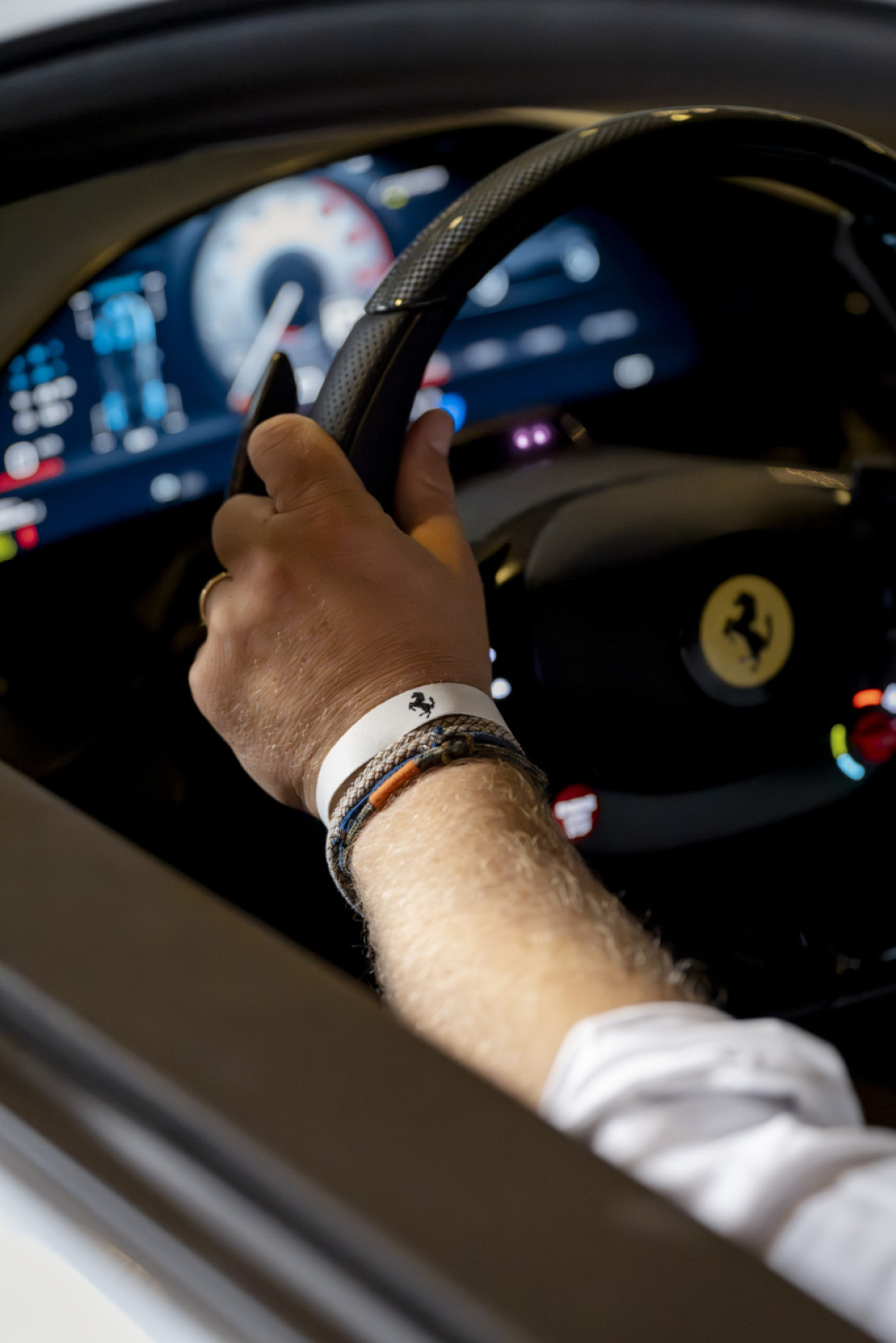
The steering wheel deserves its own note. It truly conveys a sense of a unique driving-machine design with racing DNA. I love the fact that the start button sits proudly on the steering wheel. The design is perfect. I noticed that after the day was over, I had rarely moved my hands from the wheel during the session.
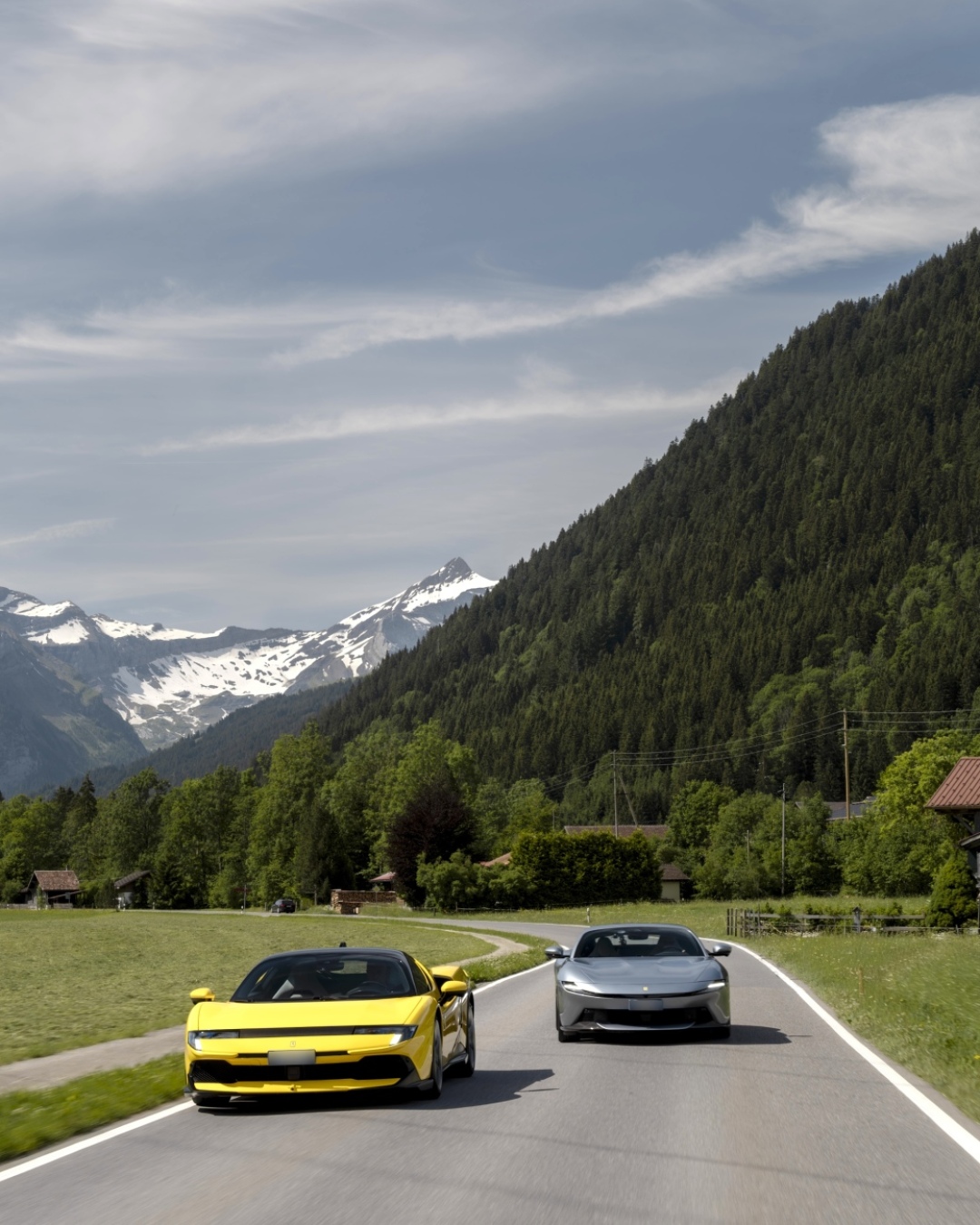
On the road, town driving is impressively nimble; mountain roads reveal the true nature. In Saanenland’s rolling lanes, the car responds with direct honesty – the chassis reads the pavement and rewards confidence with precision.
As you climb towards alpine passes, balance takes precedence. The car sits low; inputs remain light yet precise. The steering is razor-sharp – an almost telepathic link between you and the front tyres. It’s not merely steering; it’s a dialogue with the road, a little nudge here, a confident bite there, as if the car were listening and answering back.
Braking is also a highlight. The brake-by-wire system communicates clearly, making downhill deceleration deliberate and controllable. Road noise is minimal at low speeds, but switch to Sport and the cabin erupts into a concert hall, with the engine as the star. The soundtrack is Ferrari’s signature – bold, purposeful, and unmistakably unique.
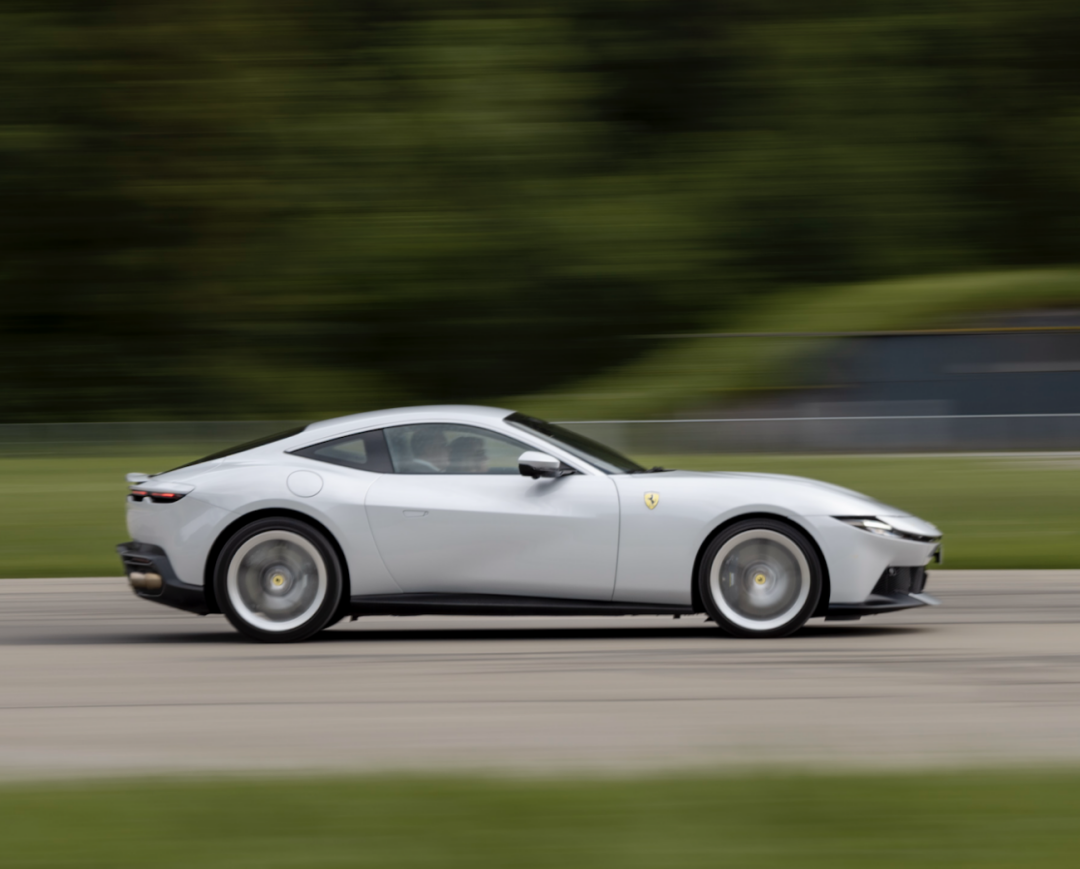
We ended the tour at the Gstaad Airport strip: a concluding ritual where the racing DNA was to be tested. The day’s crescendo occurs on the quiet, empty airport strip, a controlled stage for the car’s command at speed. While officially the entrylevel Ferrari, it delivers power in abundance, stability feels deliberate, and the balance among acceleration, steering, and braking becomes a choreography you orchestrate in real time. It’s here that Ferrari’s heritage – engineered precision, driver-centric tuning, and a disciplined appetite for speed – shines brightest. The V8’s voice carries through the emptiness, a raw, refined hymn to Ferrari. Love!
Purely my own opinion, but I am compelled to make some comparisons to what I consider two similar cars, so here we go: Ferrari Amalfi against Porsche 911 and Aston Martin DB12
• Porsche 911: Precision personified. German engineering at its best. The 911’s steering is telepathic; its feedback is razor-sharp. Performance is undeniably impressive. The Amalfi adds a theatre-like layer – an immersive storytelling experience that invites you into a driving narrative rather than simply delivering speed and handling. The Amalfi’s cockpit immersion and tactile controls feel more cinematic, more everyday-driver-friendly in their emotional pull, while still offering the thrill of a pure driver’s machine.
• Aston Martin DB12: Two moods of grand touring. The DB12 leans toward long-haul serenity and restrained refinement. An incredibly beautiful car. I find the Amalfi more urgent and visceral, urging you to engage, react, and chase the edge with precision that rewards risk with clarity. It’s a more passion-driven GT behaviour calibrated for immediate feedback and high-speed poise.
As the sun sets over the Saanenland, the car’s lines take on a new depth, and the launch colour seems to shift with the light. I'm beginning to understand the decision Ferrari made about the colour.
Looking back at the event, the setting, the beautiful Saanenland tour, the alpine climbs, and the airport test all converge into a single, emotional arc: Ferrari’s Passion. And when leaving the event at the Alpina Gstaad, I could not help but wonder whether Mr Bond should consider a Ferrari Amalfi next time around.
NIKLAS LINDBERG