

Daniel Hope - Coming home to Gstaad
17.07.2026 Profile, Menuhin Festival & Academy, Inspiration, Arts & Culture, Profile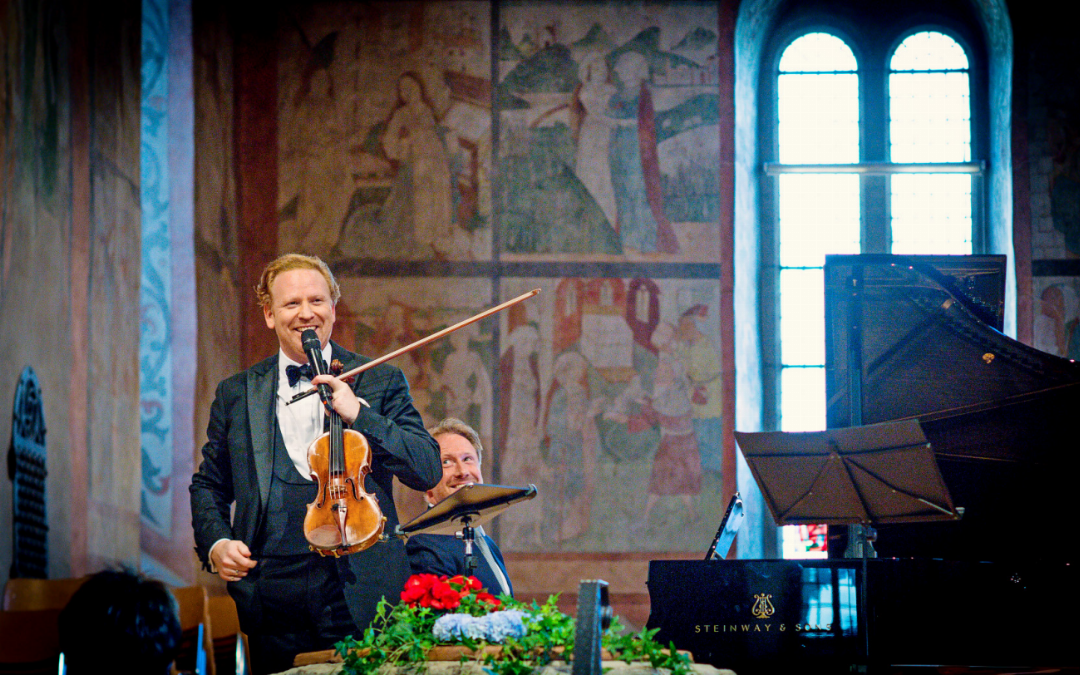
Gstaad has long been a place where families return generation after generation. For violinist Daniel Hope, the connection runs even deeper. This summer, as the new Artistic Director of the Menuhin Festival Gstaad, he returns not only to the festival that shaped his musical life but ...
Gstaad has long been a place where families return generation after generation. For violinist Daniel Hope, the connection runs even deeper. This summer, as the new Artistic Director of the Menuhin Festival Gstaad, he returns not only to the festival that shaped his musical life but also to the place he has regarded as a second home since childhood.
You've chosen “Family Matters” as the theme for the 70th edition of the Menuhin Festival Gstaad. Why did you feel it was the right theme for your first season as Artistic Director?
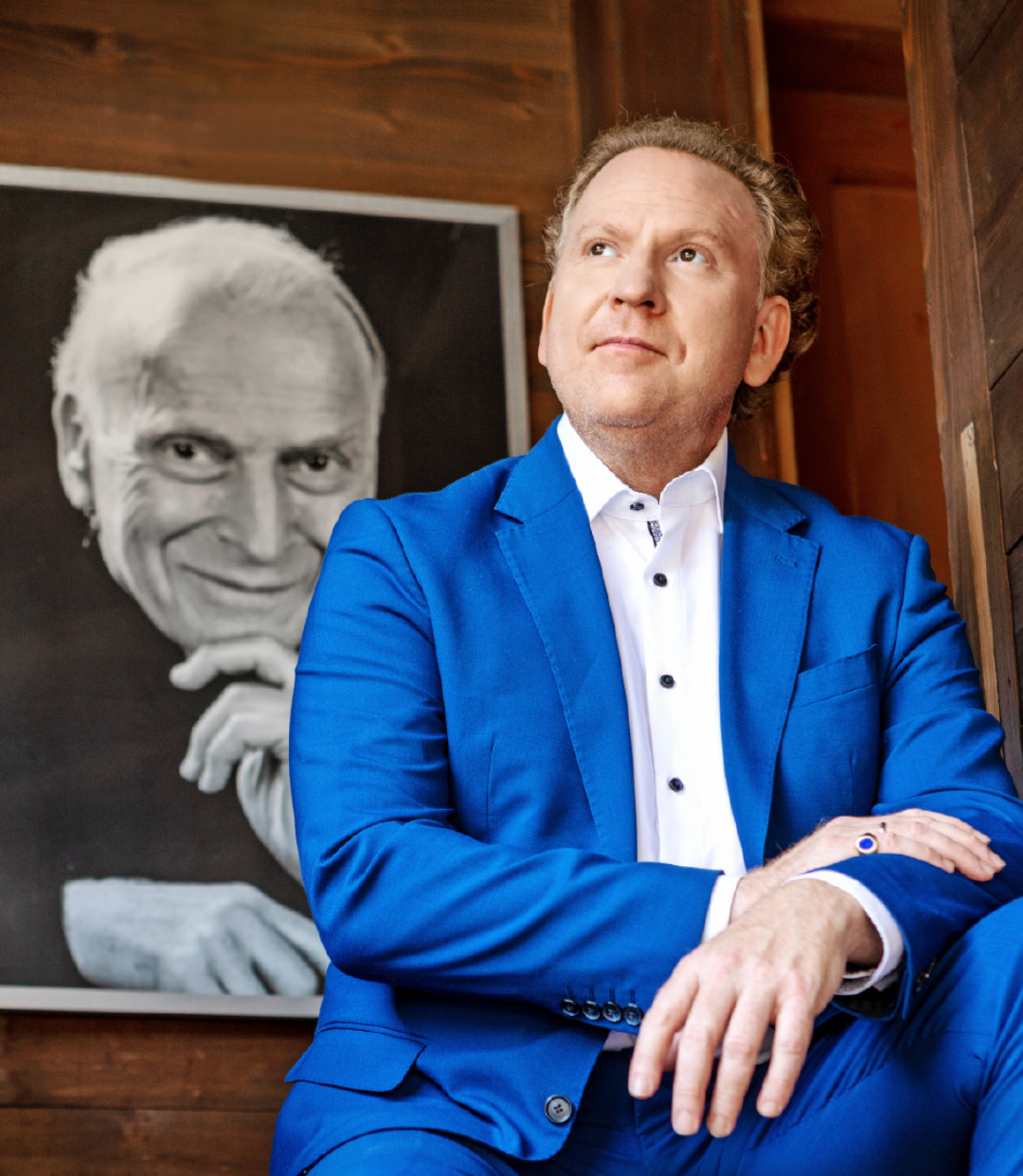
For the first time, it truly feels like a homecoming. This place is inseparable from my earliest memories of both life and music.
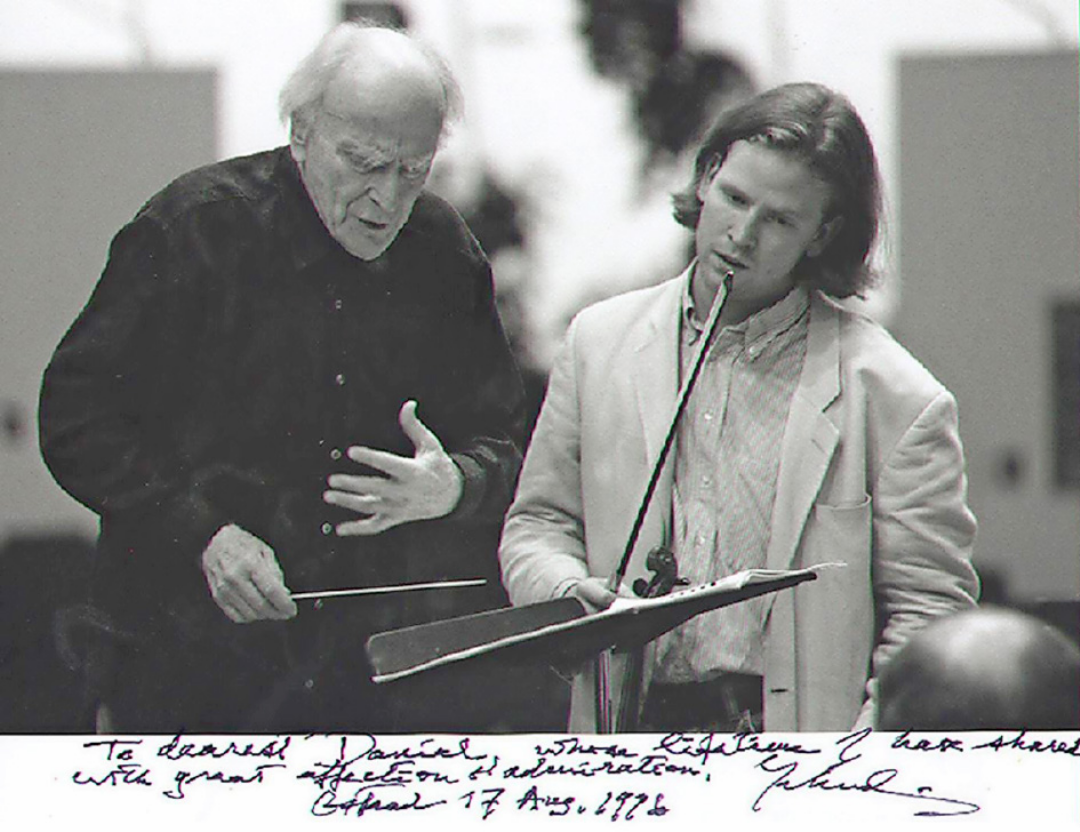
Our family had just left South Africa for England when Yehudi Menuhin offered my mother a job as his secretary. His first words were, "Come to Gstaad." My mother replied, "I can't; I have small children." He immediately said, "But the whole family comes to Gstaad!"
In a sense he brought our family from South Africa to England – and ultimately to Gstaad. I was only a baby at first, so I don't remember that first summer, but from the age of three, we came here every year for the next twenty years. Many of my first experiences happened here. I discovered the beauty of the mountains, I heard extraordinary music, and I sat in the church in Saanen where the Zurich Chamber Orchestra performed with Yehudi Menuhin himself. Following in his footsteps now is an enormous privilege. After all, he gave our family the gift of music. Nevertheless, Family Matters is about more than family in the traditional sense. It also reflects the family of instruments, composers and musicians. Above all, it's about a sense of belonging.
You have often said that Yehudi Menuhin transformed your family's life. In what way?
He certainly saved us from what could have been financial ruin. My parents arrived in England with very little indeed. My father couldn't get his books published, so my mother had to find work.
When she began working for Menuhin, she understood both him and his approach to life. She helped organise and reshape many aspects of his professional life, and in return he transformed ours through his extraordinary generosity and openness.
When I was four years old, I watched him rehearsing and performing, and I wanted to do the same. He encouraged me, helped me find a teacher and was always there for our family. He truly transformed our lives, and for that I will always be enormously grateful. And, of course, he introduced us to one of the most beautiful places on earth.
How was life in Gstaad during those early years?
We spent every summer and winter here. That meant not only attending concerts and rehearsals, but also seeing everything that goes on behind the scenes to make a festival work.
By the time I was thirteen, I was turning pages at the church concerts and carrying music stands around. I had the privilege of being close not only to Menuhin but also to many of the great musicians who performed here. This gave me a unique insight into musical life from a very young age.
What made Yehudi Menuhin's artistic vision for the festival so distinctive?
Menuhin was unique because he never divided music into categories. I remember meeting Ravi Shankar and Stéphane Grappelli here. This was the mid-1970s, long before crossover projects became fashionable. Yehudi was decades ahead of his time. As a child, I never realised there were different categories of music. I would see him rehearse with Mstislav Rostropovich or Wilhelm Kempff during the day, then spend the evening playing Indian ragas in the garden. To me, it was all simply great music.
Only later, when I began studying with other teachers, did people tell me I shouldn't play Indian or folk music because serious classical musicians didn't do that. I was genuinely shocked. I couldn't understand why anyone would put boundaries around great art.
Menuhin never did. He always looked beyond labels and genres. What mattered to him was reaching the musician's soul, and, through that, the music.
How do you share your passion for music with audiences today?
We live in a world filled with anxiety, conflict and division. Music remains one of the simplest ways to bring people together. You can sit beside someone you've never met before, share a concert, and discover common ground, at least for those few precious moments.
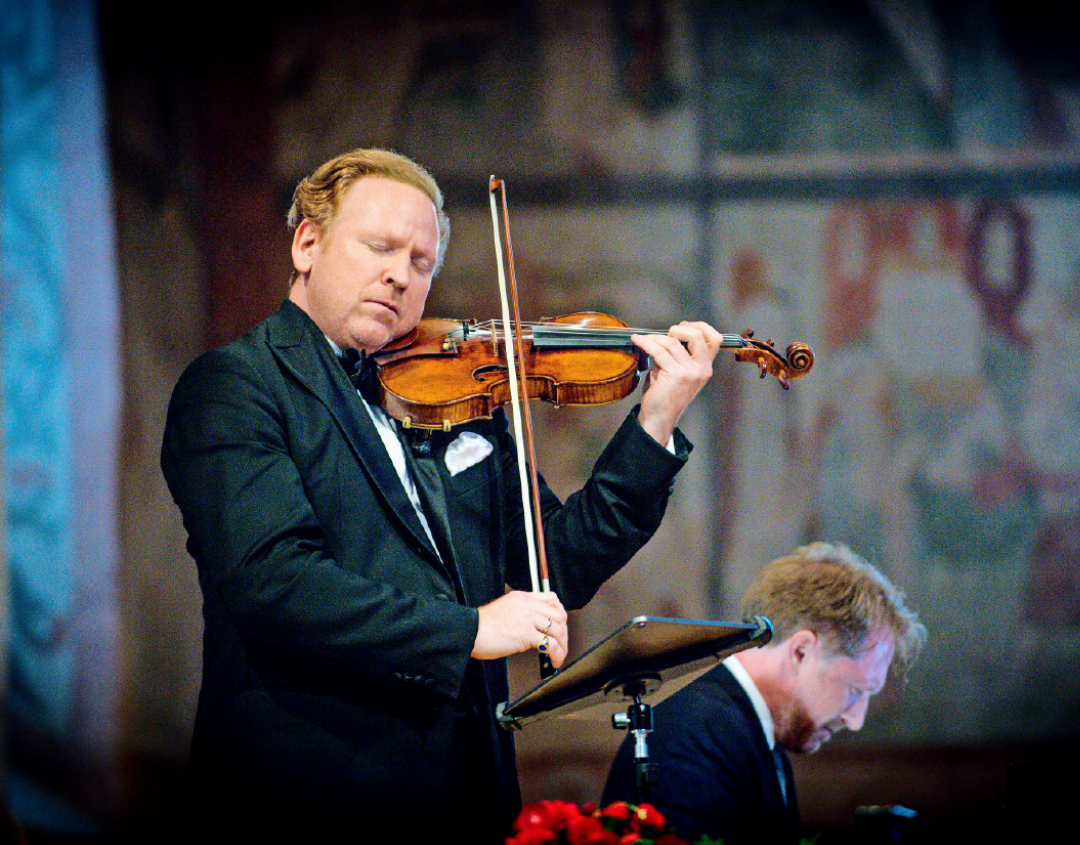
Performing remains the most important part of what I do. Being on stage and playing live is irreplaceable. But it's only one way I communicate music.
I've also been writing about music for many years, and for the past decade I've hosted a two-hour radio programme every Sunday on German public radio. During the pandemic, I produced over 150 episodes for ARTE of my own television series from home in Berlin. We invited musicians into the house to perform, combining music from The Beatles and Gershwin to Alfred Schnittke and Sting. It became a wonderful way to bring music into people's homes during a difficult time.
Any opportunity to share music is worth embracing. I've also been involved with Live Music Now, the organisation Menuhin founded in the 1970s to bring live performances into hospitals and care homes.
Music fills my day from morning until night, and I simply try to pass that enthusiasm on. Interestingly, some people first encounter me through my radio programme. They don't even realise I'm a violinist until they come to a concert. For more than thirty years, I've given children's concerts. If you ask kids to close their eyes while you play a melody, their imaginations come alive immediately. They're incredibly receptive. Once they experience music and instruments at close quarters, it can be life-changing. Perhaps only one or two children in a class will be inspired to learn an instrument, but that's enough to change a whole lifetime.
Today, social media allows music to reach audiences in ways we could never have imagined. We should embrace those opportunities without compromising what matters most: outstanding music performed by outstanding artists.
Crossing musical boundaries has always been part of your career. Will that continue to shape the festival?
Absolutely. I've been collaborating with pop, jazz and folk musicians for more than twenty years. One of the most valuable lessons my first violin teacher ever taught me was how to improvise. For a classical musician, that was transformative. I wouldn't describe myself as a great improviser, but I feel completely at ease joining an Irish folk band, for example, following the rhythm and becoming part of their music.
I'm equally fascinated by what happens when different artists come together. I love creating those encounters while allowing everyone to remain true to themselves.
You'll see more of that in Gstaad over the coming years. I believe audiences today are more open-minded than ever before. Similarly, Gstaad has always provided a platform for young musicians, and this year we've almost doubled their number. They inspire young audiences because they create genuine connections between people of the same generation. The emotional power of music is often strongest when people recognise themselves in the artists on stage.
This year's programme is exceptionally rich and diverse. Which events are you most looking forward to?
The Fiddlefest on our opening weekend is something I'm particularly excited about. We're bringing together six violinists from completely different musical traditions: the Norwegian Hardanger fiddle, gypsy swing in the style of Stéphane Grappelli, classical music, Irish music and folk traditions. Bringing those worlds together feels very much in the spirit of Menuhin. On 2 August, we'll transform the Festival Tent in a way audiences haven't experienced before. Through projection, light and spectacular stage visuals, we'll present short and very poignant arthouse films accompanied by live music performed by the outstanding LGT Young Soloists. I want audiences to leave feeling they have been transported somewhere completely different for two hours. In a world dominated by negative headlines, it offers a rare opportunity to experience something truly uplifting.
Among this year's internationally renowned artists are Pinchas Zukerman (16, 17, 24 and 25 July), Benjamin Bernheim (21 July), Sir András Schiff (31 July), Steven Isserlis (7 August) and Thomas Hampson (19, 26 and 28 August), to name just a few.
Alongside them are many young artists, and I want to give them the opportunity to grow with the festival so that audiences discover them here and follow their careers in the years ahead.
I'm also particularly excited about our academies. We're welcoming outstanding new teachers, including Thomas Hampson and Pinchas Zukerman, and the standard of applications this year has been extraordinarily high. Some of the finest young conductors, singers, pianists and instrumentalists I've encountered will be here, and these concerts are free for everyone to enjoy. Watching and listening to these musicians at the beginning of their careers is deeply inspiring.
Alongside the concerts, you've introduced several new initiatives this year.
Yes, one of the projects I'm particularly pleased about is the Summit, a threeday roundtable and think tank at the Grand Chalet (24–26 July). We'll bring together some of today's leading voices from the worlds of culture, music and ideas..., including Setsuko Klossowska de Rola, Marco Malagodi, Dr Clemens Trautmann and Jakub Fiebig, to discuss the future of classical music.
We'll explore questions that affect all of us: How is artificial intelligence changing the arts? How will young musicians respond? How will composers create music in the future? These questions are becoming increasingly important.
We're also introducing a completely new format: the President's Hikes (on 9, 16, and 27 August). Our Festival President, Richard Müller, is a certified hiking guide with deep roots in the Saanenland. He'll lead walks through some of the region's most beautiful landscapes, accompanied by live music along the way. It's a wonderful way of bringing together nature, music and the unique atmosphere of Gstaad.
What would you like people visiting Gstaad this summer to take away from the festival?
I hope people come with an open mind and leave feeling inspired. Music is ultimately about empathy. There is, of course, a place for works that explore darkness and tragedy, but there is also immense beauty in the world. Few places embody that more naturally than the mountains of Gstaad.
This festival has an extraordinary tradition and heritage. Artists from around the world come to this Alpine village to tell their stories through music. I hope audiences leave with lasting memories, not only of the performances but of the experience of sharing them together.
Looking beyond this anniversary year, where do you hope to take the Menuhin Festival Gstaad? What legacy would you like to leave?
I'd like the Menuhin Festival Gstaad to become known as a deeply personal festival, one defined by its artistic personalities and its authenticity. Today, we can copy almost anything and have instant access to almost everything. Authenticity is becoming increasingly rare. What interests me is the original story, the genuine artistic voice and the human connection behind it. If, in years to come, people think of Gstaad as a place where extraordinary artists come together not only to perform at the highest level, but also to inspire, connect and share generously with one another and with audiences, then I'll feel we've succeeded.
SASKIA VON ALTISHOFEN