

CHEF'S TALK - Preserving the essentials
30.12.2025 Lifestyle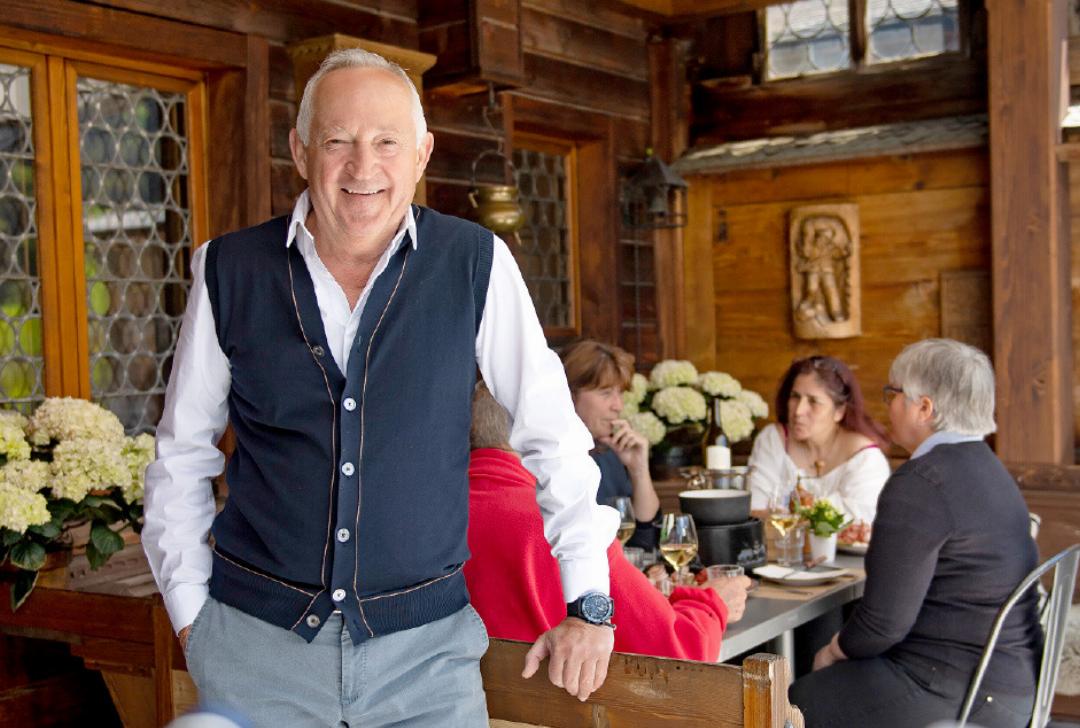
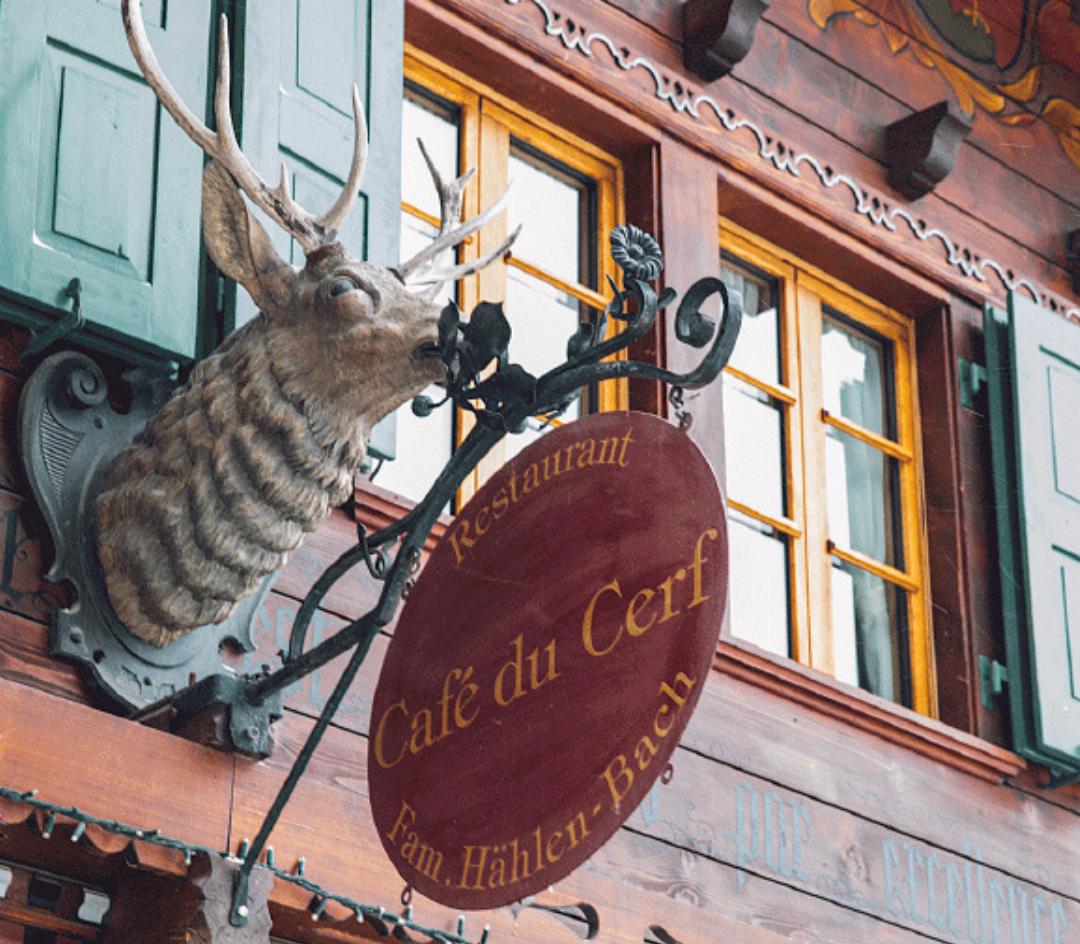
Edgard Bovier savours his work at the Café du Cerf in Rougemont. Here, he welcomes a clientele he knows well: holidaymakers from Gstaad and locals from the region. It is the perfect balance between a career spent in luxury hotels and his childhood at the ...
Edgard Bovier savours his work at the Café du Cerf in Rougemont. Here, he welcomes a clientele he knows well: holidaymakers from Gstaad and locals from the region. It is the perfect balance between a career spent in luxury hotels and his childhood at the Buffet de la Gare, his parents’ restaurant in Saint-Léonard, in Valais. The chef shares his thoughts on this mythical place, where fondue was once served to the jet set while villagers danced to the sound of the accordion. As the guardian of the establishment’s history, he has created an authentic menu suited to year-round operations. The establishment has a rating of 12 points in Gault & Millau, and chef Yanick Poidevin now prepares the dishes. As the patron of the 2025 Semaine du Goût, Edgard Bovier also shares his attachment to local products and the essential role of restaurateurs.
We are here at the Café du Cerf in Rougemont, which you have taken over. What does this place represent for you?
My family and I moved to Rougemont 38 years ago, and this was the first restaurant we visited on our first evening. Even before that, when I worked in Gstaad, I already loved the concept of being in a chalet and eating fondue. And the atmosphere as well. The Hählen-Bach family was extraordinary, and the owner played the accordion every night. I have always loved this place, and I am happy to take care of this restaurant. People often tell me I am the guardian of its history. It has been renovated with great respect for its identity, keeping the furniture and photographs. But above all, its soul. Le Cerf was, and still a place loved by royalty, film stars, and singers. We have, for example, welcomed Richard Gere and Madonna.
The story of the Café du Cerf also echoes your own…
I grew up in a restaurant, the Buffet de la Gare in Saint-Léonard in Valais, the one my parents ran. I spent my whole life working in luxury hotels, but I come from this background.
Restaurants are the heart of social life. That’s where business happens, where people meet. Where you can come alone to eat or drink your coffee while reading the newspaper and still see people around you. That is also what I want to preserve here. Taking care of Le Cerf gives me great satisfaction. It is, in a way, the continuity of my career and my professional life in the restaurant world.
How did you preserve its culinary identity while making it more modern?
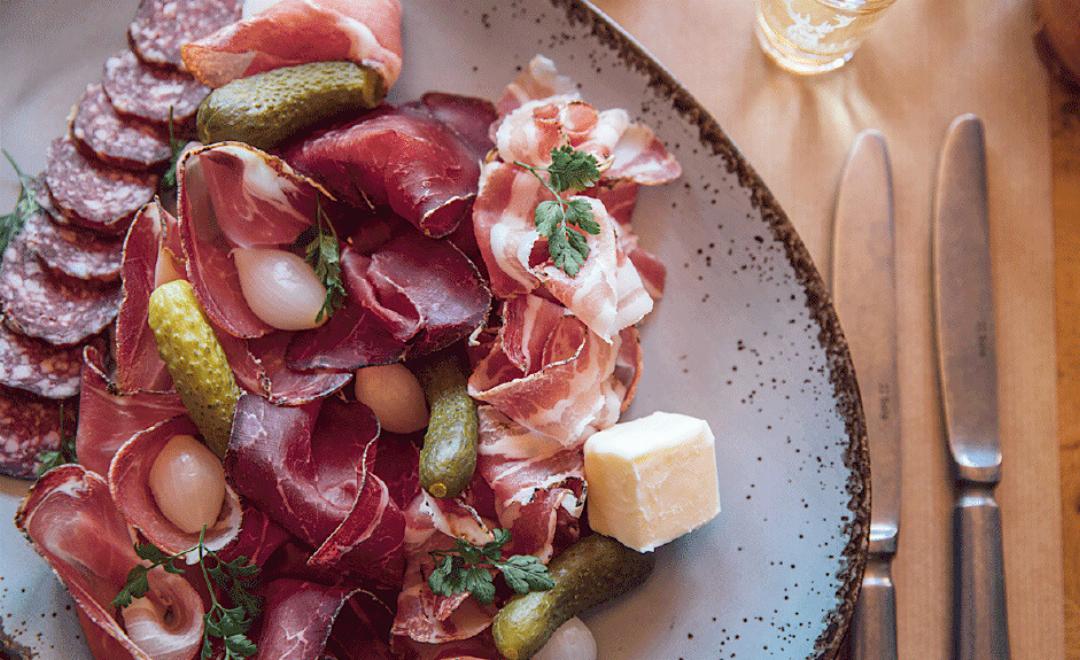
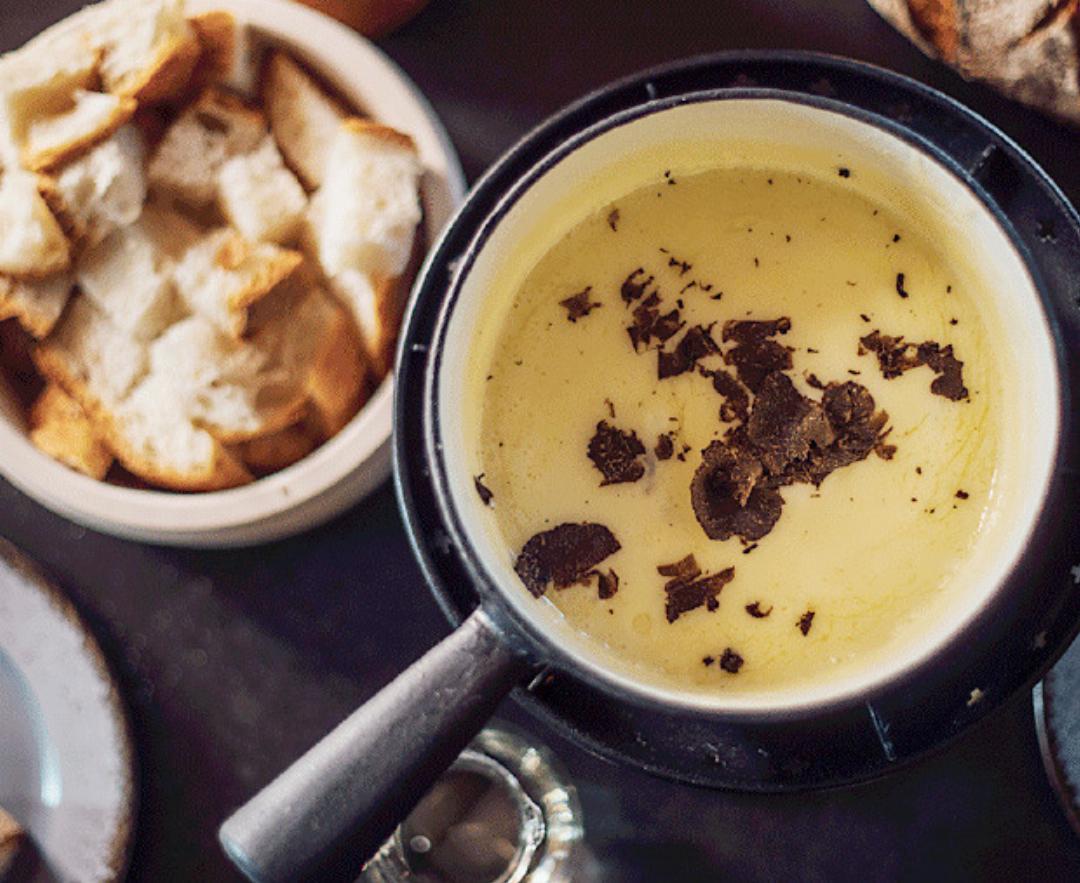
I added a few traditional dishes to the menu that have become, in a sense, must-haves, like the chard tart and the soupe de chalet, revisited in my own way, and featured in the book I cowrote, Les Secrets de l’Étivaz. The malakoffs as well. It’s a recipe I created for the Maison Suisse during the Olympic Games in Beijing. Fondue is also a flagship dish of my menu. Back then, there was only one type of fondue; today, we serve different versions depending on the season. We offer, for example, tomato fondue in summer and truffle fondue in winter. I designed a special fondue blend specifically for Le Cerf, the “Fondue Edgard,” made from different AOP cheeses from the region: L’Étivaz, Gruyère, and Vacherin.
We also serve fish, a pasta dish, and a few vegetarian options. The restaurant industry has changed: you can’t offer only cheese dishes if you want to keep regular customers. For the products, I work with the village butcher, the cheesemaker, and the baker. We really try to be an integral part of the region.
You were also the patron of the Semaine du Goût. Isn’t true luxury simply enjoying foods that genuinely have flavour?
Absolutely, we are returning to fundamental things. We are reconnecting with nature and the work of farmers. I come from a family with farming roots, so this is very important to me. We have a responsibility. The customer who walks through our door must have crusty bread, butter that comes from the local dairy. We restaurateurs and chefs are the guardians of taste.
Public establishments are essential to village life. In Rougemont, some restaurateurs may have forgotten the locals by not offering daily menus, for example. Le Cerf has always maintained this option; does it matter to you?
Of course. Furthermore, we are open all year, except for three weeks in May. This is crucial for our customers, allowing them to dine at the restaurant throughout the year. It also helps us retain staff. I am fortunate to work with employees from the village and surrounding area, which I find very rewarding. In a village like Rougemont, this is a significant asset. It’s not always easy, but we manage. It truly matters to me. We saw during the COVID-19 pandemic how walking through a village when all the cafés are closed is quite sad.
This place has a history not only for local residents but also for the Gstaad clientele, who used to visit even in the days of the Hählen-Bach family.
Is this a place where everyone from different backgrounds comes together to eat side by side?
In the 1980s, I was a chef at the Olden in Gstaad. At that time, there was an upmarket restaurant, and a bistro called La Pinte, where farmers would stop for their nine o’clock coffee before bringing their milk to the dairy. Sometimes, they would stay until midday for an aperitif. The stars of the era, like Elizabeth Taylor or Liza Minnelli, preferred dining at La Pinte rather than the restaurant. It was a successful mix of clientele. At Le Cerf, it’s the same. Workers building chalets or working on construction sites come here for lunch. They feel at home. We also have guests who own second homes. It’s a successful blend. I believe this mix of guests is the key to Le Cerf’s success.
Do you think that with its expansion to the ski areas of the Gstaad region, the Magic Pass will bring more customers to the restaurants in the area?
In my opinion, we already saw an increase in visitors this summer. We had a wonderful summer season with a slight rise in our clientele. Visitors came to discover our magnificent region thanks to the Magic Pass.
MARY MEYER