



Champagne Cocktail - A luxurious darling of the Jazz Age
30.12.2025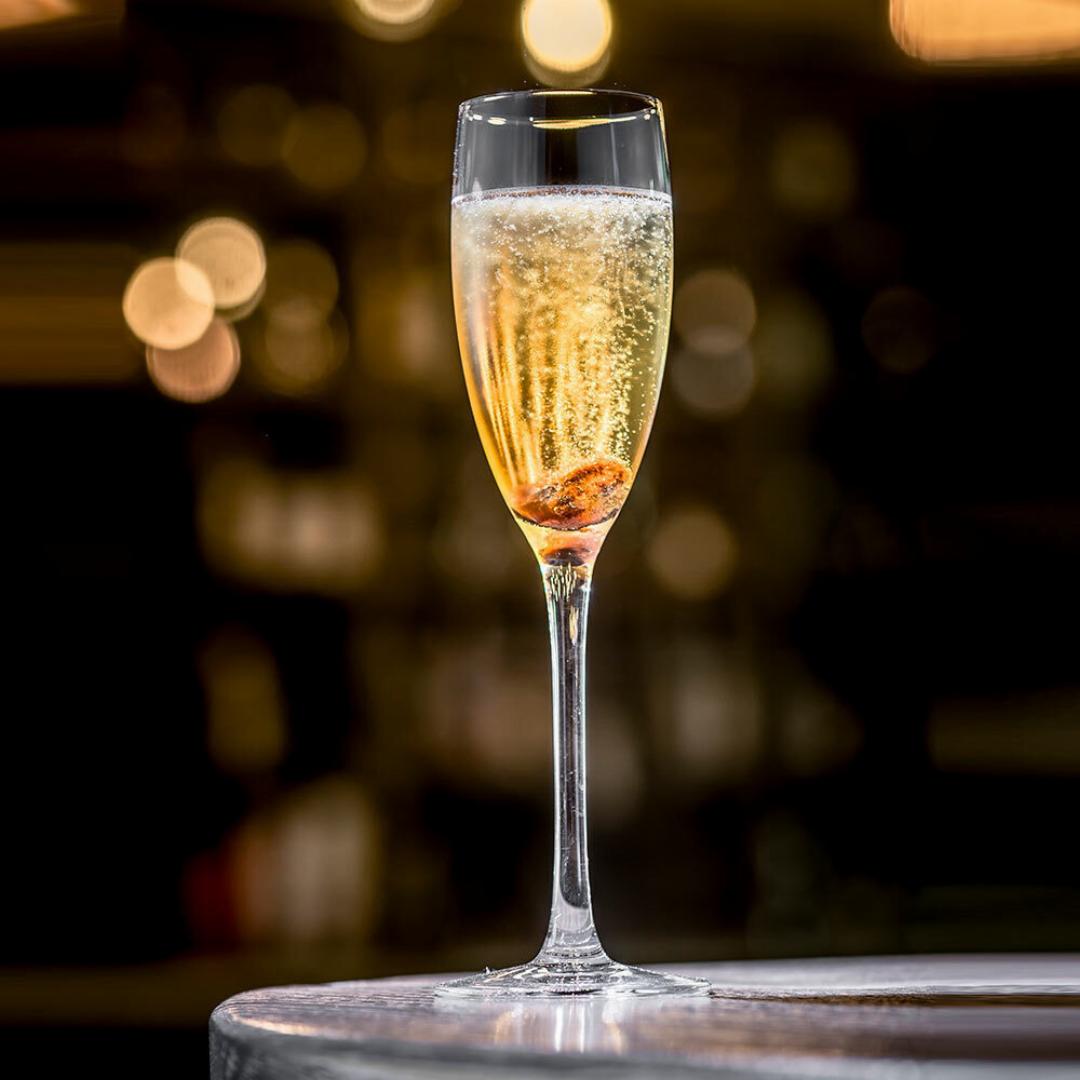
Early in F. Scott Fitzgerald’s novel The Great Gatsby, which turned a stately 100 years old this past April, narrator Nick Carraway meets wealthy socialite and flapper Jordan Baker at his first Gatsby extravaganza. Smitten, he relates that “a tray of cocktails floated at us through ...
Early in F. Scott Fitzgerald’s novel The Great Gatsby, which turned a stately 100 years old this past April, narrator Nick Carraway meets wealthy socialite and flapper Jordan Baker at his first Gatsby extravaganza. Smitten, he relates that “a tray of cocktails floated at us through the twilight.” Given that the great novel’s pages flow lavishly with champagne, one can confidently speculate that the platter in question held the delicately divine Champagne Cocktail – not, mind you, one of the many contemporary versions that attack the bubbly with various and sundry syrups and juices, but the original, canonised classic.
In the parlance of the modern bar, the term “cocktail” encompasses all drinks that mix alcohol with any other liquid, but in the primordial days of the bartender’s craft, when the job was maturing from coarse saloonkeeper to respectable publican, a cocktail referred to a specific way to prepare your preferred spirit. There were many such categories: bucks, slings, juleps, fizzes, fixes, collinses, et al., but cocktail was the name given to the original mixed drink, which is perhaps why it blossomed through the ages to become the umbrella term for the entire category.
Originally a hangover curative, the cocktail was a measure of whatever you indulged in during the previous night’s revelries, sweetened with a lump of sugar and fortified with a dash or two of bitters, a medicinal compound of barks, roots, and winter spices, like cinnamon, clove, and nutmeg. The original version, based on whiskey, is what we now know as the vaunted Old Fashioned, but in the mid-1800s, you simply added sugar and bitters to your choice of beverage to make the cocktail version: brandy, gin, or,marvellously, champagne.
First recorded in the 1862 version of the original cocktail guide, “Professor” Jerry Thomas’s How to Mix Drinks, or The Bon-Vivant's Companion, it wasn’t until the Jazz Age that the Champagne Cocktail really took flight, its aristocratic elegance a staple at every celebration of the Roaring Twenties.
There may never be a more beautiful cocktail to serve to your guests. Gatsby would have presented his in a shallow champagne coupe, but it shows better in a slender flute. Simply cast a small sugar cube into its depths, dash it with two or three drops of aromatic bitters (Angostura is the gold standard), and ease in approximately 15 ml of fine cognac. Making every effort not to disturb this base, slowly fill the glass with a crisp brut champagne, and watch in wonder how, upon contact with the sugar, the cocktail blossoms into a hypnotising bubble garden. Take care not to mix the ingredients before sipping; instead, let the bubbles gently deliver the flavours and aroma of cognac and spices to you, all elements arriving in perfect harmony.
Later in the novel, Nick admonishes his host that “you can’t repeat the past.” Fortunately, the Champagne Cocktail, at least, agrees with Gatsby’s fabled riposte: “Why, of course you can!”
SIMON OGDEN