

Behind the Glass
04.09.2026 Lifestyle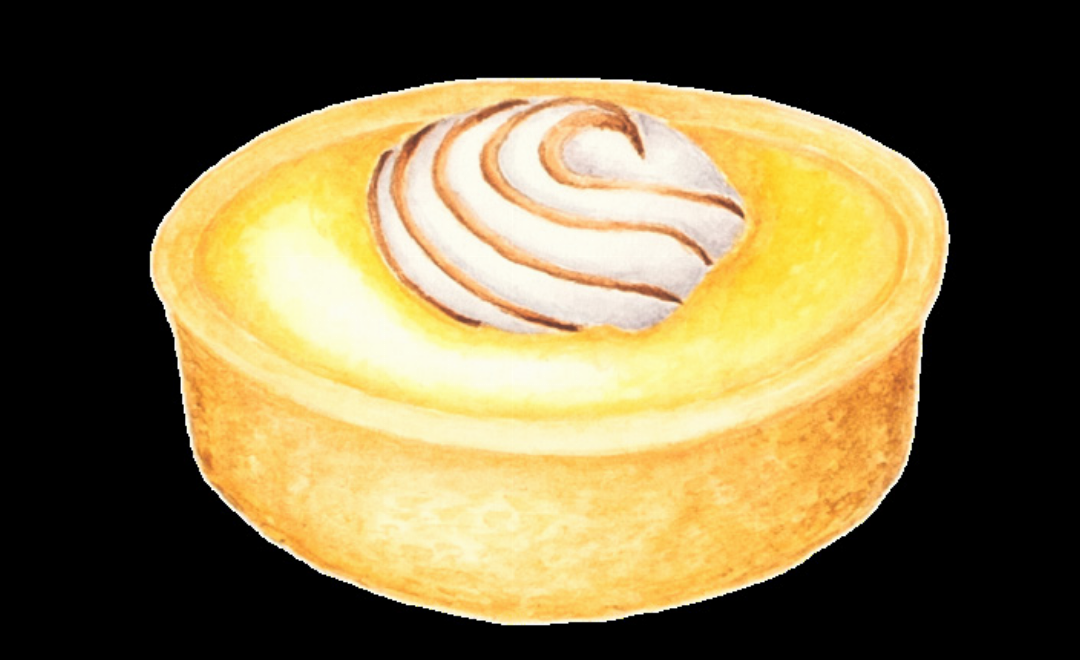
Swiss pastry counters are not a modern invention. They come from a long tradition of baking shaped by the seasons and recipes passed down through generations. That legacy is still visible today. Outside a café in Gstaad this afternoon, a handwritten chalkboard advertised Nusstorte made ...
Swiss pastry counters are not a modern invention. They come from a long tradition of baking shaped by the seasons and recipes passed down through generations. That legacy is still visible today. Outside a café in Gstaad this afternoon, a handwritten chalkboard advertised Nusstorte made with mountain cream. Inside, the nut cake sits behind the glass alongside the usual selection of immaculate cakes and tartlets.
The Line Up
The Carac is the one that immediately catches the eye: a small tart with a smooth, jade-green fondant top. A Swiss creation most closely associated with Vaud and Suisse Romande, its origins remain unclear. Thought to have emerged in the early twentieth century, it comes from a time when chocolate patisserie was still largely a city-based craft rather than something made at home. Beneath the fonda nt shell, you’ll find a layer of dark chocolate ganache, which initially came as a surprise to me. I had assumed the green icing suggested a lime flavour. Chocolate isn’t really my thing, though the Carac is undeniably popular.
The Citron tartlets, however, I can speak about with authority. A crisp shell, a filling that is thick, sharp, and properly lemony, topped with a glossy swirl of meringue. Citrus tarts have long been part of European patisserie, and I find the ones from local bakeries disappear in about four bites. This feels insufficient every single time. I invariably consider buying two.
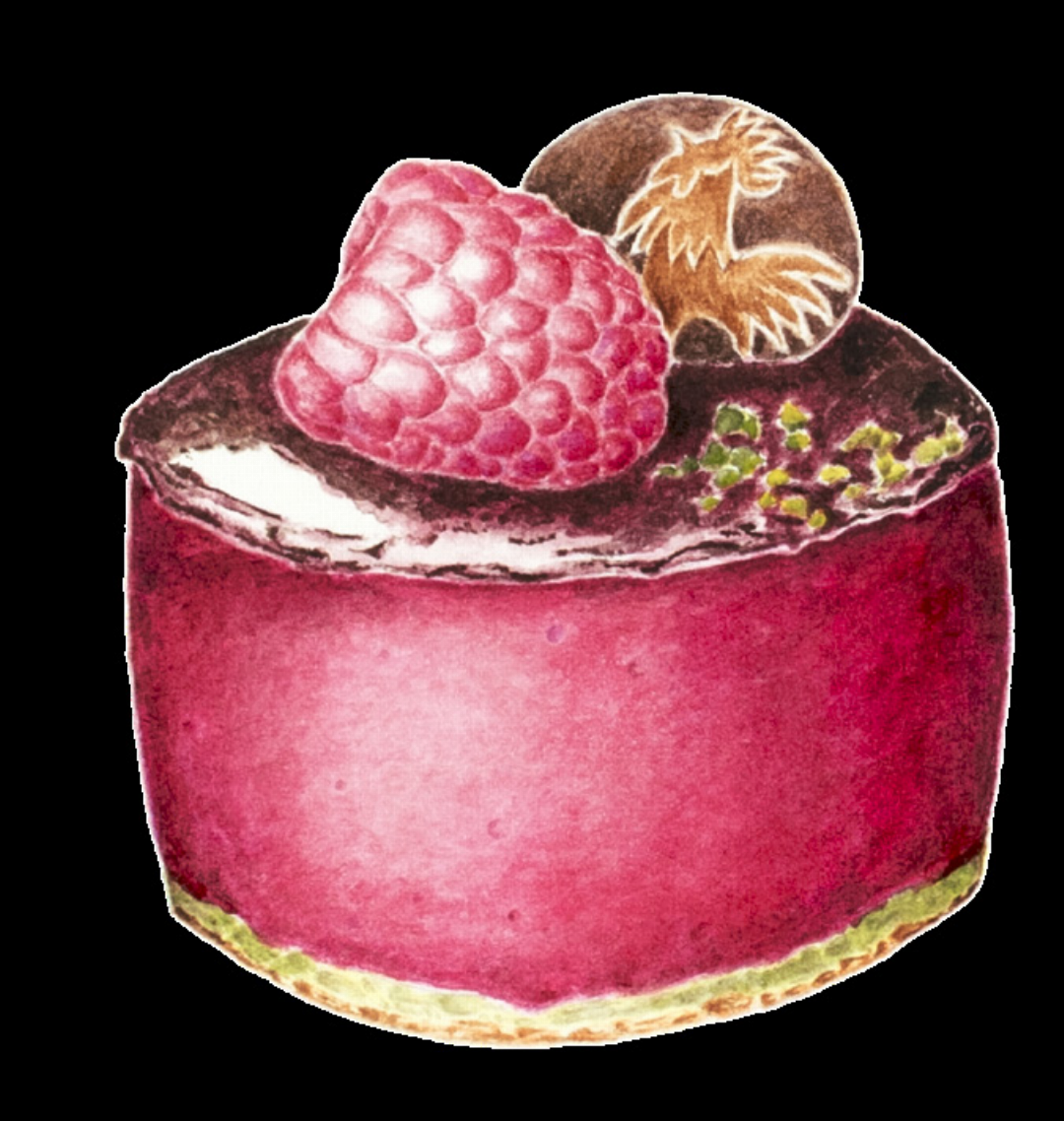
It turns out I’m not the only one paying attention to the cake displays. I was speaking with Katharine Amies, the botanical painter whose stunning illustrations of alpine flowers appear in GstaadLife this summer, when she mentioned she had turned her hand to cakes as well. Her illustrations of the Citron tartlet and Early Beck’s raspberry mousse cake accompany this piece.
She clearly has good taste in picking the Citron and I can see why her attention was drawn to the raspberry mousse, topped as it is with a small
chocolate cockerel bearing the name of EarlyBeck. This kind of detail speaks to the long tradition of bakeries ‘branding’ their work.
But what of the Nusstorte made with mountain cream? It apparently originates from Graubünden and is closely tied to mountain baking traditions shaped by preservation, long winters and the need for ingredients that travel and keep. Buttery pastry encloses a dense, nutty filling that is just sweet enough, with a slightly crumbly edge when you cut into it. Highly recommended.
Alongside these local favourites, you’ll find familiar staples like Linzertorte, one of Europe’s oldest named delicacies from Austria, apple cake, mille-feuille and many more. But if you cast your eyes further along the counter, you’ll see something quite different.
Beyond the Cakes
I am, of course, talking about the Canapés: slices of plain white bread topped with various combinations like hard-boiled egg, gherkins and ham sealed beneath a layer of aspic. This form of bourgeois European catering predates refrigeration, using aspic for both preservation and presentation, allowing prepared foods to be stored and served in elaborate buffet displays.
These open sandwiches are very popular here. I have even been invited to birthday parties where they were served instead of cake. I am sure they’re excellent, but I am quite happy for others to be the arbiters of that. I still struggle to understand gelatine on bread when there is a Citron tartlet sitting three inches away.
ANNA CHARLES
Illustrations by Katharine Amies,
katharineamies.com @katharineamies