

When Gstaad Slows Down
23.01.2026 Local News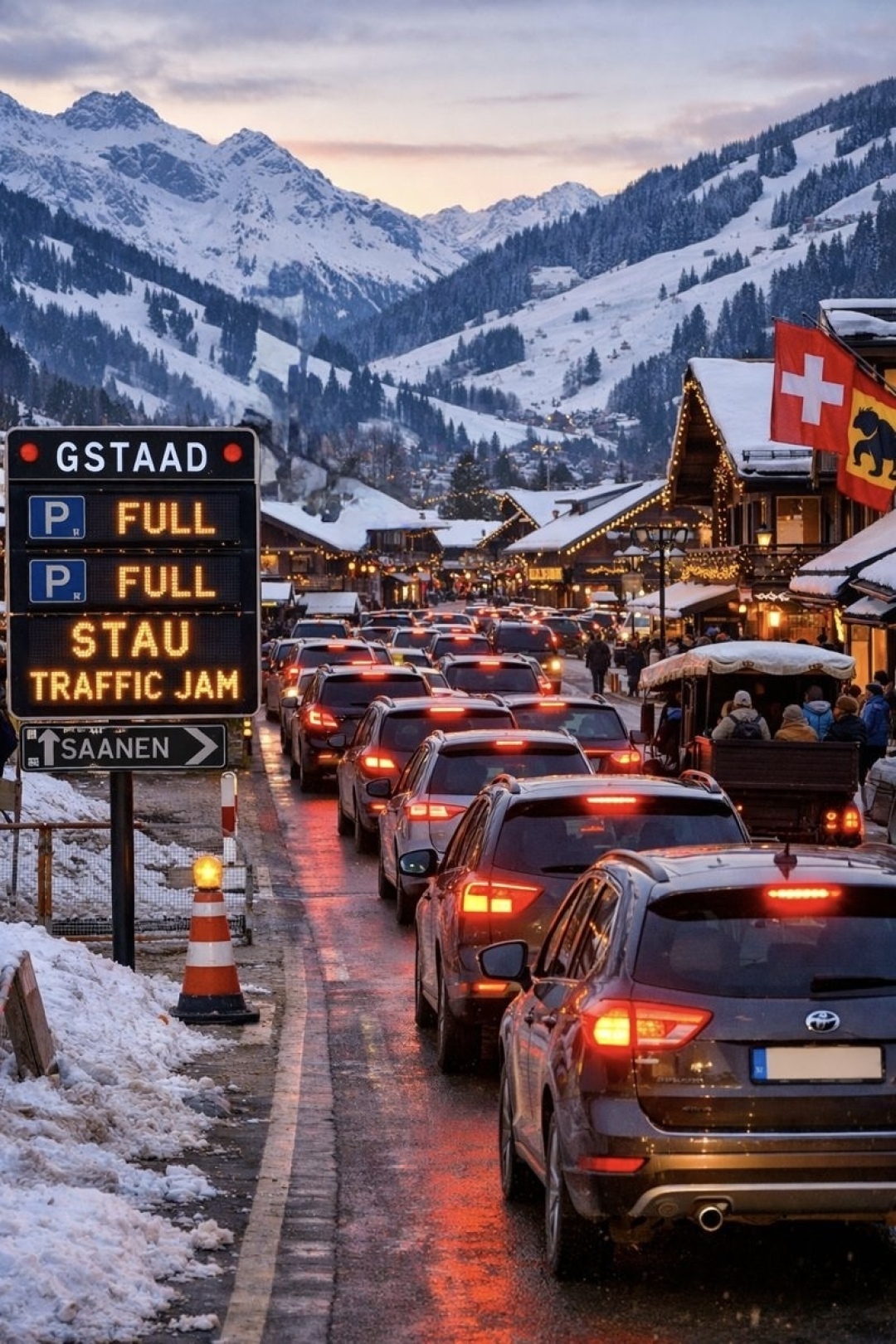
Traffic, peak days and the challenge of success
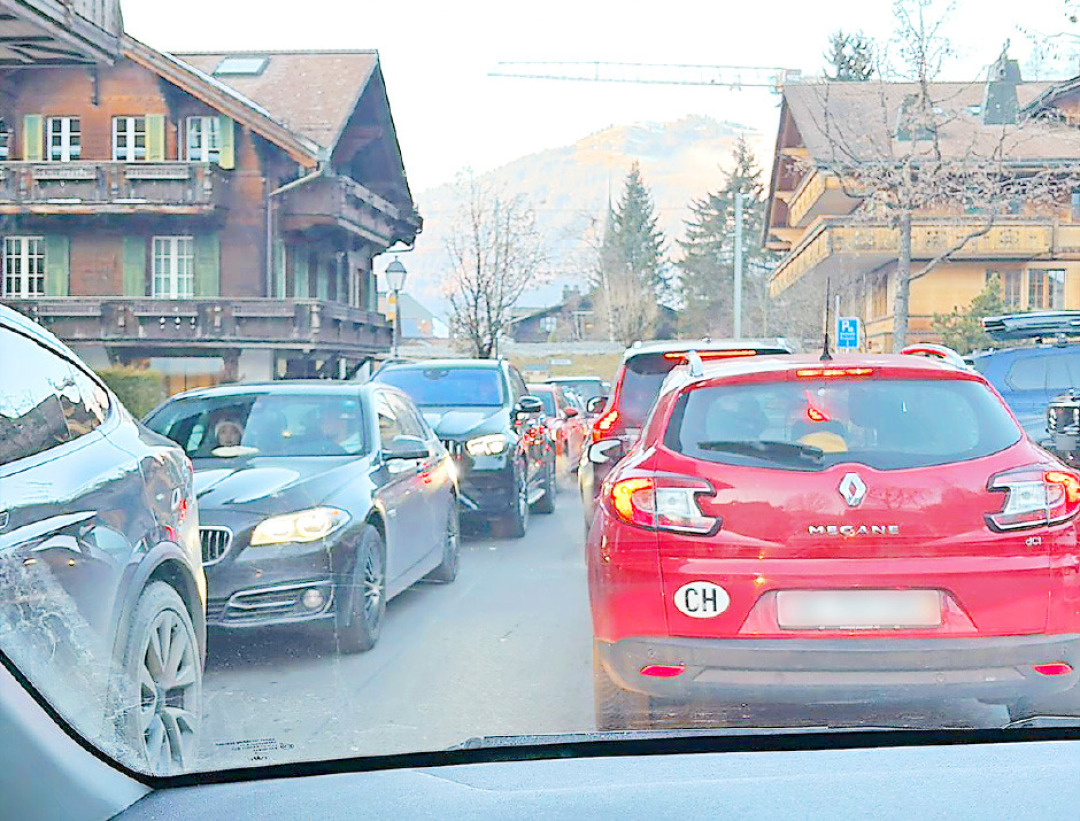
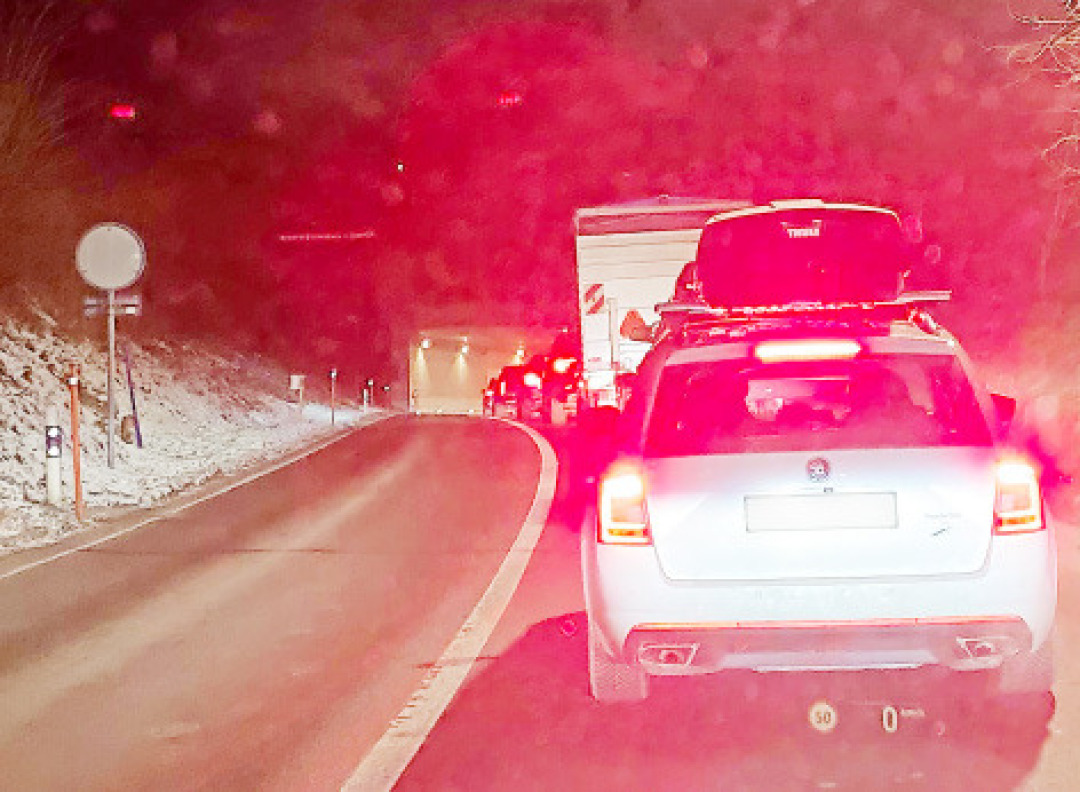
During the Christmas and New Year holidays, traffic congestion in and around Gstaad became an unexpected topic of discussion. Guests complained of long delays, locals spoke of gridlock, and fingers were quickly pointed in various directions, not least towards the Magic Pass. Yet behind the scenes, a more complex picture emerged. While the visual impression was one of chaos, tourism authorities, mountain railways, and the municipality were already working in close coordination to manage the situation and draw lessons for the future.
At the heart of the debate lies a fundamental question: where does Gstaad’s capacity really end – on the slopes, or in the village?
Not a ski-area problem
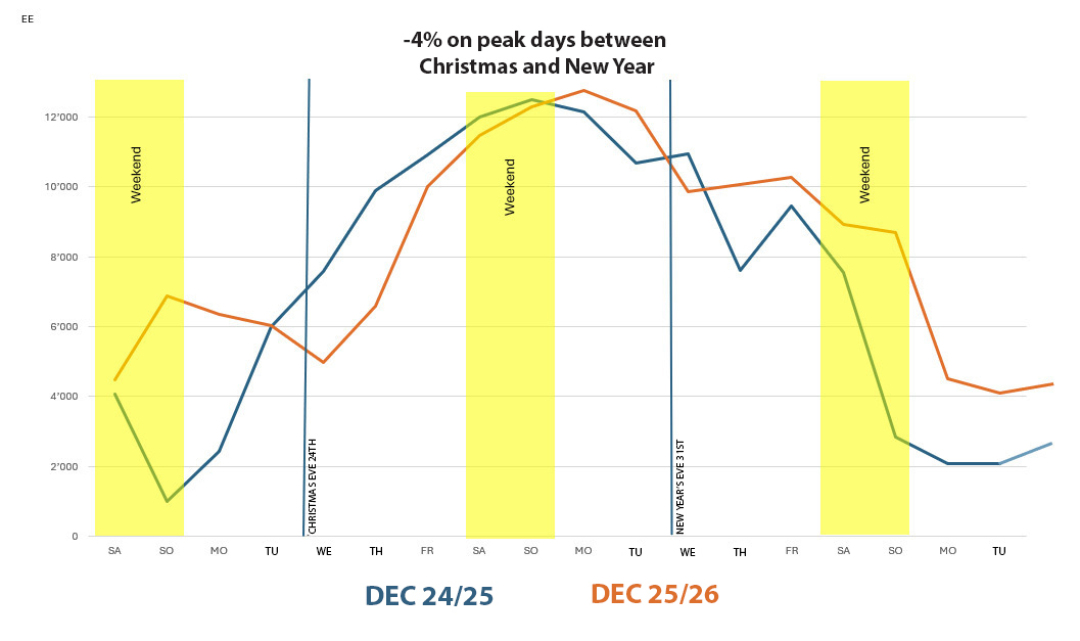
From the perspective of the mountain railways, the answer is clear. According to Gstaad Mountain Railways (BDG), the ski area itself did not reach its limits during the festive period. While the Magic Pass brought a noticeable increase in guests before Christmas and after New Year, the classic peak days between Christmas and New Year actually saw slightly fewer skiers than last year.
“The main volume of the ski area does not affect Gstaad, where the traffic jam occurred,” says Matthias In-Albon, CEO of BDG. At Gstaad Eggli, fewer skiers were on peak days than in the previous winter, and the closure of Wispile further reduced pressure on the lift system. Parking capacities at the valley stations, he adds, were sufficient, and the measures put in place, from improved signage to additional parking attendants, proved effective.
Where problems occurred, they were localised and time-specific. On 29 and 30 December, guests leaving the Eggli car park had to merge into already congested traffic. Elsewhere, delays followed weather-related late openings, such as at Videmanette and Horneggli after snowfall, and are expected again during major youth events like the Grand Prix Migros. “On peak days, there can always be point overloads,” In-Albon notes. “But overall, operations functioned.”
A village under pressure
If the slopes were not overcrowded, why did Gstaad feel overwhelmed? ForFlurin Riedi, Director of Gstaad Saanenland Tourism, the answer lies firmly on the valley “floor”.
“When you’re stuck in traffic for an hour to cover three kilometres, it feels like a collapse,” he says. “And that perception must be taken seriously.” The infrastructure in and around Gstaad, he acknowledges, was never designed for such frequencies. Yet it would also be unrealistic to build a road network solely for two or three extreme days a year.
What has changed, however, is the frequency of these situations. Days with traffic-jam-like conditions are becoming more common, and Riedi believes it would be a mistake to wait until congestion becomes a regular occurrence. “We shouldn’t only react once we have traffic jams on 50 days a year.”
Crucially, his observations challenge the assumption that skiers are the main cause. “Seventy, if not eighty percent of vehicles are not ski traffic,” he says. Day visitors, chalet guests, locals, commuters, delivery vehicles, taxis and even horse-drawn carriages all converge on the village to shop, dine, work or simply stroll along the Promenade.
A major contributing factor is so-called search traffic: drivers circling the centre in search of parking, then turning back when they find none. Each unsuccessful attempt adds another loop to already-strained access roads.
Visitor management as a quality issue
The discussion has brought renewed focus to visitor management, not as a logistical afterthought, but as a core quality issue. “Effective visitor management is match-deciding,” Riedi argues. “This destination lives from quality. And quality also means that things function, that the experience doesn’t suffer unnecessarily.”
That philosophy shaped preparations well before the Magic Pass was introduced. A dedicated working group was set up early on, bringing together the municipalities of Saanen, Lauenen, Gsteig and Zweisimmen, along with the mountain railways, GST, the hotel association, and the local trade association. The aim: to maintain an overview of all visitor-management measures and regularly assess their impact.
During the holiday period itself, coordination was intense. For nearly two weeks, stakeholders were in almost daily contact, monitoring developments and adjusting measures where possible, from traffic-service deployment times to interventions at known bottlenecks. Additional parking areas were created near valley stations and at the cross-country ski car park between Saanenmöser and Schönried, while the Gstaad Card continued to encourage overnight guests to use public transport rather than private cars.
The festive season is now being formally reviewed, with findings feeding directly into planning for the upcoming sports holidays.
The promise, and limits, of guidance systems
One concrete project gaining momentum is a comprehensive parking and traffic guidance system. The goal is simple: reduce search traffic by informing drivers early when car parks are full, discouraging unnecessary trips into the village centre. Ideally, the system will be operational by next winter season.
“It won’t solve the fundamental infrastructure problem,” Riedi cautions. “But it can make traffic noticeably smoother.” In a destination where perception matters almost as much as numbers, even incremental improvements can have an outsized effect on the guest experience.
The same logic applies to event scheduling. Gstaad’s calendar is rich, but some events, such as the Classic Car Auction, coincide with periods of already high visitor density. Whether certain events could be shifted to quieter windows is now part of the broader discussion, even if such decisions are rarely straightforward.
Planning beyond the next season
For the municipality of Saanen, the holidays highlighted both the urgency and the limits of short-term measures. The Municipality conducts regular traffic measurements, supplemented by large-scale studies every five to seven years to analyse flows and parking occupancy.
During the festive period, the municipality demonstrated flexibility: provisional parking areas were opened at short notice for major events; traffic services and cadets were deployed at key intersections in Gstaad, Schönried and Saanenmöser; and various test scenarios were run to gather data for future planning.
At the same time, officials are keenly aware that, compared with cities, Gstaad’s situation is often described, even by cantonal authorities, as a “luxury problem.” Yet that label does little to reassure guests stuck in traffic or residents trying to navigate their own village.
Safety considerations add another layer. Ensuring that emergency services can reach the centre, even during heavy congestion, is non-negotiable. Dedicated routes, such as Gschwendstrasse and the Promenade/Bahnhof axis, can be cleared by opening barriers, and road users are legally obliged to make way for emergency vehicles. However, these systems rely on discipline as much as infrastructure.
A vision for 2050?
Ultimately, many agree that the real challenge is long-term thinking. Infrastructure on the valley floor cannot be expanded indefinitely, making a shared vision essential. How will guests arrive in 10, 20 or 30 years? Where will parking be located? What balance should there be between rail, bus and private transport?
Ideas range from a regional mobility concept with an expanded bus network, similar to models in destinations like Davos, to more ambitious infrastructural visions, such as bypass roads, underground solutions, or multi-storey car parks with integrated transport hubs. Some of these ideas have been explored before, only to be shelved. With changing conditions, they may now warrant fresh evaluation.
A problem of success, but still a problem
For now, Gstaad finds itself in the middle ground. Traffic congestion remains limited to a handful of peak days each year, yet those days are increasing in number and intensity. In that sense, the destination does indeed face a “luxury problem”, the by-product of sustained appeal and strong demand.
But as this winter has shown, even luxury problems can erode quality if left unaddressed. The challenge ahead is not to point fingers, but to align expectations, infrastructure and mobility in a way that allows Gstaad to function smoothly on the slopes, in the village, and everywhere in between.
Based on AvS